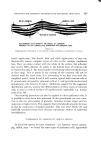
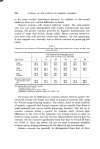
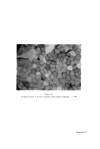
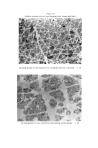
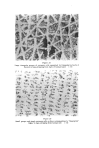
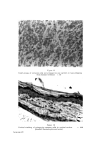
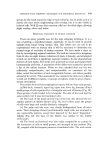
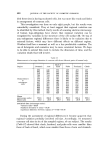
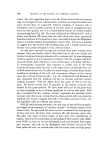
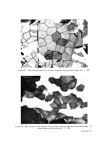
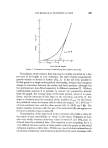
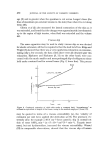
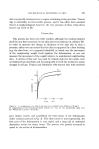
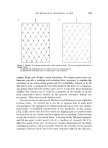
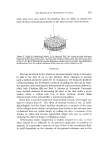
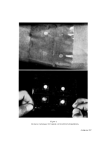
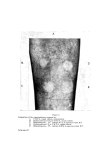
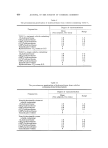
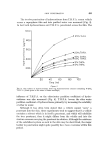
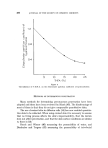
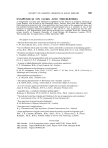
SKIN PENETRATION 493 to lower thermodynamic potential. It is thus important that the thermo- dynamic activity of a penetrant in the vehicle is high. Thermodynamic activity is a product of the concentration and activity coefficient of the penetrant in the vehicle. Thus a weakly acid compound buffered to a weakly acid pH will have a higher activity than if it were buffered at an alkaline pH, and consequently its release will be dramatically improved in the former case. The converse is true of weakly basic compounds. Similarly solutes held firmly by the vehicle, such as the complexing of phenolics and polyethylene glycols (41), are released slowly. Solutes held loosely by the vehicle exhibit high activities and are released quickly. Thus an oil-soluble drug would be released rapidly by a polyethylene glycol vehicle. Blank (41) has demonstrated this well in the study of a series of simple alcohols. Thus the water-soluble ethanol penetrates better from an oily than from an aqueous vehicle, whereas the oil-soluble pentanol penetrates better from an aqueous than from an oily vehicle. Using a modification of the occlusive technique of McKenzie and Stoughton (26), Barrett et al (43) investigated the effect of formulation on the penetration of hydrocortisone free alcohol. Standard test discs of ointment (37) were prepared on 16 mm squares of polyethylene film which were then arranged, ointment uppermost, on a strip of cellulose tape leaving a border of approx. 25 mm of tape around each square of film (Fig. 1). The complete dressing was then applied to the flexor aspect of the fore- arm and left in place for 16 h. The resultant vasoconstriction was scored subjectively as follows:- 0 - no vasoconstriction 1 - slight vasoconstriction 2 - obvious vasoconstriction 13 - pronounced vasoconstriction Whereas no vasoconstrictor response could be demonstrated from hydrocortisone 1% ointment BP or cream BPC, a significant vasoconstric- tion was obtained from o/w creams containing 25% tetrahydrofurfuryl alcohol (T.H.F.A.) or 25% dimethylacetamide, and ointments containing 15% T.H.F.A., or 10% dimethylacetamide (44). (Tables I and II). Both T.H.F.A. and dimethylacetamide are water-miscible and solubilise hydro- cortisone, and were present in the o/w creams in sufficient amounts to keep the hydrocortisone in solution. Fig. • shows the vasoconstrictor response to 0.1% and 1% hydro- cortisone in T.H.F.A. cream vehicle as compared •vith the response to 0.1% and 0.05% betamethasone-17-valerate in aqueous cream B.P.

494' JOURNAL OF THE SOCIETY OF COSMETIC CHEMISTS Table I The percutaneous penetration of hydrocortisone from vehicles containing T.H.F.A. Preparation T.H.F.A. ointment vehicle containing: 1 •o hydrocortisone 0.5 •o hydrocortisone 0.25 •o hydrocortisone 0.1 •o hydrocortisone 0.05 •o hydrocortisone Unmedicated vehicle Hydrocortisone 1 •o ointment B.P. T.H.F.A. cream vehicle containing: 1 •o hydrocortisone 0.5 •o hydrocortisone 0.25 •o hydrocortisone 0.1 •o hydrocortisone 0.05 •o hydrocortisone Unmedicated vehicle Hydrocortisone 1 • cream B.P. Degree of vasoconstriction Mean (Ten subjects, two tests) 1.8 1.5 1.3 1.0 0.5 0 0 1.9 1.8 1.4 1.2 0.7 0 0 Range 1-3 1-2 1-2 0-2 0-1 1-3 1-3 1-2 0-2 0-2 _ Table II The percutaneous penetration of hydrocortisone from vehicles containing dimethylacetamide Preparation Degree of vasoconstriction Mean (Ten subjects, two tests) Dimethylacetamide ointment vehicle containing: 1 •o hydrocortisone 1.6 0.5 •o hydrocortisone 1.3 0.25 hydrocortisone 0.8 0.1 •o hydrocortisone 0.4 0.05 •o hydrocortisone 0 Unmedicated vehicle 0 Dimethylacetamide cream vehicle containing: 1 •o hydrocortisone 0.5 •o hydrocortisone 0.25 •o hydrocortisone 0.1 •o hydrocortisone 0.05 •o hydrocortisone Unmedicated vehicle 1.9 1.5 1.3 0.7 0.3 0 Range 1-2 0-2 0-2 0-1 -- 1-3 0-3 O-3 0-2 0-1 --
Purchased for the exclusive use of nofirst nolast (unknown)
From: SCC Media Library & Resource Center (library.scconline.org)