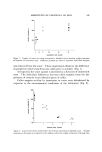
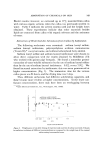
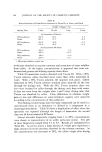
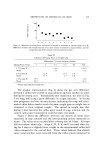
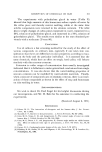
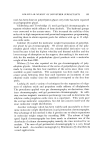
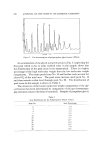
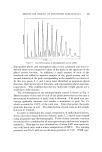
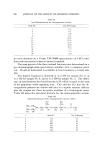
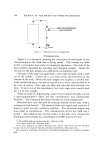
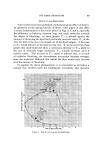
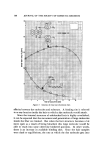
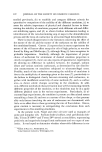
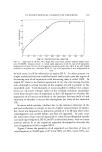
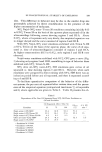
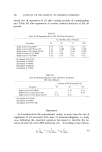
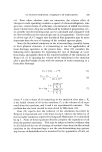
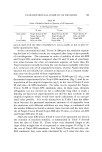
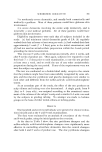
158 JOURNAL OF THE SOCIETY OF COSMETIC CHEMISTS 1 27 TIME ----) Figure 3. Gas chromatogram of polypropylene glycol acetate (PPGA) An examination of the glycol acetate fraction in Fig. 3, neglecting the first peak which is due to some residual ether in the sample, shows that the distribution of the peak areas is not symmetrical. There is a higher percentage of the high molecular weight than the low molecular weight components. The major peaks from No. 15 and further each account for about 8% of the total area. The peak areas increase until peak No. 15 and then remain at that level through peak No. 28. The distribution of peak areas in this sample is shown in Table I. The structure of the lowest molecular weight components of the gly- col fraction has been determined by comparison of the gas chromatogra- phy retention times with those of standards. Samples of propylene glycol, Table I Area Distribution for the Polypropylene Glycol Acetate Peak No. Area Percentage 2 3 4 7 12 15 18 21 24 27 28 14 12 19 33 58 77 8.7 8.2 8.3 7.8 8.1

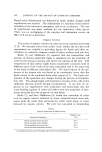
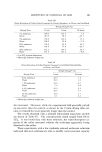
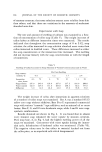
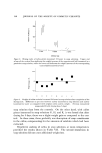
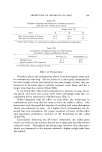
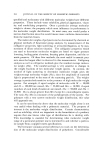
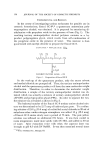
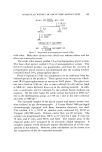
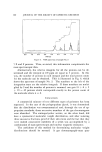
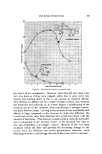
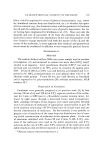
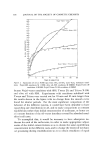
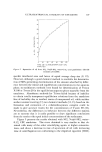
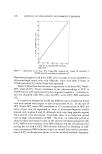
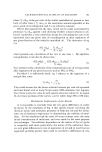
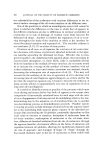
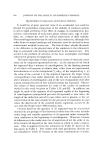
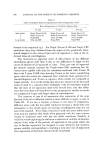
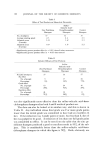
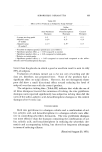
MOLECULAR WEIGHT OF POLYETHER SURFACTANTS 159 21 23 TIME Figsire 4. Gas chromatogram of aminopolyether acetate (APA) dipropylene glycol, and tripropylene glycol were acetylated and their re- tention times were compared to those of the peaks in the spectrum of the glycol acetate fraction. In addition, a small amount of each of the standards was added to separate samples of the glycol acetate and in- creased intensity of the peak corresponding to the standard was observed. In this way, peaks 2, $, and 4 have been identified as propylene glycol diacetate, dipropylene glycol diacetate, and tripropylene glycol diacetate, respectively. This confirms that the low molecular weight glycols are a small part of the mixture. The chromatogram of the aminopolyether acetate is shown in Fig. 4. Determination of the area of each of the peaks shows that in this case a symmetrical distribution of peak areas is obtained. The peak area per- centage gradually increases and reaches a maximum at peak No. 15, which accounts for 15.5% of the total area. From that point, the peaks gradually decrease in area. The distribution of peak areas in this sample is shown in Table II. In order to determine the actual composition of individual fractions, three consecutive major fractions (namely, peaks 5, 7, and 9) were isolated using preparative gas chromatography. Proof of their structure was then determined by a combination of mass spectroscopy and nuclear magnetic resonance. Mass spectra were obtained on a Varian GH7 mass spectrom- eter with batch inlet with a source temperature of 250øG. The ionizing potential was 70 eV with an accelerating potential of $ kV. NMR spec-
Purchased for the exclusive use of nofirst nolast (unknown)
From: SCC Media Library & Resource Center (library.scconline.org)