188 JOURNAL OF THE SOCIETY OF COSMETIC CHEMISTS (16) Acevedo, M. C., Report on the Search for Methods for the Quantitative Determination of the Concentration of Nonionics in the Equilibrium Liquids of Nujol-Water-Non- ionic Surfactant Emulsions, Unpublished report, University of Southern California, Fall, 1969. (17) Groot, R. C., and Vold, R. D., The Ultracentrifugation of Emulsions with Different Phase Volumes of Emulsified Oil, in Overbeek, J. Th. G., Physics and Physical Chemis- try of Surface Active Substances [which is Vol. II of the Proc. of the iVth Int. Congr. on Surface Active Substances, Brussel,s (1964)], Gordon and Breach, New York, N.Y., 1967, pp. 1233-42. (18) Ross, S., Foam and emulsion stability, J. Phys. Chem., 47, 266-77 (1943). (19) Bikerman, J. J., Foams: Theory and Industrial Applications, Reinhold Publishing Co., New York, N.Y., 1953, Chap. 4.

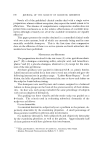
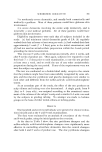
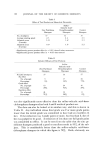
J. Soc. Cosmet. Chem., 23, 189-194 (March 3, 1972) A Clinical Evaluation of Two Shampoos in the Treatment of Seborrheic Dermatitis NORMAN ORENTREICH, M.D.* Synopsis--The relative EFFICACIES of a commercially available ZINC PYRITHIONE SHAMPOO a com•nercially available SULFUR, SALICYLIC ACID, and HEXACHLORO- PHENE SHAMPOO and a control shampoo in the "over the counter" treatment of frank SEBORRHEIC DERMATITIS were measured using a visual technique. Both the zinc pyrithione shampoo and the shampoo based on the combination of active ingredients pro- duced better results than the unmedicated control shampoo. Further, the zinc pyrithione shampoo was significantly more effective in controlling this disease process than the shampoo containing the combination of active ingredients. A supplementary evaluation of the rela- tive efficacies of the test products in suppressing itching of the scalp also indicated the zinc pyrithione product to be superior however, the data do not give any evidence of better long- term reduction of scalp oiliness with this shampoo compared to the other active ingredient shampoo. INTRODUCTION Commercial preparations for the treatment of seborrheic dermarl- tis* of the scalp generally include the use of a shampoo, a postshampoo treatment (rinse), or a hair dressing containing one or more active in- gredients. Some of the more commonly used materials have been sulfur, salicylic acid, resorcinol, coal tar, selenium sulfide, quaternary ammo- nium compounds, and hexachlorophene (1-7). * Orentreich Medical Group, 909 Fifth Ave., New York, N.Y. 10021 and New York Uni- versity School of Medicine, New York, N.Y. ?Seborrheic dermatitis: an erythemoto squamous dermatitis with a predeliction for areas with a heavy sebaceous gland population. 189
Purchased for the exclusive use of nofirst nolast (unknown)
From: SCC Media Library & Resource Center (library.scconline.org)