190 JOURNAL OF THE SOCIETY OF COSMETIC CHEMISTS Nearly all of the published clinical studies deal with a single active preparation almost without exception, they report the tested system to be efficacious. The absence of comprehensive comparative studies does not permit firm conclusions as to the relative effectiveness of available treat- ments although certainly not all of the available treatments are equally effective! This paper presents the results obtained in a controlled clinical study with two active systems, both of which are currently being used in com- mercially available shampoos. This is the first time that comparative data on the efficacies of these two active systems on frank seborrheic der- matiris have been published. MATERIALS AND METHODS The preparations involved in the test were (A) a zinc pyrithione sham- poo • (g) a shampoo containing sulfur, salicylic acid, and hexachloro- phene * and (C) a placebo shampoo, identical to (A) except for the omis- sion of the zinc pyrithione. All three products were packed in identical 6.5-fi. oz. plastic bottles. Label instructions called for at least once-a-week use at home and gave the following instructions in product usage: "Lather-Rinse-Repeat." In ad- dition, the lable of product (B) instructed the user to leave each lather on the scalp for 5 min before rinsing. The shampoos were used by men and women, assigned in a balanced fashion to three groups on the basis of the pretest severity of their derma- titis. In that way, each group included the same percentage of subjects with various degrees of dermatitis. The grading was done visually and the entire scalp was graded on a 0-4 scale. The criteria used in evaluating seborrheic dermatitis of the scalp were as follows: 0 is no dermatitis. 1 is minimal dermatitis, subjectively not a problem to the patient, ob- jectively detectable by the examining physician. A small percentage of these patients would have glabrous skin involvement. 2 is moderate dermatitis, both subjectively and objectively detectable by the examining physician, as well as the patient. Approximately half of these patients would have glabrous skin involvement. * Head and Shoulders, The Procter & Gamble Co., Cincinnati, Ohio 45224. t Sebulex, Westwood Pharmaceuticals, Buffalo, N.Y. 14213.

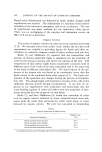
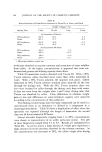
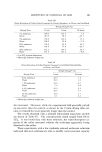
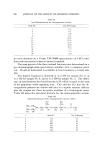
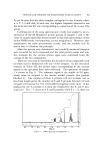
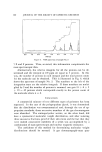
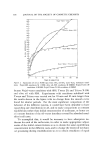
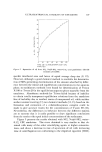
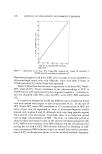
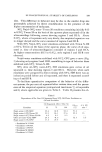
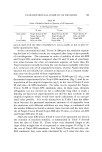
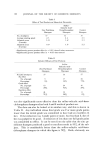
SEBORRHEIC DERMATITIS 191 3 is moderately severe dermatitis, and usually both cosmetically and medically a problem. Most of these patients would have glabrous skin involvement. 4 is severe dermatitis involving the entire scalp intensively, and is invariably a real medical problem. All of these patients would have glabrous skin involvement. Eligibility requirements were such that all subjects included in the study: (a) had minimum initial dermatitis grade of 2.0 (b) regularly washed their hair at home at least once per week (c) had washed their hair approximately 1 week (7 --+ 2 days) prior to the initial examination and (d) had not used an antiseborrheic preparation within the 4-week period preceding the initial examination. This test ran 8 weeks with examinations initially, after 4 weeks, and after 8 weeks of product use. Once again, subjects were required to wash their hair 7 --+ 2 days prior to each examination, to use the test product at least once a week, and to avoid the use of any other antiseborrheic preparation during the test period. If any of the requirements were not met, the subject was rejected. The test was conducted as a double-blind study, except to the extent that the products might have been unavoidably recognized by some sub- jects and that the zinc pyrithione and placebo shampoos were similar to each other and different from the sulfur-salicylic acid-hexachlorophene system. As an attendant part of the study, the effect of the test products on scalp oiliness and itching were also determined. A single grade, from 0 (dry) to 4 (very oily), was assigned according to the examiner's assess- ment of the oiliness of the subject's scalp and a similar 0-4 scale was used by the subjects in grading itching. No attempt was made to balance groups on the basis of either initial oiliness or itching grades. RESULTS One hundred and seventy individuals were present for clinical evalua- tions initially and at the 4- and 8-week examinations. The data were evaluated by an analysis of covariance of the 4-week and 8-week grades, using the initial grades as the covariate. As the data in Table I show, the zinc pyrithione shampoo and the sulfur-salicylic acid-hexachlorophene shampoo were significantly more effective in controlling seborrheic dermatitis than the control shampoo after both 4 and 8 weeks of product use. The zinc pyrithione shampoo
Purchased for the exclusive use of nofirst nolast (unknown)
From: SCC Media Library & Resource Center (library.scconline.org)