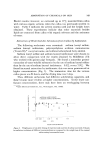
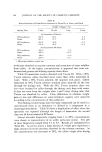
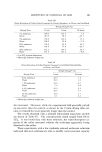
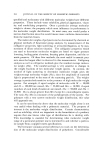
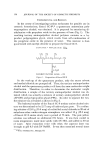
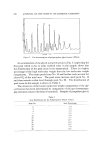
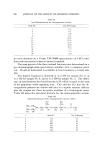
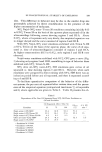
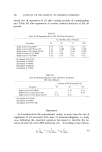
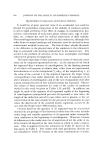
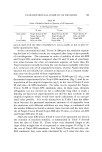
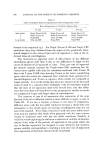
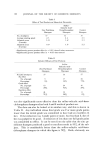
192 JOURNAL OF THE SOCIETY OF COSMETIC CHEMISTS Table I Effect of Test Products on Seborrheic Dermatitis No. of subjects Average starting grade Adjusted mean (4 weeks) Adjusted mean (8 weeks) Sulfur- Salicylic Acid- Zinc Pyrithione Hexachlorophene Shampoo Shampoo Control Shampoo 57 56 2.5 2.6 1.0 ø 1.6 b O. 6 a 1.3 b 57 2.5 2.3 2.2 Significantly greater product effect (a = 0.05) than all other treatments. Significantly greater product effect (a = 0.05) than control. Table II Relative Efficacy of Test Products Su'-fur- Salicylic Acid- Zinc Pyrithione Hexachlorophcne Control Shampoo Shampoo Shampoo Number of subjects 57 56 57 No effect No. of people 3 17 41 Percentage 5 % 30 % 71% Good effect No. of people 13 24 16 Percentage 24 % 42 % 29 % Excellent effect No. of people 41 15 0 Percentage 71% 28 % 0 % was also significantly more effective than the sulfur-salicylic acid-hexa- cholorophene shampoo after both 4 and 8 weeks of product use. The data can also be looked at in another way, and this is shown in 'Fable II. Any individual whose final grade was 2 or more grade points lower than the initial grade was considered to have had an excellent ef- fect. If the reduction was 1 grade point or more, but less than 2, the ef- fect was judged to be good. A reduction of less than one full grade point was considered no effect. It can be seen from the table that the zinc py- rithione shampoo produced a good or excellent result in 95% of the sub- jects. This is considerably better than the sulfur-salicylic acid-hexa- chlorophene shampoo in which this figure is 70%. Both, obviously, are

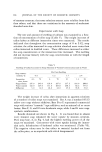
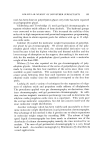
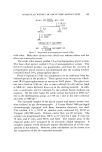
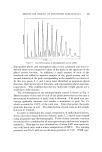
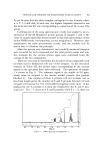
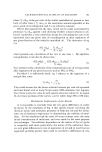
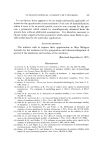
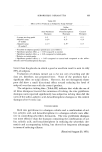
SEBORRHEIC DERMATITIS Table III Effect of Test Products on Subjective Scalp Itching" 193 Sulfur- Salicylic Acid- Zinc Pyrithione Hexachlorophene Control Shampoo Shampoo Shampoo Average starting grade 0.9 0.7 0.9 Adjusted mean 0.2 b,c 0.5 c 0.5 c (4 weeks) Adjusted mean 0.1 c,• 0.3 b,• 0.5 c (8 weeks) a _ • Numbers of subjects/product/period same as in Table I. 0 Significant product effect, a = 0.05 compared to control. c Significant product effect, a = 0.05 compared to initial grade. a Relative to initial grade. ' Significant product effect, a = 0.05 compared to control and compared to the sulfur- salicylic acid-hexachlorophene shampoo. better than the placebo in which a good or excellent result is seen in only 29% of subjects. Evaluation of oiliness turned out to be not very rewarding and the data are, therefore, not presented here. None of the products had a significant effect on scalp oiliness. However, the two therapeutic sham- poos did show a small directional effect toward reducing the level of scalp oil over that seen with the control product. The subjective itching data (Table lII) indicate that while the use of all three shampoos lowered the awareness of itching, the zinc pyrithione shampoo users reported significantly less subjective itching than did the users of the sulfur-salicylic acid-hexachlorophene shampoo or the control shampoo after 8 weeks' use. CONCLUSIONS Both zinc pyrithione in a shampoo vehicle and a combination of sul- fur, salicylic acid, and hexachlorophene in a shampoo vehicle were effec- tive in controlling seborrheic dermatitis. The zinc pyrithione shampoo was more effective than the shampoo containing the combination of sul- fur, salicylic acid, and hexachlorophene in reducing the seborrheic der- matiris and accompanying itching, but showed no long-term advantages in terms of reducing oiliness. (Received August 23, 1971)
Purchased for the exclusive use of nofirst nolast (unknown)
From: SCC Media Library & Resource Center (library.scconline.org)