THE BINDING OF SMALL MOLECULES TO HAIR--I 459 Therefore, it can be stated that experimental evidence suggests that peptide linkages both in a-helical and in amorphous conformations will bind water, but apparently in different proportions. The secondary structure of a protein, and in particular the degree of order, has a role in determining its water uptake capacity. This view is also confirmed by the fact that polyalanine absorbs water (15). Co-operative hydration regions So far the interactions between water and discrete functional groups of the protein have been discussed and very little has been said about hydration processes which are due to wide ranging co-operative interactions resulting from the ordered macromolecular structure of proteins. A distinction must be drawn here between short-range co-operative interactions (e.g. next neighbour interactions) and interactions which facilitate the stabilization of extended water structures around the polypeptide chain. From the fore- going it would seem that the latter interactions will only have secondary importance in determining the hydration structure of proteins, as practically all the water uptake of proteins can be accounted for by direct interactions with functional groups. However, there are a number of phenomena sug- gesting that co-operative hydration also exists in proteins and that this is governed mainly by the tertiary structure of the protein. One of the successful techniques for the study of co-operative hydration structures proved to be the measurement of volume changes which accompany various reactions of the protein molecules. Ikegami (22) carried out a systematic study of the hydration of various polyacids using a refractometric technique. On the basis of his results he concluded that the hydration region around a polyelectrolyte ion can be separated into two regions. Firstly, there is an intrinsic spherical region around each charged group, and secondly, there is a cylindrical region surrounding the entire macro-ion which is produced by the co-operative action of two or more charge-bearing groups along the polymer skeleton. From his measurements of the volume changes accompanying the ionization and de-ionization of poly-acids, he concluded that when counterions enter the secondary regions, the co-operative water structures will be destroyed owing to the strong electrostatic interactions with the polyion. Correlating the spatial distribution of ionic groups along the polymer skeleton with the volume changes observed, he came to the conclusion that if the individual charged groups are spaced more than 0'31 nm from each other, no

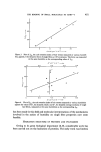
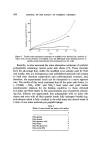
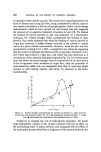
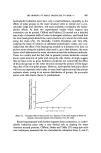
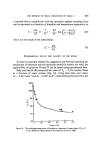
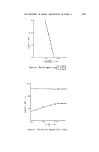
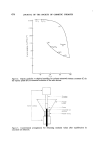
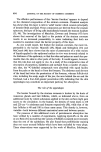
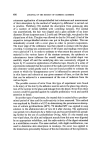
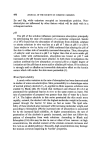
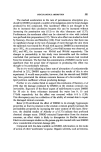
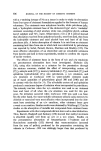
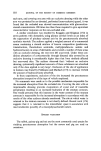
460 JOURNAL OF THE SOCIETY OF COSMETIC CHEMISTS co-operative water sheath can exist. His results were in good agreement with those of Strauss and Leung (23) who, using a dilatemetric method, came to very similar conclusions in the case of polyphosphates. Some volume change measurements which we have carried out with human hair also suggested the presence of co-operative hydration structures in hair (24). We studied the binding of various phenols to hair and measured, by a dilatemetric technique, the volume changes which accompanied the binding of these phenols. Our results indicated that when the binding of various phenols to virgin hair occurred, a sudden change occurred in the volume vs uptake curves at a given critical concentration. However, when the hair was first penetrated by soaking in 0.1 N HC1, a straight line was obtained, suggesting that the acid pre-treatment had destroyed the co-operative hydration struc- ture which had existed in virgin hair, and which was also destroyed as a consequence of the relatively high phenol uptake (Fig. 11). It is interesting to note that minor structural changes must be responsible for the destruction of the co-operative water structures in virgin hair, since the properties of acid-treated hair differ only very marginally from that of virgin hair (slight increase in acid binding capacity and about 2•o decrease in the elastic modulus) (24). • 4- o• x '•'" 2 I o I 2 3 4 r x I0 • mole g-I Figure 11. Volume changes accompanying the sorption of phenols on virgin and acid- treated hair (hair exposed to pH 1 for 12 h and subsequently washed acid free). O, Virgin hair ß acid-treated hair [reproduced with permission from ref. (24)]. Finally let us consider the role of hydrophobic hydration. No doubt large hydrophobic regions of the protein molecule will have an effect on the surrounding water. It seems, however, that compared with the effects of the many polar groups which form a large part of the protein molecule, the
Purchased for the exclusive use of nofirst nolast (unknown)
From: SCC Media Library & Resource Center (library.scconline.org)