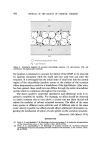
PERCUTANEOUS ABSORPTION 485 Hermann and Baer (52) who studied the penetration of heavy-metal com- pounds, sulphonamides and dyes through the skin of guinea-pigs and men, using histochemical techniques for the identification of these compounds. Further evidence has been provided from experiments using isotope- labelled compounds: for example, in studies of the passage of labelled para- thion through the skin of a variety of species, including man, a high concen- tration of labelled material was found in the appendages (53) suggesting a preferential absorption via this route. In an appraisal of these autoradio- graphic results Fredriksson (54) suggested that they could equally well be regarded as an affinity of the test substance for certain structures. The same critical comment could be applied to observations on the localization of coloured compounds or on the histochemical demonstration of other compounds. Percutaneous passage by way of skin appendages was elegantly demonstrated by Van Kootan and Mali (55). Employing in vitro techniques, these authors mounted a freshly obtained piece of cadaver skin in a Perspex chamber and perfused one side of it with potassium ferrocyanide, and the other side with ammonium ferrisulphate. The solutions diffused through the epidermal barrier and formed a blue precipitate (Turnbull blue) at the site where they met. Under these conditions it was shown that a precipitate of Turnbull blue was formed at the epidermal barrier and within the skin appendages, especially sweat glands. The contribution of sweat glands and of hair follicles to the percutaneous absorption of test substances has been investigated by a number of workers. Substances that are absorbed via the appendages must first pass through the orifices at the skin surface. According to Scheuplein (50) this process takes place by diffusion since 'hydrodynamic flow is excluded'. Taking into account the differences in the diffusion constants of the keratinized epider- mis and the cells lining the ducts of the appendages, this author calculated that the route via the glands is important for a brief period immediately after the application of the test substance. During this period, absorption is greater through the appendages than through the matrix of the stratum corneum. Later a 'steady state' is established during which the bulk of diffusion appears to be no longer intra-appendageal but occurs through the matrix of the stratum corneum (50). In his studies, Scheuplein (50) considered only water and water-soluble substances and precluded the effect of solvents such as chloroform and methanol since these destroy the stratum corneum and as a consequence alter considerably the dynamics of absorption. In the case of lipid-soluble substances which do not affect the integrity of the stratum corneum to any appreciable extent, absorption via the pilosebaceous

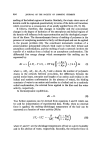
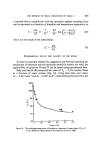
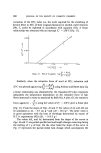
486 JOURNAL OF THE SOCIETY OF COSMETIC CHEMISTS apparatus may be considerable, due to its lipid-rich sebaceous secretion (50). The results obtained by Maibach et al (49) in their study of the percutaneous absorption of the lipid-soluble insecticides, parathion, malathion and carbaryl, mentioned in an earlier section, give considerable support to this hypothesis. Further light on the relative rates of absorption via the skin appendages and the stratum corneum was provided by Wahlberg (22, 56). He used a solution of •'•'NaC1 and applied it to the shaved abdominal skin, rich in hair follicles and to the non-hairy skin behind the ear in guinea-pigs. From in vivo and in vitro experiments lasting several hours he showed that the percutaneous absorption from the abdominal skin was approximately 20•o greater than that from the non-hairy skin and attributed this difference to the amount absorbed from the greater number of hair follicles in the abdominal skin. This conclusion was supported by a second experiment in which he used the same technique but substituted HgCI•. for the sodium chloride. No difference in the absorption rates of Hg was observed between the hairy and non-hairy skin. This was due to the occlusion of the hair follicles and their glands by the protein precipitated by the mercury. These results suggest that even during the 'steady state', absorption via the hair follicles forms an appreciable fraction of the total amount absorbed. It would seem reasonable to assume that the sweat glands, if present, con- tribute an amount at least equal to that of hair follicles to percutaneous absorption. While the hair follicle may complicate measurements of the amount absorbed, the hair keratin may interfere with measurements of the amount of the compound retained in the skin (57). In the design of experiments of this sort, it is important to remember that considerable regrowth of hair may occur, especially in young animals, within a few days of shaving. METHODS FOR TESTING Efficiency of the cutaneous barrier Of the procedures that have been employed for measuring the barrier properties of the skin, the one most frequently used is the water diffusion test, carried out under controlled humidity conditions in vitro (58, 59). A cylindrical aluminium cell containing water is separated from the atmo- sphere by a piece of skin which serves as a membrane. Water loss through skin after an appropriate equilibration time is expressed as mg cm
Purchased for the exclusive use of nofirst nolast (unknown)
From: SCC Media Library & Resource Center (library.scconline.org)