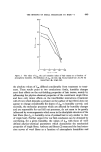
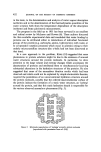
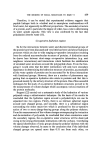
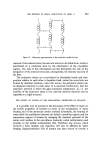
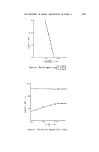
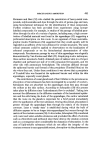
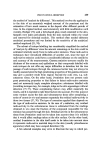
THE BINDING OF SMALL MOLECULES TO HAIR--I 80 6O • 40 2O I I I I ........... I,, 0 20 40 60 80 100 Figure 1. The value of IcR, the curl retention index of hair tresses as a function of atmospheric humidity. (For definition of IcR, see text.) O, Textratreated hair O, Pin Up treated hair O, virgin hair. 449 the absolute values of IcR differed considerably from treatment to treat- ment. These results point to two conclusions: firstly, humidity changes exert their effects on the curl-holding properties of hair tresses, mainly by influencing the physico-chemical properties of the constituent single fibres and have only minor effects on the interfibrillar interactions (treatment with Textra which deposits a polymer on the surface of hair fibres does not appear to change considerably the slopes of Ica vs humidity curves) and secondly, the molecular processes which are affected by humidity changes and are responsible for curl fall out processes, do not seem to be greatly influenced by re-arrangements which occur in the disulphide structure of the hair fibres (the IcR vs humidity curve of permed hair is very similar to that of virgin hair). Further support for our first conclusion can be obtained by correlating, for a given humidity, the values of Ica with those of well- defined physico-chemical parameters which characterize the mechanical properties of single fibres. Astbury and Street (2) measured the load exten- sion curves of wool fibres as a function of atmospheric humidities and

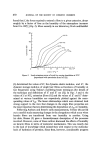
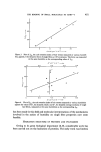
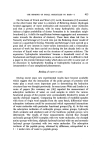
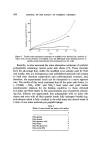
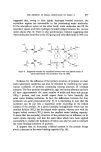
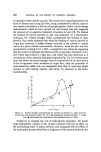
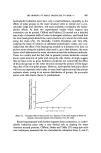
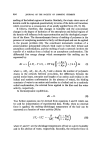
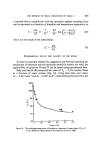
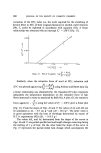
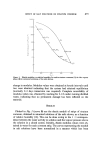
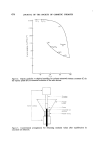
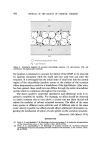
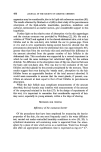
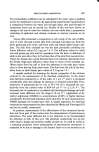
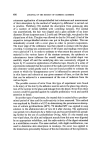
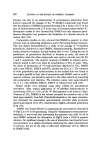
45O JOURNAL OF THE SOCIETY OF COSMETIC CHEMISTS found that f, the force required to extend a fibre to a given extension, drops roughly by a factor of four as the humidity of the atmosphere increases from 0 to 1003/o (Fig. 2). More recently in our laboratory, Huck and Baddiel 60- I00% 45 •• •'4% ---- / / / _41% ß 3o ß 15 I I I I I I I I I I I I I I I 0 6 12 18 24 30 36x105 Lood x 104 g- :::' Figure 2. Load extension curves of wool for varying humidities at 25øC [reproduced with permission from ref. (2)]. (3) determined the values of E', the dynamic elastic modulus, and E", the dynamic storage modulus of single hair fibres as functions of humidity at low frequencies using Tokita's oscillating beam techniques [for details of the technique and definitions of E' and E" see (3)]. In Figs. 3 and 4, the values off at 10% extension [from (1)] and the values of E' and E" deter- mined at various humidities are respectively plotted against the corre- sponding values of IcR. The linear relationships which were obtained lend strong support to the view that changes in the single fibre properties are the most important factors determining the dependence of Icx on humidity. Following Astbury and Street's early measurements, Treloar (4) carried out a careful study measuring changes in the elongations which occur when keratin fibres are transferred from one humidity to another. Using his data, Breuer (5) gave a thermodynamic description of the processes involved. However, none of these authors discussed the effects of humidity on keratin fibres in terms of molecular mechanisms. This was mostly due to the lack of knowledge which existed then with respect to the molecular basis of hydration of proteins. Since then, however, considerable progress
Purchased for the exclusive use of nofirst nolast (unknown)
From: SCC Media Library & Resource Center (library.scconline.org)