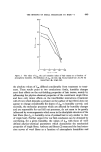
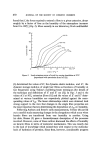
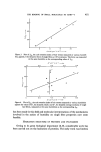
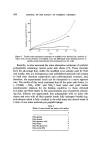
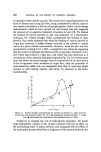
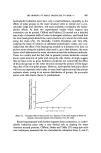
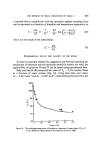
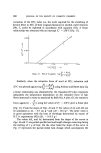
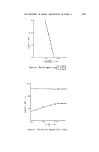
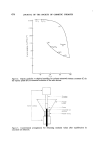
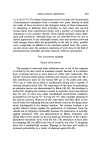
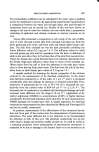
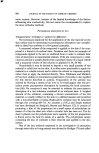
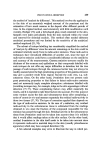
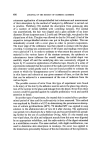
THE BINDING OF SMALL MOLECULES TO HAIR--I 451 60- 5 10 15 20 ,'"( 10 %) gcm 2x 10⁻⁹ --.- Figure 3. Plot of/ca, the curl retention index of hair tresses measured at various humidi- ties, against f, the retractive force of single fibres at 10 % extension. The force was measured at the same humidity as the corresponding value of IcR. 600 o. I I 4o E"X 10 -I N m -2 0.2 0.3 0.4 I I I ß 0 o i i I I 0 '3.5 4.0 4.5 ,5.0 E'x 10 -IN m-2 Figure 4. Plot of IcR, the curl retention index of hair tresses measured at various humidities against the values of E', the dynamic elastic and E*, the dynamic storage modulus of single hair fibres, measured at the same humidities as the corresponding Ic•. has been made in this field and molecular interpretations of the mechanisms involved in the action of humidity on single fibre properties now seem feasible. HYDRATION STRUCTURE OF PROTEINS AND POLYAMIDES Owing to its great biological importance (6-9), considerable work has been carried out on the hydration of proteins. The early work was limited,

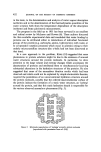
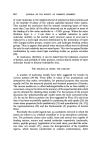
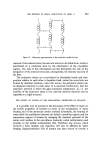
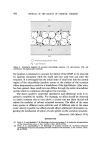
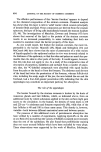
452 JOURNAL OF THE SOCIETY OF COSMETIC CHEMISTS in the main, to the determination and analysis of water vapour absorption isotherms and to the determination of the thermodynamic quantities of the water sorption both from the temperature dependence of the absorption isotherms and from calorimetric measurements. The progress in the field up to 1951 has been surveyed in an excellent and critical review by McLaren and Rowen (6). These authors discussed the then available experimental data and concluded that water binding by proteins can be attributed either to interactions of individual functional groups of the protein (e.g. carboxylic, amino, hydroxyl etc.) with water, or to co-operative sorption processes which occur in proteins owing to their orderly microcrystalline structure (the e-helix had not been discovered at that time). In a new approach to the problem, Klotz (10)suggested that some phenomena in protein solutions might be due to the existence of unusual water structures around the protein molecule. In particular, he drew attention to the large volume and entropy changes which accompany the denaturation of proteins and attributed them to simultaneously-occurring substantial alterations in the hydration structures of the proteins. He also suggested that some of the anomalous titration results which had been observed and which could not be explained by simple electrostatic theories, required the postulation of an unconventional hydration structure around the protein molecule, notably that the ordered macromolecular surface of the protein induces the formation of a static water structure, an 'iceberg' around the protein, and that this static hydration sheath is responsible for the various observed anomalous phenomena (Fig. 5). Figure 5. Schematic reproduction of 'icebergs' around a protein molecule [reproduced with permission from ref. (10)].
Purchased for the exclusive use of nofirst nolast (unknown)
From: SCC Media Library & Resource Center (library.scconline.org)