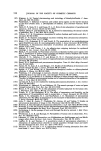
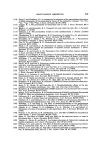
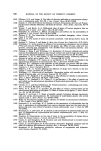
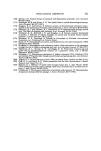
PERCUTANEOUS ABSORPTION 521 (170) (171) (172) (173) (174) (175) (176) (177) (178) (179) (180) (181) (182) (183) Scholtz, J. R. Topical therapy of psoriasis with fiuocinolone acetonide. Arch. Dermatol. 84 1029 (1961). Sulzberger, M. B. and Witten, V. H. Thin plastic films in topical dermatological therapy. Arch. Dermatol. 84 1027 (1961). Scoggins, R. B. and Kliman, B. Relative potency of percutaneously absorbed cortico- steroids in the suppression of pituitary-adrenal function. J. Invest. Dermatol. 45 347 (1965). Feldmann, R. J. and Maibach, H. I. Penetration of x4C-hydrocortisone through normal skin. The effect of stripping and occlusion. Arch. Dermatol. 91 661 (1965). Wildnauer, R. H., Bothwell, J. W. and Douglass, A. B. Stratum corneum biochemical properties. I. Influence of relative humidity on normal and extracted human stratum corneum. J. Invest. Dermatol. 56 72 (1971). Stevenson, D. E. Toxicology of Telodrin in Proceedings of Zestiende Internationaal Symposium over Fytofarmacie en Fytiatrie (Gent). Heath, D. F. Organophosphorus poisons, anticholinesterases and related compounds (1961) (Pergamon Press, Oxford). Norgaard, O. Investigations with radioactive nickel, cobalt and sodium on the resorption through the skin in rabbits, guinea-pigs and man. Acta Dermato-Venereol. 37 440 (1957). McDermot, H. L., Murray, G. W. and Heggie, R. M. Penetration of guinea-pig and rabbit skin by dimethylsulphoxide solutions of a quaternary oxime. Can. J. Physiol. Pharmacol. 43 845 (1965). Wahlberg, J. E. Percutaneous absorption of sodium chromate [sxCr], cobaltous [58Co] and mercuric [20aHg] chlorides through excised human and guinea-pig skin. Acta Dermato- Venereol. 45 415 (1965). Tregear, R. T. Physical functions of skin (1966). (Academic Press, London and New York.) Folk, G. E. and Peary, R. E. Water penetration into the foot. Quartermaster Climatic Research Lab. Report No. 181. Buettner, K. J. Diffusion of liquid water through human skin. J. Appl. Physiol. 14 261 (1959). Diffusion of water vapour through small areas of human skin in normal environ- ment. J. Appl. Physiol. 14 269 (1959). Fredriksson, T. Percutaneous absorption of parathion and paraoxon. VI. Decomposition of paraoxon during epidermal passage. J. Invest. Dermatol. 42 37 (1964).

Book reviews RODD'S CHEMISTRY OF CARBON COMPOUNDS. 2nd edn. Editor: S. Coffey. Vol. II, Part E: Steroids. Cumulative Index, Vol. II, Parts A-E (1971). Pp. xv+289. Elsevier, Amsterdam, London, New York. oe8.25. 'Chemistry of Carbon Compounds' has for many years been the standard reference work on organic chemistry. As noted in the preface to this last part of Volume II, it is sad that Dr. Rodd died on 22 July 1970 and that his assistance in the preparation of further volumes will therefore not be available. However, the distinguished list of advisers and the work of Dr. S. Coffey as editor should ensure the continued success and value of this series. The present book is devoted to steroids and is of particular interest to biochemists in the perfumery and cosmetic spheres. Chapter 18 deals with steroids and includes useful reference lists of these materials, and their sources and main physical characteristics. Chapter 19 is concerned with the biogenesis of terpenes and steroids. This brings up-to- date the isoprene rule and develops the history of the concept of the isoprenoid unit existing as isopentenyl pyrophosphate. The work in this chapter and the many references will prove invaluable to those who still hope to develop techniques for tissue culture pro- duction of essential oils or for the ultimate in vitro synthesis of such materials. The com- plexity of the chemistry is apparent, but the mode of presentation eases the burden. The text of these two chapters takes 137 pages and then follows an index to Volume 2 which takes a further 289 pages. This volume is, like its predecessors, in- valuable in respect of the multiplicity of 523 references which are conveniently given in the text rather than at the end of each chapter. While this makes the reading perhaps a little more difficult, nevertheless it is extremely convenient from the point of view of reference and while no one would recommend this book for light reading, as a book of reference and hence leading on to original papers it must be among the best available. M. A. COOKE STRUCTURE AND BONDING. Editors: P. Hemmerich, C. K. J•rgensen, J. B. Neilands, R. S. Nyholm, D. Reinen and R. J.P. Williams. Vol. 9. Pp. 263+111. (1971). DM. 64.00 $17.60. Vol. 10. Inorganic chemistry. Pp. 190+111. (1972). DM. 58.00 $17.70. Springer-Verlag, Berlin, Heidelberg, New York. Established members of the former Faraday Society will feel at home with this series others requiring to employ physico- chemical calculations refining molecular structures will find in-depth authoritative reviews in a broad spectrum of specific topics. Previous volumes have predominantly included monographs relating spectroscopic observations or thermodynamic functions to relative or absolute structural features in various complexes of the transition elements-- particularly those of biological significance. International contributors to Vols. 9 and 10 have certainly maintained a preference for transition elements and spectroscopic pro- perties but it must be conceded that these reviews are even more theoretical than usual and bring little to gladden the eye of the pure organic chemist--or even the biophysicist. Selection of attractive facets is a highly subjective and personal decision: but one
Purchased for the exclusive use of nofirst nolast (unknown)
From: SCC Media Library & Resource Center (library.scconline.org)