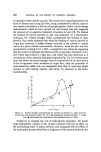
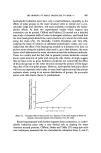
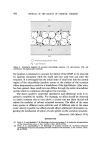
PERCUTANEOUS ABSORPTION 487 The permeability coefficient can be calculated if the water vapour gradient across the membrane is known. By appropriate experimental manipulations a comparison between the water loss through intact skin and through its ß component layers can be carried out. Studies of this sort have shown no change in the rate of water loss whether one uses whole skin, a preparation consisting of epidermis and stratum corneum or stratum corneum on its own. Vinson (60) conducted a comparative in vitro study of the rate of diffu- sion of water through normal skin from neonatal and adult rat, from the adult guinea-pig and swine, and from male and female adult human sub- jects. The skin from neonatal rat was the least permeable exhibiting the lowest diffusion values (0.15 mg cm -• h-•). The diffusion values for adult rats and guinea pig skin and for specimens from the back or abdomen of adult swine were about four to five times that of the skin from neonatal rats. Values for human skin varied between these two extremes. Specimens from the female thigh gave diffusion values close to those of the neonatal rat. Others taken from the calf or from the abdomen in the male gave values close to those derived from adult swine The skin from the sole of the foot, taken from an adult female gave values of 2.1 mg cm A simpler method for assessing the barrier properties of the stratum corneum is the measurement of its electrical conductivity. In the intact skin electrical conductivity is of the order of 1 I•A V -• and it is increased considerably after skin damage by abrasion or chemical action (60). Thus, immersion of guinea-pig skin in vivo at 70øC for 45 s, increased the con- ductivity from the control value of 0.04-0.9 ira V -• to 2.2 ira V-L The increased rate of conductivity correlated with histological damage and with increased water diffusion over the range 0-10 I•A V 4. Application of di- methyl sulphoxide (DMSO) in concentrations of 20•o or higher decrease considerably the electrical resistance of the skin (61). At such concentrations DMSO damages the keratin layer (62). A simple apparatus for electrical conductivity measurements has been described by Blank and Finesinger (63) and can be readily constructed. In practice, measurement of the effectiveness of the cutaneous barrier does not form part of the routine tests for measurements of percutaneous absorption. The water diffusion test is too elaborate to be recommended for inclusion in tests of this sort. The electrical conductivity test on the other hand is simple and could be readily carried out. It could be useful as a screening procedure where enhancement of percutaneous absorption is suspected to be due to damage to the keratin layer or to an increase in its

488 JOURNAL OF THE SOCIETY OF COSMETIC CHEMISTS water content. However, because of the limited knowledge of the factors influencing skin conductivity, this test cannot be recommended to replace the more orthodox methods. Percutaneous absorption in vivo 'Disappearance' technique or 'analysis by difference' The techniques employed for the application of the test material on the skin surface and for measuring its percutaneous absorption vary consider- ably in detail but conform to a few general principles. A measured volume of the compound is applied to the skin if the com- pound is a liquid in its natural state. Parathion and $arin are examples of compounds applied to the skin in undiluted form in order to estimate their rates of absorption in experimental animals. If the test compound is a solid, a known amount is usually dissolved in a specified volume of a liquid vehicle and a measured volume of this solution is applied (19, 54, 64-66). Occasionally it may be desired to deposit a very small quantity of test material in solid form on the skin. It is often more practicable to apply the material in a volatile solvent and to allow the solvent to evaporate quickly rather than to apply the material directly. Thus, Feldmann and Maibach (67) in their studies on percutaneous penetration of steroids in man applied the test steroid dissolved in acetone. Evaporation of the acetone was assisted by blowing a stream of air over it. It would appear that this pro- cedure assists percutaneous absorption by increasing the local concentra- tion (68). On occasions it may be essential to estimate the percutaneous absorption of a test substance contained in an ointment base. A weighed amount of the ointment, containing a known concentration of the test material, is usually rubbed on the skin in a defined manner and protected with a non-absorbable covering. Radio-active emission may be measured through this covering (69-71). An accurate (4-10•o) and simple method has been developed by Hadgraft, Barrett and Sarkany (72). It consists of producing a disc of the preparation on a small square of polyethylene by means of a thin tin sheet into which a circular hole has been cut. The tin sheet is placed over the polyethylene and a quantity of the test preparation is drawn across the hole by means of a spatula. The polyethylene square containing the disc of ointment is then removed and applied to the skin surface. One of the first methods employed in the investigation of absorption through intact skin in living animals was devised by Hediger (73) and called
Purchased for the exclusive use of nofirst nolast (unknown)
From: SCC Media Library & Resource Center (library.scconline.org)