PERCUTANEOUS ABSORPTION 489 the method of 'analysis by difference'. This method involves the application to the skin of an accurately weighed amount of the penetrant and the estimation of how much remains in the deposit after different periods of time. In the original method, used extensively with little modification until recently, Hediger (73) used a bell-shaped glass vessel cemented to the skin. Samples were taken periodically from the skin enclosed within the vessel and removed for chemical analysis. This method often needed elaborate analytical procedures and was limited by the sensitivity of the analytical method employed (21, 74). The advent of isotope labelling has considerably simplified the method of 'analysis by difference' since the amount remaining on the skin could be estimated relatively easily from its radio-active emission. These radio-active techniques have introduced difficulties of another sort, since the type of radio-active emission could have a considerable influence on the sensitivity and accuracy of the measurements. Gamma emission traverses readily the thickness of the corneum and epithelium so that compounds labelled with such isotopes do not offer any major difficulties in detection but the true passage of such isotopes through the cutaneous barrier may not always be readily assessed since the high penetrating properties of the gamma emission may give a positive result from regions beyond the cutis vera, e.g. sub- cutaneous tissue. On the other hand, [I-emission does not possess such great penetrating properties so that failure to detect radio-active emission need not necessarily imply complete absorption: substances labelled with [I-emitting isotopes may, for example, lodge in the skin appendages without detection (75-77). These complicating factors may affect materially the results, and it is essential to take these factors into account. For this purpose some workers excise the skin and subcutaneous tissue after completing a series of counts in vivo and measure separately the residual radio-activity in those two tissues (57, 76). The type of correction applied then depends on the type of radio-active emission. In the case of T-radiation, any residual radio-activity in the subcutaneous tissue is subtracted from the readings obtained in vivo since the fraction of the compound responsible for this emission has passed through the skin. Residual activity in the subcutaneous tissue from [I-emission need not be taken into account since it is unlikely that it would affect readings taken at the skin surface. On the other hand, residual •-emission in the skin itself needs to be taken into account since it represents radio-active material deep in the skin (usually pilosebaceous apparatus) which may have escaped detection (74). A few selected examples may serve to illustrate the way in which per-

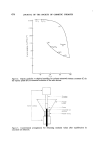
490 JOURNAL OF THE SOCIETY OF COSMETIC CHEMISTS cutaneous application of isotope-labelled test substances and measurement of their absorption by the method of 'analysis by difference' is carried out in practice. Wahlberg (74) studied the absorption from guinea-pig skin of a number of metals labelled with •,-emitting isotopes. The animal was anaesthetized, the hair was dipped and a glass cylinder of an inner diameter 20 mm (exposure area 3.2 cm •) and 104 mm high, was glued to the dipped area of skin. The glue was allowed to dry for 24 h and 1.0 ml of the respective isotope-labelled solution was put in the glass cylinder. This was immediately covered with a cover glass in order to prevent evaporation. The lower edge of the collimator was then placed in contact with the glass coverslip. Counting was commenced ! 5-30 s later and readings were taken over a period of 5 h. In order to estimate to what extent the amount of test material in the various layers of the stratum corneum, the epidermis or subcutaneous tissue influence the overall reading, the initial depot was carefully wiped off and the underlying skin was successively stripped in layers by 35 successive applications of adhesive tape. Results of a series of experiments indicated that the content of the radio-active label of the various skin elements varied greatly and it was not found possible to estimate the extent to which the 'disappearance curve' is influenced by amounts present in skin layers and subcuffs at any given moment of time, so that the best that can be achieved is a measurement of the sum of radiation from the various layers. The possible sources of error from this type of experiment were found to be injury of the skin by the adhesive used to secure the glass ring, absorp- tion of the isotope to the glass and leakage from the depot. Error from these sources could be guarded against by suitable preliminary work and careful attention to detail. In another type of experiment, the treated skin is excised after a predeter- mined period of time and the radio-activity is then measured. This method was employed by Parekh et al (57) in determining the percutaneous absorp- tion of sodium pyridinethione (SPT). 35S labelled SPT was applied in soap solution to the abdominal skin of rats 24 h after shaving. The application was spread over a fixed area by a Teflon rod, and was prevented from spread- ing further by the use of a polyethylene O-ring. After 15 s the treated area was wiped dean, the skin and subjacent muscle from this area were digested by an appropriate solubilizer, and the radio-activity of the digest estimated in a scintillation counter. The same method, with slight modifications, was used to determine skin absorption in monkeys. No cover was applied to the treated area presumably because of the short duration of the experiment.
Purchased for the exclusive use of nofirst nolast (unknown)
From: SCC Media Library & Resource Center (library.scconline.org)