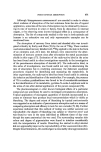
502 JOURNAL OF THE SOCIETY OF COSMETIC CHEMISTS ether and to a lesser extent, alcohol, have been shown to facilitate absorp- tion of both water-soluble and lipid-soluble substances (107). According to Rothman (21) these solvents increase the permeability of the skin by 'attacking lipid building stones of the cell membrane'. Valette, Cavier and Savel (140) investigated another series of organic solvents with respect to their ability to enhance the percutaneous absorption of physiostigrnine. The solvents belonged to eight classes of organic compounds: saturated aliphatic hydrocarbons, aromatic hydrocarbons, cyclic hydrocarbons, terpenes, primary saturated alcohols, ethylesters of saturated aliphatic acids and acetate esters of primary saturated alcohols. In this series, those solvents with the longer aliphatic chains were more efficient accelerants, while the presence of hydroxyl groups made the solvent less efficient. Baker (139) studied the effects of dimethylformamide and dimethylacetamide on the cutaneous barrier to water and thought that both these agents promoted percutaneous absorption by enhancing the state of hydration of the stratum corneum as a consequence of their hygroscopic properties. Allenby et al (137) compared the in vitro effect of a number of 'accelerants' on the pene- tration ofsaP-tri-n-propylphosphate (TPD), on the swelling of the skin and on its electrical conductivity. In this series, isopropanol, xylene, 0.9•o NaC1 in water, 8 M urea, methanol, chloroform, DMSO and phenol were studied. The most effective agents in promoting absorption of 8aP-TPD, in causing skin swelling and in reducing skin impedance were 8 M urea and DMSO, the least effective was isopropanol. All the substances which induced an accelerated absorption of oaP-TPD extracted some organic component from the epidermis. In previous studies, Elfbaum and Laden (141-143) using picrate ions showed that some accelerants cause swelling of the stratum corneum as well as increased penetration, while Vinson et al (60) and Montes et al (62) showed that accelerants may extract structural material from the stratum corneum. These results, according to Allenby et al (137) suggest that accelerants owe their effectiveness, at least in part, to their ability to lower the barrier properties of the stratum corneum by modifying its natural structure. The ease with which lipids dissolve in the organic solvents mentioned might suggest that these increase the rate of percutaneous absorption by removing the lipids from the stratum corneum, and Szakall (144) showed that in vivo, defatting human skin by swabbing with ether for 3 rain resulted in an increase in the amount of water absorbed lasting for 2 h. However, Winsor and Burch (145) have been unable to show an increase in the

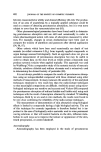
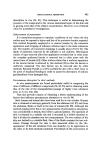
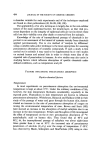
PERCUTANEOUS ABSORPTION 503 permeability of excised human skin to water after the surface lipid film has been removed with lipid solvents. Blank and Gould (121, 122) failed to discover any increased permeability of the skin in vitro to sodium dodecyl sulphate after removal of lipids from the cutaneous surface by washing with acetone, ethyl alcohol or an ethyl alcohol-ethyl ether mixture for a for a brief period. If this period of washing was extended to 3-4 days permeability to sodium dodecyl sulphate and to sodium laurate was greatly increased. These results show that organic solvents remove lipids only after prolonged contact with the skin. In the experiments mentioned above, lasting at most 24 h, it would seem unlikely that the increased per- meability observed is due to the removal of the skin lipid. The mechanism involved in the increase in permeability on removing the lipid in the stratum corneum by means of lipid solvents consists, according to Scheup- lein and Ross (146), of 'hole formation and loss ofwater-bindingcapacity'. In the case of'hydrogen-bonding solvents', for example DMSO and DMFA, the increased permeability is due to 'membrane expansion and uniform increase in media diffusivity' (146). Surface active agents Surface active agents differ considerably in their ability to penetrate the epidermal barrier, at least when low concentrations are employed. The penetration of sodium laurate and sodium dodecyl sulphate was investigated by Blank and Gould (94) on excised human abdominal skin. They found that 20 h after application, sodium laurate had penetrated the epidermis and dermis from weak (0.005 M) unbuffered, mildly alkaline aqueous solutions. Sodium dodecyl sulphate (0.005 M) on the other hand had penetrated only in very small quantities below the barrier and for the most part was retained in the stratum corneum. This difference was attributed to a greater affinity of the skin proteins to sodium dodecyl sulphate and is in keeping with the observations (147-149) that alkyl sulphates and alkyl benzene sulphonates combine with proteins to an appreciable extent. A difference between the in vivo rate of percutaneous absorption of n-dodecyl and n-hexadecyl sulphate in the rat was reported by Sprott (96). Using asS-labelled compounds in 0.65 mu concentration, the rate of excretion of ass in the urine after the application of n-hexadecyl asS- sulphate was twice that obtained following the application of n-dodecyl sulphate. Estimation of the amount of ass retained in the skin showed that the amount retained was inversely proportional to the amount absorbed.
Purchased for the exclusive use of nofirst nolast (unknown)
From: SCC Media Library & Resource Center (library.scconline.org)