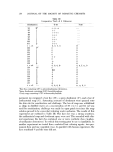
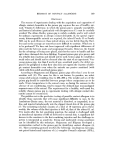
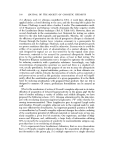
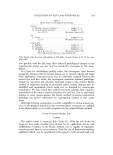
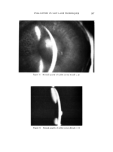
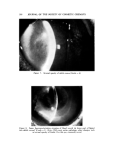
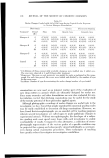
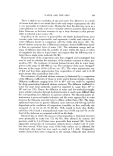
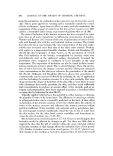
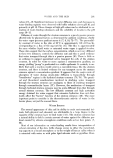
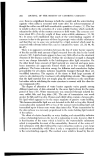
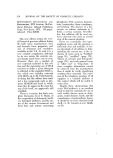
194 JOURNAL OF THE SOCIETY OF COSMETIC CHEMISTS Table VI Ocular Changes Graded with Aid of Slit Lamp during Topical Ocular Exposure to Various Shampoo Formulations Treatment • Observation Period Cornea Fluorescein Staining Flare Iritis Opacity Area Intensity Area Shampoo A 0 0 • (0/6) c 0 (0/6) 0 (0/6) 0 (0/6) 0 (0/6) 0 (0/6) i 0.1 (1/6) 0.5 (3/6) 1.6 (6/6) 2.1 (6/6) 1.3 (6/6) 9..1 (6/6) oe4 0 (0/6) 0 (0/6) 0.5 (3/6) 1.0(3/6) 0.3 (2/6) 0.3 (2/6) Shampoo B Shampoo C Control 0 0 (0/6) 0 (0/6) 0 (0/6) 0 (0/6) 0 (0/6) 0 (0/6) 1 0(0/6) 0.1 (1/6) 0.3(•/•) 0.5(•./6) 0.8(4/6) 1.0(4/•) 24 0 (0/6) 0 (0/6) 0 (0/6) 0 (0/6) 0 (0/6) 0 (0/6) 0 0 (0/6) 0 (0/6) 0 (0/6) 0 (0/6) 0 (0/6) 0 (0/6) i 0.5 (3/6) 1.0 (6/6) 3.2 (6/6) 4.0 (6/6) 1.8 (6/6) 2.4(6/c) 24 0.1 (1/6) 0(0/6) 2.1 (5/6) 3.1 (5/6) 1.3 (4/6) 1.5 (4/6) 0 0 (0/6) 0 (0/6) 0 (0/6) 0 (0/6) 0 (0/6) 0 (0/6) 1 0 (0/6) 0 (0/6) 0 (0/6) 0 (0/6) 0 (0/6) 0 (0/6) 24 0 (0/6) 0 (0/6) 0 (0/6) 0 (0/6) 0 (0/6) 0 (0,/6) 1:oe dilutions of three commercially available shampoos were instilled into 6 rabbit eyes. The eyes xvere observed at 1 and 24 hours after treatment. Mean score. The score or each parameter was graded by scales as indicated in this mono- graph. For each time period, the scores xvere totaled and divided by the number of eyes for the mean score. Incidence. Number of eyes demonstrating the ocular change/number of eyes tested. examinations are no•v used as an integral, routine part of the evaluation o[ ne•v drug entities in animals which are ultimately designed for ocular use. Since many cosmetics and other •ormuIations are now also evaluated for ocu- lar irritation, we •eel that slit-lamp examinations may be useful for the study of the toxicity potential ooe these periocular applied agents. Although photographic recordings of ocular changes are useful tools to the investigator, •ve have found that simple reproducible numerical grading scales may be easily established to document slit-lamp examinations. However, we have found that stereophotographs are an essential aid for teaching purposes wherein several investigators are called upon to grade pathologie ehanges in experimental animals. Without stereophotographs, the developer o• a subjec- tive grading scale must spend many hours •vith each investigator to enable combinability of results. Compared to this alternative, a collection ooe stereo- photographs representative of the various grades of a specific condition may be projected for a group and subsequently viewed individually as necessary, even during actual examination procedures. These techniques of teaching h ave greatly reduced investi gator-to-investigator variabilities.

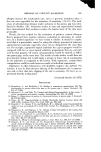
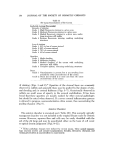
EVALUATION BY SLIT-LAMP TECHNIQUES 195 Table VII Evaluation of Slit Lamp Disadvantages Cost of equipment Greater time expenditure for examination Advantages Detection and scoring of minute pathologies not possible with macroscopic examination Examination of anterior chamber, lens, vitreous, and retina Greater flexibility in determining degrees of p•thologic changes, i.e., easier to develop concentration response rela- tionships and/or differences between formulations Reduced investigator-to-investigator variabfiity Photographic recording of observations possible during ex- amination An example of the type of data derived with use of the grading scales and slit-lamp examination is presented in Table VI. Three commercially available shampoos were evaluated for ocular irritation potential in rabbit eyes. The data were tabulated to demonstrate the severity (mean scores ) and frequency (incidence) of each ocular parameter. Based on these data, the investigator indicated that Shampoo B had the lowest potential for ocular irritation while Shampoo C had a high potential for ocular damage. In summary (Table VII), although there are disadvantages to the routine use of the slit lamp for examination of experimental animal eyes, we have found the techniques described in this text superior, in most instances, to macroscopic methods. ( Received June 20, 1972) I•EFERENCES (1) Draize, J. H., Woodard, G., and Calvery, H. O., Methods for the study of irritation and toxicity of substances applied topically to the skin and mucous membranes, J. Phar- raacol. Exp. Therap., 82, 377-90 (1944).
Purchased for the exclusive use of nofirst nolast (unknown)
From: SCC Media Library & Resource Center (library.scconline.org)