J. Soc. Cosmet. Chem., 25, 113-130 (March 1974) Some Problems on the Appraisal of the Skin Safety of Hexachlorophene FUJIO MORIKAWA, M.D., TOSHIAK[ KOBAYASHI, B.S., YASUHISA NAKAYAMA, B.S., YOSHIKO YOKOYAMA, B.S., MINORU FUKUDA, B.S., SHINOBU KATOH, B.A., and TOSHIAKI NAGURA, B.S.* Presented May 26, 1972, Seminar, Los Angeles, Calif. Synopsis-The SAFETY of the bactericide HEXACHLOROPHENE for use on the skin has been questioned in recent years. The authors have investigated primary IRRITA- TION, contact SENSITIZATION, PHOTOTOXICITY, and PHOTOSENSITIZATION with this chemical on animals. Results confirmed that hexachlorophene showed a higher degree of primary irritation than any other halogenareal compound tested in this study. Irritation from this chemical increased with time and reached a peak 96 to 120 hours following application. Moreover, there was a difference in the irritant reaction to this chemical depending upon the solvents used. In another study, photopatch tests of hexachlorophene were performed on guinea pigs and rabbits. A greater inflammatory reaction was observed at the irradiated site, as com- pared with the control site which had been treated topically with the chemical but with- out exposure to ultraviolet light. In addition, histological examination revealed dis- turbances of blood vessels apparently caused by topical application with hexachlorophene. INTRODUCTION Hexachlorophene (HCP) and other halogenated compounds active as bactericides have frequently been used in the preparation of deodorants and antiperspirants. Recently, it has been reported that bithionol and other com- pounds have the property of inducing a photoallergic reaction (1-10). As a result, emphasis has been placed on the necessity of appraising the safety of these bactericides for living organisms. The safety of HCP for the skin was reviewed by Gump (11) in 1969. Re- ports on the occurrence of sensitization (12-14) and photosensitization *Shiseido Laboratories, Yokohama, lapan.

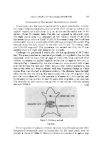
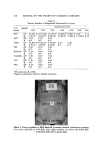
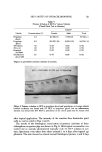
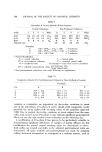
114 JOURNAL OF THE SOCIETY OF COSMETIC CHEMISTS (5, 8, 15--18) of HCP were presented. Generally speaking, however, it was concluded that HCP is a baeterieide having a wide safety margin. HCP has been used extensively as a baeterieide for over 20 years, without causing noticeable problems. This has been regarded as evidence that HCP is one of the safe bactericides. The authors studied the safety of HCP for the skin mostly in experimental animals, by examining the capacity of this chemical to induce primary irrita- tion, contact allergy, phototoxicity, and photoallergy. EXPERIMENTAL MATERIALS AND METHODS Determination of Primary Irritation Primary Irritation Comparison of primar? irritation between hexachlorophene and other halogenated compounds used as bactericides was done by an open patch test method on animals. The animals used were male albino guinea pigs of the Hartley strain weigh- ing 400-500 g and white male albino rabbits weighing 2,500-3,500 g. Hair on the back of the an:_mal •vas cut •vith electric hair clippers. A depilatory* containing calcium thioglycolate was immediately applied to this area for depilat•on. Twenty-four hours after depilation, the following compounds, dis- solved in acetone, were applied to the depilated area: hexachlorophene (0.01, 0.05, 0.1, 0.25, 0.5, 1, and 3%) 3,3',4',5-tetrachlorosalicylanide (TCSA) (0.1 0.25, 0.5, 1, and 3%) dichlorophene (DCP) [2,2'-methylenebis(4- ehlorophenol) ], 3,4',5-tribromosalicylanilide (TBS), bithionol [2,2'- thiobis (4,6-dichlorophenol) ], 3,4,4'-triehloroearbanilide (TCC), and 3- tritluoromethyl-4,4'-dichlmocarbanilidc (TFC) (0.5, 1, and 3%). Each chemical (0.03 ml) was applied to a circle on the back of the animals 1.5 cm in diameter. The sites of topical application were observed for the presence or absence of a skin reaction 24 and 48 hours after application. The intensity of skin reaction was graded in accordance with the criteria shown in Table I. *Shiseido Hair Remover, Shiseido Company, Ltd., Tokyo, Japan. Table I Evaluation of Skin Reaction No erythema 0 Very slight erythema 1 Well defined erythema 2 Moderate to severe erythema 3 Severe erythema to slight eschar formation 4
Purchased for the exclusive use of nofirst nolast (unknown)
From: SCC Media Library & Resource Center (library.scconline.org)