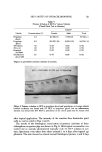
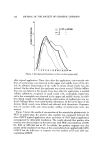
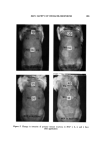
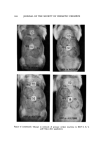
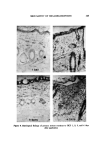
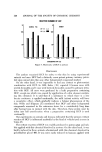
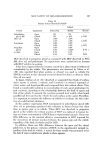
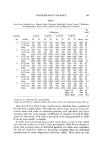
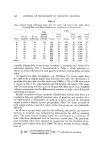
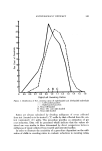
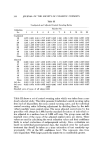
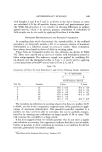
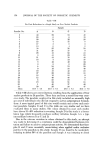
SKIN SAFETY OF HEXACHLOROPHENE 129 HCP dissolved in propylene glycol at a lower concentration than HCP dis- solved or suspended in any other vehicle tested. The irritant reaction to HCP was compared between humans and experi- mental animals. When propylene glycol was used as vehicle for HCP, irrita- tion was induced in human beings at a slightly lower concentration than in experimental animals. When any other vehicles were used, the irritant reac- tion to HCP was much more readily induced in experirnental animals than in human beings. The most intense primary irritant reaction to HCP was observed macro- scopically in experimental animals 4 to 5 days after topical application. When histological examination was carried out on the site of primary irritant reac- tion to HCP in experimental animals, some disturbances of the vascular wall and extravasation of erythrocytes were observed. Exposure to ultraviolet rays slightly intensified the primary irritant reac- tions of HCP. Neither contact sensitization nor photocontact sensitization of HCP was observed in any experimental animals. (Received December 13, 1972) REFERENCES (1) Jillson, O. F., and Baughman, R. D., Contact photodermatitis from bithionol, Arch. Dermatol., 88, 409 (1963). (2) Baughman, R. D., Contact photodermatitis from bithionol, Ibid., 90, 153 (1964). (3) Epstein, S., Photocontact dermatitis from bithiono], Ibid., 92, 591 (1965). (4) Harber, L. C., Harris, H., and Baer, R. L., Photoallergic contact dermatitis due to halogenated salicylanilides and related compounds, Ibid., 94, 255 (1966). (5) O'Quinn, S. E., Kennedy, C. B., and Isbell, K. tI., Contact photodermatitis due to bithionol and related compounds, J. Amer. Med. Ass., 199, 89 (1967). (6) Barry, J. N., Cross sensitivity between fenticlor and bithiono], Arch. Dermatol, 97, 497 (1968). (7) Morikawa, F., Metabolism of hapten in skin tissue, Jap. J. Clin. Dermatol., 25, 273 (1971). (8) Masuda, T., Honda, S., Nakauchi, Y., Ito, H., and Mizoguchi, M., Photocontact dermatitis due to bithionol, TBS, diaphene and hexachlorophene, Jap. J. Dermatol., 81, 566 (1971). (9) Fukuhara, N., Ishikawa, S., Nakayama, Y., Nagura, T., Fukuda, M., Yano, K., and Morikawa, F., Experimental studies on photosensitivity of halogenated phenol com- pounds, Skin Allergy News, 2, 26 (1971). (10) Nakayama, Y., Fukuda, M., Yano, K., and Morikawa, F., Experimental study on photosensitivity of 3,4',5-tribromosalicylanilide, Jap. J. Dermatol. 81, 538 (1971). (11) Gump, W. S., Toxicological properties of hexachlorophene, J. Soc. Cosmet. Chem., 20, 173 (1969). (12) Epstein, S., Hexachlorophene (G-11) in the treatment of eczematous dermatoses., AMA Arch. Dermatol., 71, 692 (1955). (13) K]igman, A.M., The identification of contact allergens by human assay. II. Factors influencing the induction and measurement of allergic contact dermatitis, J. Invest. Dermatol., 47, 375 (1966). (14) Kligman, A.M., The identification of contact allergens by human assay. III. The maximization test: A procedure for screening and rating contact sensitizers, Ibid., 47, 393 (1966).

130 JOURNAL OF THE SOCIETY OF COSMETIC CHEMISTS (15) Willis, I., and Kligman, A.M., The mechanism of photoallergic contact dermatitis, Ibid., 51, 378 (1968). (16) Barry, J. N., and Donald, G. F., Photocontact dermatitis from soap, Brit. J. Dermatol., 80, 711 (1968). (17) Willis, I., and Kligman, A.M., The mechanism of the persistent light reactor, J. Invest. Dezmatol., 51, 385 (1968). (18) Hather, L. C., Targovnik, S. E., and Baer, R. L., Studies on contact photosensitivity to hexachlorophene and trichlorocarbani]ide in guinea pigs and man, Ibid., 51, 373 (1968). (19) Baker, H., Ire, F. A., and Lloyd, M. J., Primary irritant dermatitis of the scrotum due to hexachlorophene, Azch. Dezmatol., 99, 693 (1969). (20) Nilzen, A., Some endocrine aspects of skin sensitization and primary irritation, J. Invest. Dermatol., 18, 7 (1952). (21) Ishihara, M., and Yoshii, T., Studies on various factors in primary irritant reaction of the skin, Jap. J. Clin. Dezmatol., 25, 1043 (1971). (22) Stott, C. W., Evaluation of the phototoxic potential of topically applied agents using longwave ultraviolet light, J. Invest. DcrmatoI., 55, 335 (1970).
Purchased for the exclusive use of nofirst nolast (unknown)
From: SCC Media Library & Resource Center (library.scconline.org)