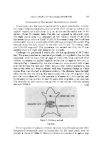
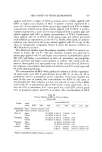
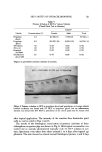
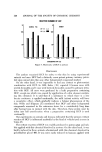
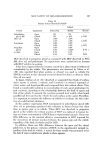
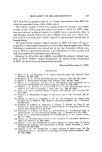
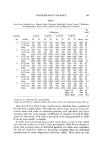
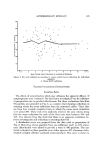
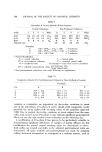
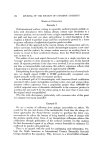
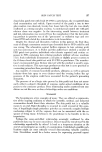
SKIN SAFETY OF HEXACHLOROPHENE 119 applied with 0.1% or higher o[ HCP in acetone and in rabbits applied with 0.05% or higher concentration of HCP. A positive reaction expressed by a score of 1-2 was noticed in all the gu'nea pigs applied with 0.5% or higher concentration of HCP and in all the rabbits applied with 3% HCP. A positive reaction expressed by a score of 1-2 was recognized both in guinea pigs and rabbits applied with 0.5% or higher concentration of TCSA. Furthermore, when applied with 3% of TCSA, all the guinea pigs and rabb'•ts presented such irritation as expressed by a score of 1-2. On the other hand, no primary irritation was observed at all in any animal applied with 3% of any of the other six halogenated compounds. Figure 2 shows the primary irritation to HCP dissolved in acetone. The effects of vehicles upon the primary irritation of HCP in animals are shown in Tables III and IV. The skin irritation reaction was observed in guinea pigs applied with 5% and higher concentrations in polyethylene glycol 400, 0.5% and higher concentrations in olive oil, petrolatum, and propylene glycol, and 0.1% and higher concentrations in acetone. The results were the same in closed patch as in open patch tests. In the case of olive oil, however, the minimum concentration that produced irritation was 0.5% in the open and 1% in the closed patch tests. The concentrations of HCP which produced irritation in all the experimen- tal guinea pigs were 10% in polyethylene glycol 400, 3% in olive oil, 3% in petrolatum, and 1% in propylene glycol, regardless of the kind of patch test used. In the case of acetone, this concentration was 0.25% by the open or closed patch test. Skin irritation reaction was noticed in some of the rabbits tested with 5% in polyethylene glycol 400 vehicle (open patch test), 1% in olive oil, 0.5% in petrolatum, 0.5% (open patch test) and 0.25% (closed patch test) in propylene glycol, and 0.1% in acetone. The concentrations of HCP Vehicle Appli- cation Table III Primary Irritation of HCP in Various Vehicles (Guinea Pig) Concentration (%)• 10.00 5.00 3.00 1.00 0.50 0,25 0.10 0.05 Polyethylene glycol 400 Olive oil Petrolatum Propylene glycol Acetone Open 5/5(1.2) 2/10(1.0) 0/10 Closed 5/5(1.4) 3/10(1,0) 0/10 Open Closed Open Closed Open Closed Open Closed 10/10(2.0) 3/10(1,3) 1/10(1.0) 0/10 10/10(2.0) 2/10(1.0) 0/10 10/10(1.6) 6/10(1.1) 3/10(1.0) 0/10 10/10(1.6) 4/10(1,2) 1/10(1.0) 0/10 10/10(2.0) 10/10(1,6) 0/10 10/10(1.8) 8110(1.5) 0/10 7/7(1.8) 5/5(1.6) 5/5(1.4) 1/5(1.0) 0/5 5/5(1.8) 5/5(1.4) 315(1.3) 1/5(1.0) 0/5 •Figures in parentheses indicate intensity of reaction.

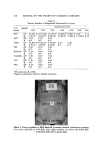
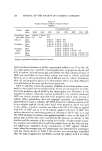
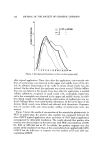
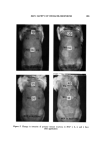
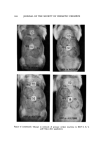
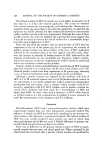
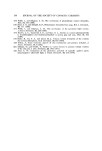
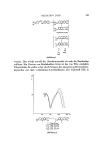
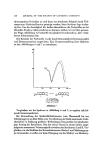
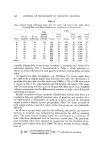
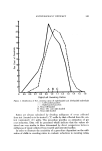
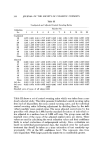
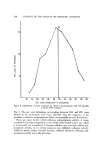
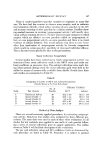
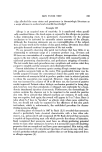
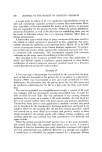
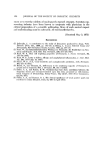
19.0 JOUBNAL OF THE SOCIETY OF COSMETIC CHEMISTS Table IV Primary Irritation of HCP in Various Vehicles (Rabbit) Vehicle Appli- Concentration (%)• cation 10.00 5.00 3.00 1.00 0.50 0.25 0.10 0.05 Polyethylene Open 1/5(1.0) 1/5(1.0) 0/5 glycol400 Closed 0/5 0/5 0/5 Olive oil Open 5/5(1.8) 1/5(1.0) 0/5 Closed 5/5(1.8) 1/5(1.0) 0/5 Petrolatum Open 4/5(1.75) 4/5(1.5) 3/5(1.3) 0/5 Closed 4/5(1.5) 4/5(1.5) 2/5(1.5) 0/5 Propylene Open 5/5(1.6) 2/5(1.0) 0/5 glycol Closed 5/5(2.0) 5/5(1.8) 1/5(1.0) 0/5 Acetone Open 5/5(1.8) 5/5(1.6) 4/5(1.0) 2/5(1.0) 0/5 Closed 5/5(1.8) 5/5(1.6) 4/5(1.25) 1/5(1.0) 0/5 aFigures in parentheses indicate intensity of reaction. which produced irritation in all the experimental rabbits were 3% in olive oil, 1% (open patch test) and 0.5% (closed patch test) in propylene glycol, and 0.5% in acetone. In both guinea pigs and rabbits, the skin irritation reaction of HCP was most likely to occur when acetone was used as vehicle, and least likely to occur when polyethylene glycol 400 was used as vehicle. Petrolatum, olive oil, and propylene glycol were intermediate. There was little difference in results between the open and the closed patch test. Table V and Fig. 3 show the primary irritation of hexachlorophene exam- ined by closed patch test on human beings. It was not infrequent to see irrita- tion from propylene glycol itself by the closed patch test. Therefore, it was regarded as positive when the reaction produced by the solution containing HCP was clearly stronger than that from propylene glycol alone serving as vehicle. When petrolatum, olive oil, isopropyl myristate, and polyethylene glycol 400 were used as vehicles, 10% HCP showed no irritation reaction at all in any subjects applied. On the other hand, xvhen propylene glycol was used as the vehicle, a positive reaction was observed in 34 of 72 subjects applied with 0.3% of HCP and in 17 of 72 subjects applied w•:th 0.1% of HCP. The authors observed an interesting pattern of irritation to HCP. One, 3, 5, and 10% HCP solutions in acetone were applied topically to sites on the back of 5 guinea pigs, and the sites were examined for the presence or absence of skin reaction and the intensity of the reaction for 2 weeks. A higher grade of posi- tive reaction was noticed after 2 and 3 days rather than one day after the top- ical application, regardless of the concentration of HCP applied. Further- more, when the average score of 5 guinea pigs was determined in accordance with the criteria shown in Table I, the reaction was increasingly intensified after the topical application and finally reached the highest level 4 to 5 days
Purchased for the exclusive use of nofirst nolast (unknown)
From: SCC Media Library & Resource Center (library.scconline.org)