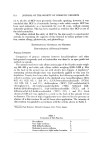
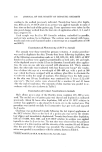
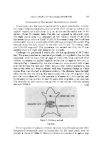
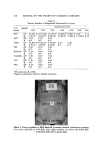
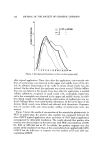
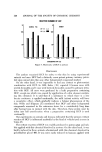
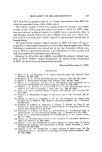
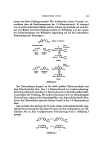
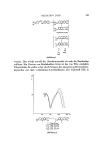
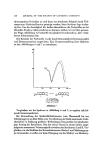
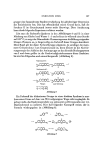
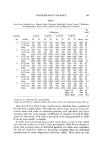
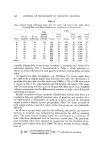
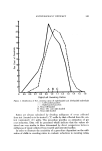
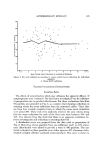
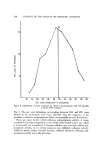
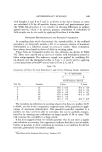
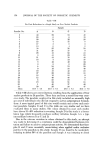
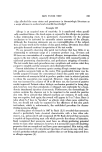
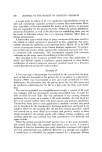
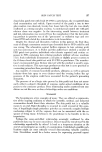
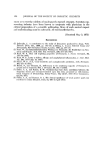
ANTIPERSPIRANT EFFICACY 145 10' A 2 3 • • • f • • 1•) 11 11 Mean Oontrol Sweat Oollections in Hundreds of Milligrams Figure 2. Per cent reduction in s•veating rs. mean control s•veat collections oeor individual panelists A. Mean 39.0% reduction FACTORS INFLUENCING EFFECTIVENESS Sweating Rates The effects of several factors which may influence the apparent efficacy of antiperspirants were evaluated. The first factor investigated was the influence of perspiration rate on product effectiveness. For these evaluations data from 89 panelists are presented in Fig. 2, as a scatter chart showing reductions in sweating versus the sweat collections from the untreated axillae. These data are from four recently completed tests in which the mean sweat reductions were about 39%. These tests were randomly selected, the only criteria being that the mean reductions for each of the four tests were between 38% and 41%. It is obvious from this chart that there is no apparent correlation be- tween sweating rate and reductions in sweating observed. A distribution curve was prepared from the data used in preparation of Fig. 2. Data from eleven panelists from one additional study on 10% alumi- num chlorohydrol were added to provide a total of 100 panelists. The ma- terials evaluated on these panelists were either aqueous 10% aluminum chlor- ohydrol or highly effective marketed aerosol products. This curve is shown in

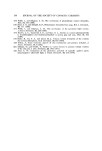
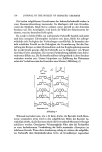
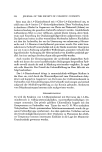
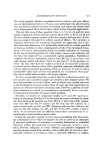
146 JOURNAL OF THE SOCIETY OF COSMETIC CHEMISTS 10, A 1'0 1'5 2'0 2• 3•) •5 ,•0 4'5 5•) 5'5 •0 •5 Per Cent Reduction in Sweating Figure 3. Distribution of sweat reductions by effective antiperspirants with 100 panelists A. Mean 39.0% reduction Fig. $. The per cent reductions in sweating between 10% and 65% were plotted at 5% increments. This curve indicates that the responses of the panelists to effective antiperspirants follow an essentially normal distribution. There are many factors which influence antiperspirant activity. A minor variation in formula composition is one of the most critical and is one which is occasionally not recognized. A formula additive may seriously inhibit anti- perspirant activity, or in certain instances may definitely enhance activity. Additives which reduce formula irritancy without adversely affecting anti- pcrspirant activity are in this last class.
Purchased for the exclusive use of nofirst nolast (unknown)
From: SCC Media Library & Resource Center (library.scconline.org)