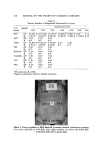
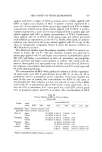
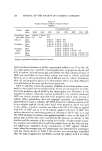
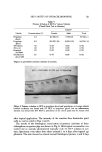
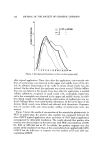
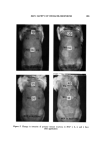
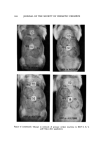
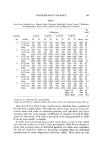
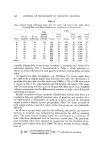
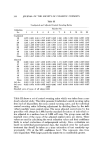
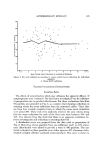
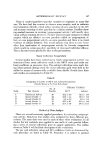
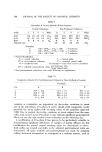
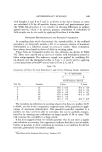
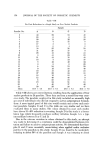
ANTIPERSPIRANT EFFICACY 151 25% of the panelists. Distinct correlation between irritancy and poor efficacy •vas not demonstrated, ho•vever. That is, some individuals who showed irrita- tion also showed marked reductions in sweating, and others who showed little or no antiperspirant effect did not show irritation from the patch applications. The fact that seven of these panelists (Nos. 1, 3, 7, 9, 11, 18, and 24) show similar responses to all four products, and six others ( Nos. 8, 10, 13, 15, 19, and 23) show similar responses to three of the four samples indicates that all sam- ples are properly formulated to achieve expected efficacy. The variations in responses observed in the remaining 12 panelists are apparently due to spe- cific individual differences. It is particularly inadvisable to exclude panelists on the basis of failure to sho•v antiperspirant activity ff the developed formu- lation is for use in substantiating claims for specific reductions in sweating. By the use of selected panelists we could achieve mean sweat reduction val- ues twice that obtained from a nonselected random population. Panelists are excluded •vho fail to consistently yield at least 100 mg of sweat from each axilla during control collections. These are less than 1% of the panelists en- rolled. The only other basis for exclusion is the lack of reasonable uniformity in control sweat collection ratios. These probably represent individuals who will not abide by standard precautions which are necessary in order to obtain reproducible values and very few such panelists are encountered. Most pane- lists can be readily indoctrinated in the proper regimen. We have occasionally heard the comment that the outlined procedures are not accurate since submitted samples do not show a dose response curve. We have demonstrated in several studies, most of which were carried out early in the development of our procedure about 15 years ago, that typical dose re- sponses are obtained with active aluminum salts. However, a plateau of maxi- mum reductions is reached at concentrations considerably below concentra- tions present in essentially all typical market products. Recently, •ve ca•ied out comparative studies on 7% and 10% aqueous so- lutions of aluminum chlorohydrol. In this study the mean reductions in sweat- ing determined on 24 panelists one hour after 2, 3, and 4 once-daily applica- tions were 26% from the 7% solution and 45% from the 10% solution. In a similar recent study on 10% and 20% aluminum chlorohydrol solutions, the value for the 10% solution was 42% and 39% for the 20% solution. Unfortu- nately, we do not have data on sufficient intermediate concentrations to ac- curately plot a concentration response curve. During the past three months we have been accumulating data from pane- list questionnaires from •vhich we hoped to be able to arrive at an estimation of practical significance of reductions in sweating determined in controlled laboratory studies. Our goals were to ansivet two questions: Is there a corre- lation between milligrams of sweat collected and panelist complaints of sweating during normal daily activities, and at what level of laboratory dem- onstrated reduction in sweating is there a noticeable difference in axillary

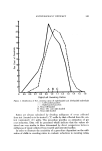
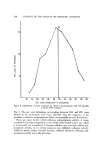
152 JOURNAL OF THE SOCIETY OF COSMETIC CHEMISTS sweating of the panelists during their daily activities? We have accumulated reams of questionnaires, but little usable data, since most of the panelists did not report noticeable sweating during their daily activity. We intend to continue this data accumulation during the forthcoming summer. The limited responses of noticed differences in axillary sweating have shown, in general, less sweating from treated axillae. The data accumulated are not sufficient to comprise a valid statistical analysis. It is contemplated that when a sufficient compilation of data is achieved it will be presented in an additional article. SU1VI•VIARY Portions of data accumulated during the past year in the course of numer- ous antiperspirant efficacy studies were presented. It was demonstrated that: 1. Reductions in sweating are independent of the sweating rate of the panelists. 2. Sweat output from the two axillae is slightly higher from the dominant hand axfila. 3. The response of panelists to antiperspirant activity of effective products follows an essentially normal curve distribution. 4. Evaluations made at 100øF are about the same as those made during ambient conditions. 5. The axillary sweating ratios are much more uniform than are sweating rates when sweat collections are made repeatedly from the same panelist. 6. Sweat reductions are essentially the same when calculations are based on sweating rates and shifts in sweating ratios. Confidence limits of values based on ratios are much narrower than those based on sweating rates. 7. Marked variations are shown in the panelist-to-panelist response to ap- plication of antiperspirant formulations these variations are not uniform from one formulation to another. (Received May 4, 1973) REFERENCES (1) Wada, Masao, Sudorific action of adrenalin on the human sweat glands and determi- nation of their excitability, Science, 111, 376 (1950). (2) Brun, Robert, Studies on perspiration, J. Soc. Cosmet. Chem., 10, 70-7 (1959). (3) Malmo, R. B., Finger-sweat prints in the differentiation of low and high incentive, Psychophysiology, 1, 231-40 (1965). (4) J.ames, R. J., A new and realistic electronic approach to the evaluation of antiperspirant activity, J. Soc. Cosmet. Chem., 17, 749-67 (1966). (5) Jenkins, J. W., Oullette, P. A., Healy, D. J., and Della Lana, Charles, A technique for perspiration measurement, Proc. Sci. Sect. Toilet Goods Ass., 42, 19.-5 (1964). (6) Fredell, W. G., and Read, R. R., Antiperspirants-axillary method of determining effectiveness, Ibid., 15, 23-7 (1951). (7) Daley, E. W., Antiperspirant testing: a comparison of two methods, Ibid., 30, 1-6 (1958). (8) Wooding, W. M., Interpretation of gravimetric axillar antiperspirant data, Proc. Joint Conf. Cosmet. Sci., Washington, D.C., 91-105 (1968).
Purchased for the exclusive use of nofirst nolast (unknown)
From: SCC Media Library & Resource Center (library.scconline.org)