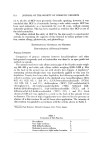
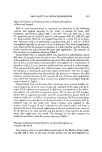
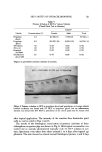
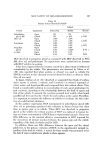
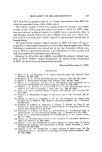
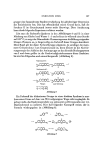
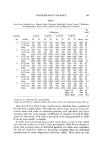
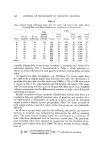
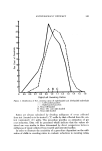
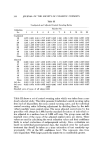
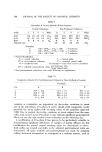
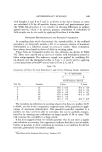
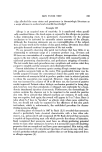
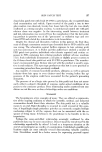
SKIN SAFETY OF HEXACHLOBOPHENE 127 Table VI Primary Irritant Threshold of HCP Subject Vehicle Application Guinea Pig Rabbit Human Polyethylene Open 5% 5% glycol 400 Closed 5% 10% Olive oil Open 0.5% 1.0% Closed 1.0% 1.0% Petrolatum Open 0.5% 0.5% Closed 0.5% 0.5% Propylene Open 0.5% 0.5% glycol Closed 0.5% 0.25% Acetone Open 0.1% 0.1% Closed 0.1% 0.1% ß o . lO% o . . lO% lO% ß , o 0.1% ß o o N.D. HCP dissolved in propylene glycol as compared with HCP dissolved in PEG 400, olive oil, and petrolatum. No experiments were carried out on humans with HCP solution in acetone. It has been reported that the reaction caused by a skin irritant is influenced considerably by the vehicle. This phenomenon was observed by Nilzen et al. (20) who reported that when acetone or ethanol was used as vehicle for DNCB, reactions to this chemical occurred about five times as often as when olive oil was used. In lapan, Ishihara et al. (21) dissolved or suspended four kinds of surface active agents (1 anionic, 1 cationic, and 2 nonionic) in ethanol, isopropyl al- cohol, water, and liquid paraffin and compared their skin irritant effects. They found a considerable variation in concentration of each agent producing irri- tant reactions, according to the relationship between the kind of agent and that of the vehicle. In general, the reaction occurred least readily when liquid paraffin had been used as the vehicle for each surface active agent. Therefore, it is important to examine the influence of vehicles to evaluate the skin irrita- tion of a mild irritant substance. In the authors' experiment, HCP incorporated in polyethylene glycol 400, olive oil, or petrolatum produced skin irritation in human beings less often than in guinea pigs or in rabbits. When HCP was dissolved in propylene glycol as the vehicle, the irritant reaction of HCP was induced in human be- ings at a lower concentration of HCP than in experimental animals. There was little diffcrenee in the minimal effective concentration of HCP required for the occurrence of irritant reaction between the guinea pig and the rabbit, regardless of the kind of vehicle used for HCP. In addition, there was little difference between the open and the closed patch test, in the primary irritation of HCP, in the experimental animals re- gardless of the kind of vehicle. A reason for these results was presumed to be the lack of minor sudoriferous glands in these species.

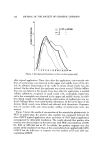
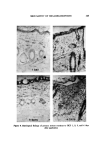
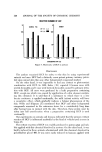
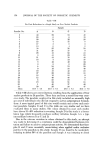
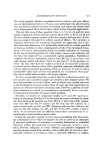
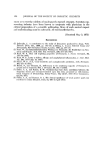
128 JOURNAL OF THE SOCIETY OF COSMETIC CHEMISTS The irritant reaction of HCP in animals was much higher in intensity 4 or 5 days than in 1 or 2 days after topical application. This result was obtained from animal experiments macroscopically and histologically. Microscopic ex- amination of the specimen taken 3 days after the application revealed that the epidermis was hardly affected, but that erythrocytes showed an extravascular outflow and the vascular walls were degenerated. Although the came of these specific reactions has not been clarified, the experimental result suggests that it may be necessary to observe the site of reaction for a considerably longer time after topical application of HCP. Stott (22) presented the negative data for phototoxicity of HCP from his experiment on the ear of the guinea pig. In our experiment, the intensity of positive irritant reaction was always higher at the sites of HCP application followed by the irradiation than at the sites applied with HCP alone. How- ever, the increase in intensity of irritant reaction to HCP influenced by the exposure of ultraviolet ray was remarkably low. Therefore, further examina- tion for the presence or absence of phototoxicity of HCP should be performed before any conclusion is drawn on this problem. Negative results of contact and photocontact sensitization of HCP in guinea pigs were obtained in our experiments. On the other hand, Harber et al. (18) obtained positive results from their experiment on 24 guinea pigs, observing 1 case of contact sensitization and t3 cases of photocontact sensitization. Although a positive reaction was induced by the challenge with 0.1% of HCP in 4 of 20 sensitized animals and in 13 of 20 photosensitized animals in our experiments, it was finally judged that neither contact nor photocontact sensitization had taken place, since a primary irritant reaction could be in- duced by application with 0.1% HCP solution, and no positive reaction oc- curred when challenge had been made by a concentration of HCP not higher than 0.05%. In short, when such a substance as HCP which induces an irritant reaction at a low concentration is applied, it seems necessary to study the concentration of the substance used for challenge. SD"IVIMARY Hexachlorophene (HCP) had a more potent primary irritancy effect upon experimental animals than any other halogenated compound studied. The influence of vehicle for HCP was found to be significant in the primary irri- tant rcaction to this chemical in experimental animals. The irritant reaction of HCP was more readily produced when acetone was used as vehicle than when polyethylene glycol 400 was used. A 50-fold difference in primary irri- tant threshold was noted between these two vehicles. There was no difference in the primary irritant reaction of HCP in experi- mental animals between open and closed patch test. When examined by the closed patch test on human skin, a primary irritant reaction was produced by
Purchased for the exclusive use of nofirst nolast (unknown)
From: SCC Media Library & Resource Center (library.scconline.org)