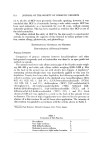
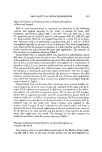
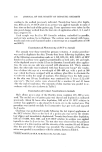
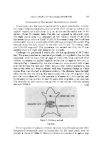
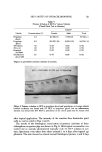
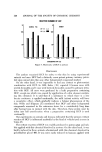
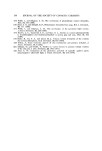
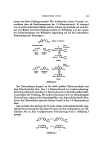
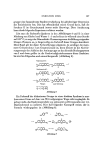
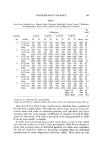
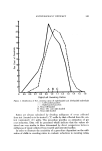
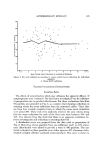
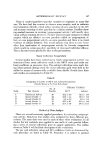
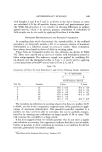
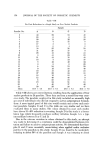
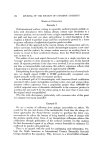
SKIN SAFETY OF HEXACHLOROPHENE 117 Examination o[ Photocontact Sensitization in Animals The animals were the same as mentioned for contact sensitization. Twenty- four hours following depilation, 0.05 ml of 9,% HCP solution in acetone was applied topically to a site about 9, x 9, cm in size on the nuchal area of the animal. About 30 minutes later, this site was exposed to ultraviolet rays. The light source used was composed of two Toshiba Model FL-20 BLB fluorescent lamps and two Model FL-20 SE fluorescent lamps (for irradiation of ultraviolet rays at a wavelength of 9,70-400 m/x) arranged alternately. The distance from the light source to the skin was 10 cm. The energy used was 1.18x 10⁸ ergs/cm •. This procedure was carried out daily for 5 con- secutive days per week and repeated for 9, weeks. Challenge was performed 9, weeks after the last application of HCP solu- tion. The same procedure as mentioned previously was applied to the skin for depilation. After 9,4 hours, 0.05 ml each of 0.001, 0.01, 0.05, and 0.1% HCP solution in acetone was applied topically to the sites arranged in two rows, as shown in Fig. 1. Immediately, the sites of one row were covered with alumi- num furl to keep the light out. Thirty minutes after topical application, the sites in the other row were irradiated with four fluorescent lamps to which a glass filter was attached to eliminate sunburn. The distance from the light source to the skin was 10 cm. The energy used was 1.19, x 108 ergs/cm •. The test sites were observed for the presence or absence of a skin reaction and the intensity of the reaction 9,4 and 48 hours after irradiation was recorded. The intensity of skin reaction was graded in accordance with the criteria shown in Table I. • •j• "• • SENSITIZED SITE ., Figure 1. Challenge method RESULTS The comparison of primary irritation between hexachlorophene and other halogenated compounds used as bactericides by the open patch tests on animals is shown in Table II. Primary irritation was observed in guinea pigs

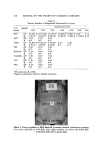
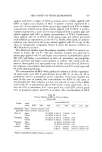
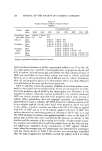
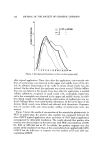
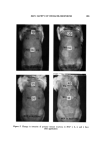
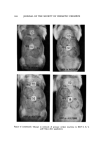
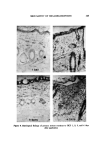
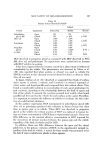
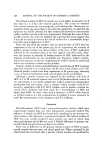
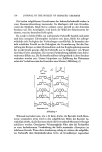
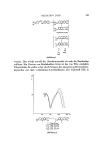
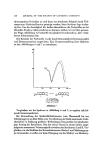
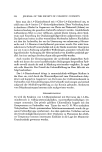
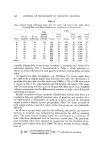
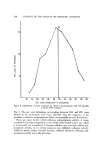
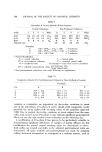
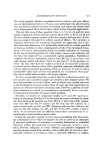
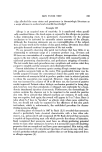
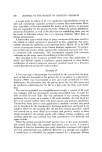
118 JOURNAL OF THE SOCIETY OF COSMETIC CHEMISTS Table II Primary Irritation of Halogenated Compounds in Acetone Com- Species • Concentration (%)• pound 3.00 1.00 0.50 0.25 0.10 0.05 0.01 HCP DCP TCSA TBS BithionoI Fentichlor TCC TFC GP 10/10(1•) 10/10(1.6) 10/10(1.4) 15/20(1.0) 6/20(1.0) 0/20 0/10 R 5/5(1.8) 8/10(1.6) 8/10(1.9) 6/10(1.0) 3/10(1.3) 1/10(2.0) 0/10 GP 0/lO 0/10 0/10 R O/5 O/5 O/5 GP 10/10(1.0) B/10(1.0) 4/10(1.0) 0/10 0/10 R 5/5(1.0) 3/5(1.0) 2/5(1.0) 0/5 0/5 GP 0/10 0/10 0/10 R O/5 O/5 O/5 GP 0/10 0/10 0/10 R O/5 O/5 O/5 GP 0/10 0/10 0/10 R O/5 O/5 O/5 GP 0/10 0/10 0/10 R 0/5 0/5 0/5 GP 0/10 0/10 0/10 R O/5 O/5 O/5 •GP, guinea pig R, rabbit. *igures in parentheses indicate intensity of reaction. Figure 2. Primary irritation to HCP dissolved in acetone (marked erythematous reactions were shown with 0.5% an 1.0% HCP, and a slight erythema was shown with 0.25% HCP in the open patch test on guinea pigs)
Purchased for the exclusive use of nofirst nolast (unknown)
From: SCC Media Library & Resource Center (library.scconline.org)