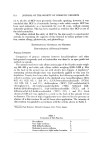
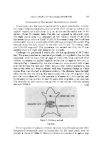
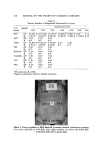
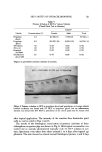
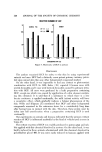
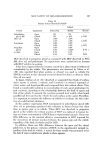
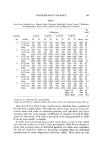
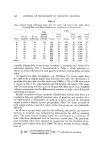
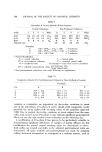
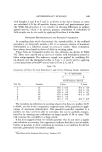
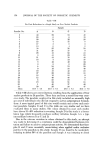
SKIN SAFETY OF HEXACHLOROPHENE 115 Effect of Vehicles on Primary Irritation of Hexachlorophene in Man and Animals HCP in such concentrations as indicated was dissolved in the following vehicles and applied topically to the backs of animals 24 hours after depilation: polyethylene glycol 400, 5 and 10% olive oil• 0.25, 0.5, 1, and 3% propylene glycol, 0.25, 0.5, and 1% and acetone, 0.05, 0.1, 0.25, 0.5, and 1%. Each solution (0.03 ml) was applied topically to a circle 1.5 cm in diam- eter. Moreover, 0.03 g of petrolatum containing 0.25, 0.5, 1, and 3% of HCP was applied topically to an area 1.5 cm in diameter. The sites of application were observed for the presence or absence of a skin reaction and the intensity of the reaction was noted 24 and 48 hours after application. The intensity of skin reaction was graded as shown in Table I. Closed Patch Test on Animals-HCP was dissolved in polyethylene glycol 400, olive oil, propylene glycol, and acetone. Hexachlorophene was also mixed with petrolatum in the concentrations indicated. Then 0.5 ml of each test solu- tion or 0.5 g of petrolatum containing HCP was applied on a round piece of absorbent cloth 1.5 cm in diameter which had been attached to adhesive tape. This was used for the patch test. Adhesive tapes were applied immediately to the animal as a closed patch and kept in place for 24 hours. The sites of appli- cation of closed patches were observed for the presence or absence of a skin reaction, and the intensity of the reaction 24 and 48 hours after application was noted. The intensity of skin reaction was graded in accordance with the criteria shown in Table I. Closed Patch Test on Humans-The volunteers were normal healthy hu- man beings from 18 to 34 years of age and consisted of 25 males and 42 fe- males. HCP solutions were prepared in different concentrations in the follow- ing vehicles: 0.1 and 0.3% in propylene glycol, 10% in olive oil, 10% in petro- latum, 10% in isopropyl myristate, and 10% in polyethylene glycol. Each test solution (0.05 ml) or 0.05 g of petrolatum containing HCP and petrolatum were applied on round pieces of absorbent cloth 1.5 cm in diameter held by adhesive tape for the patch test. These patches were applied to the surface of the forearm of each volunteer for the closed patch, and kept in place for 24 hours. The sites of application of the test materials were observed for the presence of a skin reaction and the intensity of the reaction 24 and 48 hours after application was noted. The intensity of the skin reaction was graded in accordance with the criteria shown in Table I. Changes in Primary Irritant Reaction of Hexachlorophene on Animals with Time The animals used were male albino guinea pigs of the Hartley strain weigh- ing 400-500 g. Hair on the back of each animal was cut and depilated ac-

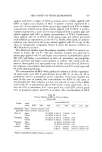
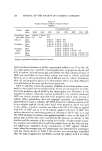
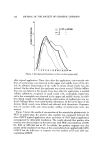
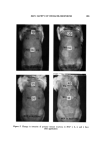
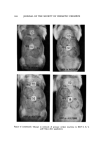
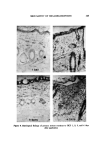
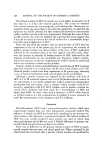
116 JOURNAL OF THE SOCIETY OF COSMETIC CHEMISTS cording to the method previously indicated. Twenty-four hours after depila- tion, 0.03 ml of a 1% HCP solut'_on in acetone was applied topically to each of four sites on the back of the guinea pig. Tissue spedmens were taken by the skin punch biopsy method from the four sites of application after 1, 2, 3, and 4 days, respeet'_vely. Each sample was fixed in 10% formalin solution, embedded in paraffin, and cut into sections 7/x in thickness. The sections were stained with hema- toxylin and eosin and examined under a microscope at a magnification of 100 and 400 X. Examination of Phototoxicity of HCP in Animals The animals were those tested for primary irritation. A similar procedure was used to depilatate the skin. Twenty-four hours following depilation, two of the following concentrations such as 1, 0.5, 0.25, 0.1, 0.05, 0.01% of HCP dissolved in acetone were applied symmetrically on both sides, left and right, of the depilated area to circles 1.5 cm in diameter. Immediately after applica- tion, the area on one side was covered with aluminum foil. Thirty minutes later, the other side was irradiated with four fluorescent lamps* (for irradia- tion of ultrav'•clet rays at a wavelength of 300-400 mR, with a peak at 360 m/•) xvhieh had been e(luipped with an ordinary glass filter to eliminate the w,•velenc th vlthin the range of sunburn. The distance from the light soume to the skin was 10 cm. Irradiation was continued for 3 hours (1.12x 10 s erRs/era2. The test circles were observed for a reaction 24 and 4S hours after the end of irrad ation, The intensity of skin reaction was graded in ac- cordance xvith the criteria shown in Table I. Examination of Contact Sensitization in Animals Male albino gu'nea pigs of the Hartley strain weighin• 400-500 g were used. The nuchal area of guinea pigs was shaved and dipilated as indicated previously. About 24 hours after dcpilation, 0.05 ml of 2% HCP solution in acetone was applied to a site about 2 x 2 cm in size in the nuehal area. This procedure was carried out daily for 5 consecutive days per week and repeated for 2 •veeks. Challenge was performed 2 weeks following the last topical application of the HCP solution. Hair on the back of a guinea pig was cut by the electric hair dipper and immediately depilatated. Twenty-four hours after depilation, 0.05 ml of 0.001, 0.01, 0.05, and 0.1% HCP solution in acetone was applied topically to sites 2 x 2 em in s ze. The test sites were observed for the presence or absence of a skin reaction and the intensity of the reaction 24 and 48 hours after the procedure of challenge was recorded. The intensity of the skin re- action was graded in accordance with the criteria shown in Table I. *Toshiba Model FL-20 BLB, 72 Horikawa-eho, Kawashi, Japan.
Purchased for the exclusive use of nofirst nolast (unknown)
From: SCC Media Library & Resource Center (library.scconline.org)