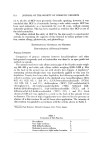
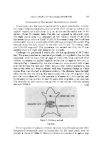
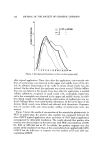
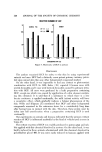
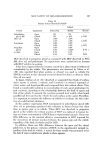
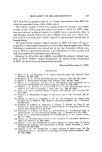
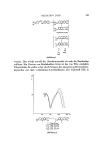
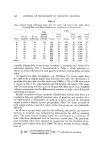
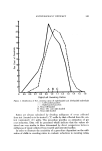
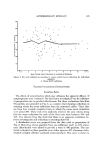
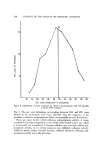
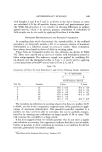
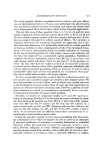
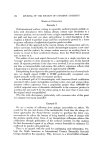
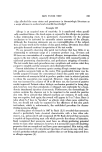
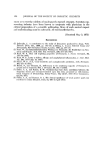
126 JOURNAL OF THE SOCIETY OF COSMETIC CHEMISTS REACTION NUMBER OF HCP GUINEA PIG '1 100- UV (-I • •1 RABBIT UV (+l I lOO 1.00 0.50 0.25 0.10 0.05 1.00 0.50 0.25 0.10 0.05 CONCENTRATION (%) Figure 7. Phototoxity of HCP in acetone DISCUSSION The authors examined HCP for safety to the skin by using experimental animals and man. HCP had a distinctly more potent primary irritaney poten- tial upon animal skin than any other halogenated compound studied. On the other hand, it was impossible to find any contact or photocontact sensitization with HCP. In 1969, Baker (19) reported 9 human cases with scrotal dermatitis and 1 case with buttock dermatitis caused by primary irrita- tion with HCP. All cases were produced by a bath preparation containing HCP, except one which was caused by application of a skin cleanser contain- ing this chemical. It is said that ff a substance to which there is a low barrier resistance is applied continually, the mild irritant activity will have a cumulative effect, which gradually induces a fatigue phenomenon of the skin. Willis and Kligman (17) mentioned that HCP and other halogenareal compounds remained in the cutaneous tissue for a considerably long time after having been in contact with the skin. Therefore, these points must be taken into full considcration •vhen a preparation containing HCP is used continually. Our experiments on animals and humans indicated that the primary irritant reaction of HCP is influenced markedly by the kind of vehicle used as seen in Table VI. The irritant reaction of HCP was readily produced in guinea pigs and rab- bits applied with this chemical dissolved in acctone. On the other hand, it was hardly induced in those animals administered with this chemical dissolved in polyethylene glycol 400. It was more easily induced in humans applied with

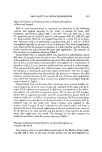
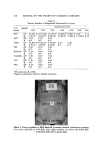
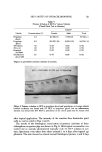
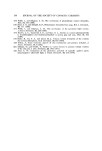
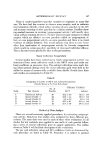
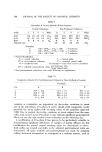
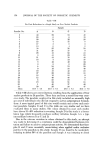
SKIN SAFETY OF HEXACHLOBOPHENE 127 Table VI Primary Irritant Threshold of HCP Subject Vehicle Application Guinea Pig Rabbit Human Polyethylene Open 5% 5% glycol 400 Closed 5% 10% Olive oil Open 0.5% 1.0% Closed 1.0% 1.0% Petrolatum Open 0.5% 0.5% Closed 0.5% 0.5% Propylene Open 0.5% 0.5% glycol Closed 0.5% 0.25% Acetone Open 0.1% 0.1% Closed 0.1% 0.1% ß o . lO% o . . lO% lO% ß , o 0.1% ß o o N.D. HCP dissolved in propylene glycol as compared with HCP dissolved in PEG 400, olive oil, and petrolatum. No experiments were carried out on humans with HCP solution in acetone. It has been reported that the reaction caused by a skin irritant is influenced considerably by the vehicle. This phenomenon was observed by Nilzen et al. (20) who reported that when acetone or ethanol was used as vehicle for DNCB, reactions to this chemical occurred about five times as often as when olive oil was used. In lapan, Ishihara et al. (21) dissolved or suspended four kinds of surface active agents (1 anionic, 1 cationic, and 2 nonionic) in ethanol, isopropyl al- cohol, water, and liquid paraffin and compared their skin irritant effects. They found a considerable variation in concentration of each agent producing irri- tant reactions, according to the relationship between the kind of agent and that of the vehicle. In general, the reaction occurred least readily when liquid paraffin had been used as the vehicle for each surface active agent. Therefore, it is important to examine the influence of vehicles to evaluate the skin irrita- tion of a mild irritant substance. In the authors' experiment, HCP incorporated in polyethylene glycol 400, olive oil, or petrolatum produced skin irritation in human beings less often than in guinea pigs or in rabbits. When HCP was dissolved in propylene glycol as the vehicle, the irritant reaction of HCP was induced in human be- ings at a lower concentration of HCP than in experimental animals. There was little diffcrenee in the minimal effective concentration of HCP required for the occurrence of irritant reaction between the guinea pig and the rabbit, regardless of the kind of vehicle used for HCP. In addition, there was little difference between the open and the closed patch test, in the primary irritation of HCP, in the experimental animals re- gardless of the kind of vehicle. A reason for these results was presumed to be the lack of minor sudoriferous glands in these species.
Purchased for the exclusive use of nofirst nolast (unknown)
From: SCC Media Library & Resource Center (library.scconline.org)