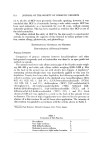
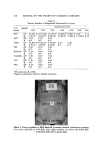
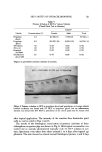
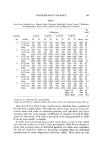
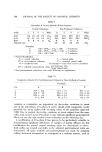
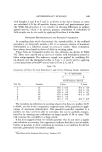
114 JOURNAL OF THE SOCIETY OF COSMETIC CHEMISTS (5, 8, 15--18) of HCP were presented. Generally speaking, however, it was concluded that HCP is a baeterieide having a wide safety margin. HCP has been used extensively as a baeterieide for over 20 years, without causing noticeable problems. This has been regarded as evidence that HCP is one of the safe bactericides. The authors studied the safety of HCP for the skin mostly in experimental animals, by examining the capacity of this chemical to induce primary irrita- tion, contact allergy, phototoxicity, and photoallergy. EXPERIMENTAL MATERIALS AND METHODS Determination of Primary Irritation Primary Irritation Comparison of primar? irritation between hexachlorophene and other halogenated compounds used as bactericides was done by an open patch test method on animals. The animals used were male albino guinea pigs of the Hartley strain weigh- ing 400-500 g and white male albino rabbits weighing 2,500-3,500 g. Hair on the back of the an:_mal •vas cut •vith electric hair clippers. A depilatory* containing calcium thioglycolate was immediately applied to this area for depilat•on. Twenty-four hours after depilation, the following compounds, dis- solved in acetone, were applied to the depilated area: hexachlorophene (0.01, 0.05, 0.1, 0.25, 0.5, 1, and 3%) 3,3',4',5-tetrachlorosalicylanide (TCSA) (0.1 0.25, 0.5, 1, and 3%) dichlorophene (DCP) [2,2'-methylenebis(4- ehlorophenol) ], 3,4',5-tribromosalicylanilide (TBS), bithionol [2,2'- thiobis (4,6-dichlorophenol) ], 3,4,4'-triehloroearbanilide (TCC), and 3- tritluoromethyl-4,4'-dichlmocarbanilidc (TFC) (0.5, 1, and 3%). Each chemical (0.03 ml) was applied to a circle on the back of the animals 1.5 cm in diameter. The sites of topical application were observed for the presence or absence of a skin reaction 24 and 48 hours after application. The intensity of skin reaction was graded in accordance with the criteria shown in Table I. *Shiseido Hair Remover, Shiseido Company, Ltd., Tokyo, Japan. Table I Evaluation of Skin Reaction No erythema 0 Very slight erythema 1 Well defined erythema 2 Moderate to severe erythema 3 Severe erythema to slight eschar formation 4

SKIN SAFETY OF HEXACHLOROPHENE 115 Effect of Vehicles on Primary Irritation of Hexachlorophene in Man and Animals HCP in such concentrations as indicated was dissolved in the following vehicles and applied topically to the backs of animals 24 hours after depilation: polyethylene glycol 400, 5 and 10% olive oil• 0.25, 0.5, 1, and 3% propylene glycol, 0.25, 0.5, and 1% and acetone, 0.05, 0.1, 0.25, 0.5, and 1%. Each solution (0.03 ml) was applied topically to a circle 1.5 cm in diam- eter. Moreover, 0.03 g of petrolatum containing 0.25, 0.5, 1, and 3% of HCP was applied topically to an area 1.5 cm in diameter. The sites of application were observed for the presence or absence of a skin reaction and the intensity of the reaction was noted 24 and 48 hours after application. The intensity of skin reaction was graded as shown in Table I. Closed Patch Test on Animals-HCP was dissolved in polyethylene glycol 400, olive oil, propylene glycol, and acetone. Hexachlorophene was also mixed with petrolatum in the concentrations indicated. Then 0.5 ml of each test solu- tion or 0.5 g of petrolatum containing HCP was applied on a round piece of absorbent cloth 1.5 cm in diameter which had been attached to adhesive tape. This was used for the patch test. Adhesive tapes were applied immediately to the animal as a closed patch and kept in place for 24 hours. The sites of appli- cation of closed patches were observed for the presence or absence of a skin reaction, and the intensity of the reaction 24 and 48 hours after application was noted. The intensity of skin reaction was graded in accordance with the criteria shown in Table I. Closed Patch Test on Humans-The volunteers were normal healthy hu- man beings from 18 to 34 years of age and consisted of 25 males and 42 fe- males. HCP solutions were prepared in different concentrations in the follow- ing vehicles: 0.1 and 0.3% in propylene glycol, 10% in olive oil, 10% in petro- latum, 10% in isopropyl myristate, and 10% in polyethylene glycol. Each test solution (0.05 ml) or 0.05 g of petrolatum containing HCP and petrolatum were applied on round pieces of absorbent cloth 1.5 cm in diameter held by adhesive tape for the patch test. These patches were applied to the surface of the forearm of each volunteer for the closed patch, and kept in place for 24 hours. The sites of application of the test materials were observed for the presence of a skin reaction and the intensity of the reaction 24 and 48 hours after application was noted. The intensity of the skin reaction was graded in accordance with the criteria shown in Table I. Changes in Primary Irritant Reaction of Hexachlorophene on Animals with Time The animals used were male albino guinea pigs of the Hartley strain weigh- ing 400-500 g. Hair on the back of each animal was cut and depilated ac-
Purchased for the exclusive use of nofirst nolast (unknown)
From: SCC Media Library & Resource Center (library.scconline.org)