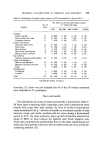
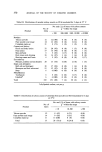
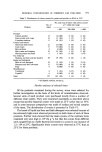
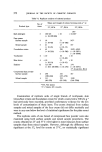
536 JOURNAL OF THE SOCIETY OF COSMETIC CHEMISTS Many non-polar preservatives are in common use and several authors have reported tlc methods for their detection. K6nig (1) separated and identified 16 halogenated aromatics. Karlskind, Valmalle and Wolff (2) quantitatively estimated six halogenated aromatics in soap by means of tlc and spectroscopic methods. Graber, Domsky and Ginn (3) identified zinc omadine and five halogenated aromatics in personal care products. Hexa- chlorophane, tribromosalicylanilide and trichlorocarbanilide have been detected and quantitatively determined by Schwarze (4) using tlc and ion exchange procedures. In addition, Porcaro and Shubiak (5) developed a uv/ liquid chromatographic method for the estimation of hexachlorophane in nanogram quantities using a dianisate ester derivative. Wolf and Senionow (6) detected six halogenated aromatics in soap using High Pressure Liquid Chromatography, although Irgasan CFa and trichlorocarbanilide were not separated. Little has been reported of the more difficultly-detected and quantified non-aromatic, polar, hydrophilic antimicrobials, particularly of the imidazolidinyl urea type. The first commercial member of this family is Germall 115.* This preservative is claimed to be a broad spectrum antimicrobial which is non- toxic, non-irritating and is particularly effective in emulsions and protein- containing formulations. It concentrates in the microbial supporting aqueous phase and its efficiency is not impaired by the presence of non-ionic emulsifiers and proteins. For quality control purposes and for the identification of antimicrobials in unknown formulations, it was necessary to develop a rapid and specific identification and quantification procedure for imidazolidinyl urea in a wide variety of personal care products. Because of the complexity of the formula- tions to which this preservative may be added, i.e. lotions, creams, hair conditioners, shampoos, deodorants etc., a comprehensive colorimetric method was impracticable. Thus tlc was used, since no sample preparation was necessary and the method was applicable to new products without change in the procedure. EXPERIMENTAL Apparatus Thin layer plates: 20 x 20 cm 0.25 mm Silica gel F,254 (Merck) used as re- ceived without further activation. * Sutton International, Boyelle, N.J., U.S.A.

TLC STUDY OF AN ANTIMICROBIAL PRESERVATIVE 537 Separating chambers: For 20 x 20 cm plates (Desaga). UV viewer for transmission: Blak-Ray Transilluminator (Shahdon Southern Instruments Ltd). UV viewer for reflectance: Blak-Ray Chromato-Vue (Shahdon Southern Instruments Ltd). Chromoscan densitometer with thin layer attachment: Joyce Loebl and Co. Ltd. Reagents Germall 115 (Imidazolidinyl urea). Flow solvent: chloroform: methanol: acetic acid: water 50: 30: 10: 10. Spray reagent: Ninhydrin--0.3 g ninhydrin in 95 ml n-butanol and 5 ml acetic acid. Procedure Sample application 5 •tl of a 10•o solution or suspension of the sample in methanol-water (70: 30) is applied using a Drummond Microcap pipette. When the samples examined are of a viscous nature, it is necessary to use the rubber bulb in order to fill and dispel the solutions. The size of the applied spot is normally 0.5 cm diameter. Sample and reference solutions are spotted alternately along the plate at a height of 2 cm from the edge of the plate. The spots are well dried after application using a warm-air dryer. Reference solutions Solutions are prepared of the product under test without imidazolidinyl urea and the product containing varying known quantities of imidazoli- dinyl urea from 0.1 •o to 0.6•o. Chamber A Desaga chamber for 20 x 20 cm plates is lined with filter paper, satur- ated in the flow solvent and allowed to equilibrate for 30 min before use. Development The chromatogram is allowed to develop for 50 rain, in which time the solvent front travels approximately 9 cm.
Purchased for the exclusive use of nofirst nolast (unknown)
From: SCC Media Library & Resource Center (library.scconline.org)