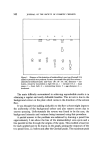
538 JOURNAL OF THE SOCIETY OF COSMETIC CHEMISTS Visualization The plate is briefly dried using a warm-air dryer and sprayed with the ninhydrin spray until well wetted. The plate is heated at a temperature of 150øC for 20 rain, allowed to cool and then viewed in uv light of 366 nm by transmission. The imidazolidinyl urea preservative is seen as two pale yellow fluorescent zones at Rfs of 0.27 and 0.35. Densitometric measurements These are performed on a Chromoscan densitometer with a thin layer attachment. The following operating conditions are used. Chromoscan: light source 12 V, 100 W, tungsten halide lamp, filter 3.00.D., optical wedge 0-0.50.D., gain 5, cam A. Thin layer attachment Light source uv mercury lamp type ST 75, aperture 1 mm x 17 mm, uv filter 300-400 nm between the light source and specimen, Kodak Wratten uv filter No. 2E between the specimen and detector, specimen expansion ratio 1: 1. The measurements are carried out using the reflectance mode. RESULTS AND DISCUSSION During the optimization of the method, various alternative systems were attempted. Laboratory-prepared plates were compared with precoated plates. The laboratory coated plates were prepared by mixing 52 g of Merck, Silica gel 'G' F254 with 110 ml of distilled water in a Waring blender and ten glass plates were then coated using a Camag automatic spreader set at a wet layer thickness of 300 •tm. The plates were left at room temperature for 20 min and finally dried for 1 h at 105øC in an air-blown oven. It was found that although satisfactory for samples containing 0.5•o imidazolidinyl urea, the laboratory-prepared plates did not display the necessary sensitivity at the lower concentrations of preservative. This may in part be due to the increased initial size of the applied spot on laboratory-prepared plates, which more readily absorb the viscous sample solutions than do the poly- vinyl alcohol bound precoated layers. Alumina laboratory-prepared plates were also examined but these failed to produce a satisfactory separation. On investigating various sample solutions, water alone usually yielded an excessive quantity of bubbles and a solution which was too viscous to pipette conveniently. The urea compound was found to be insufficiently soluble in methanol alone to be certain of recovery from emulsified products,

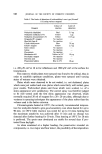
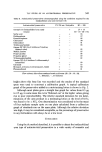
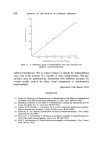
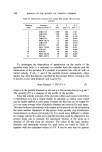
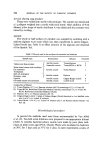
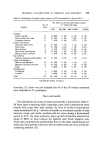
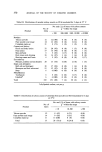
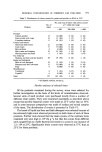
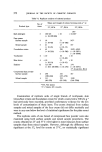
TLC STUDY OF AN ANTIMICROBIAL PRESERVATIVE 539 but as the preservative is up to 50•o aqueous soluble, the relatively small proportion of water in the mixture, methanol-water (70: 30) was found to be satisfactory and was used for all the products examined. It was shown to be essential to dry the spots well, after application, other- wise distortion and lack of sensitivity resulted. No decomposition of the imidazolidinyl urea zones was detected on heating the applied spots with a warm-air dryer, even when heated to a considerably greater extent than that required for a good chromatogram. As imidazolidinyl urea was almost insoluble in any solvent other than water, in which it was very soluble, the correct flow solvent required a certain water content but this needed to be modified by a non-polar solvent, chloroform was chosen as a convenient solvent after considering its position in the eluotropic series. These two solvents were rendered homogeneous by the mutually-miscible solvent methanol. A mixture of chloroform-methanol-water (45:45: 10) was found to give satisfactory Rf values but rather diffuse spots. As a change in pH will often produce a 'sharpening up' of diffuse spots, the following solvents were investigated. Chloroform-methanol-acetic acid-water (20: 30: 40: 10), although compacting the spots, produced an increase in Rf's and failed to separate the preservative from other components in the formulations. Chloroform- methanol-ammonia (50:40: 10) gave very low Rf's and even after the carefully-attempted removal of the ammonia, a poor background colour reduced the limits of detection considerably. Chloroform-methanol-acetic acid-water (50: 30: 10: 10) having a pH of 2.5 was found to yield compact zones separated from all other visible components. This solvent also gave a good separation of the imidazolidinyl urea components in Germall itself. A number of spray reagents were investigated, several being general reagents, whilst the remainder were intended to be more specific for the imidazolidinyl urea grouping. Of the twelve reagents tried, few successfully detected less than 25 gg of imidazolidinyl urea (Table I). Only Erlich's reagent and ninhydrin are sufficiently sensitive to detect 0.5•o imidazoli- dinyl urea in a product, i.e. 2.5 [tg for the loading used. The sensitivity of the ninhydrin spray is increased by a factor of ten when viewed by trans- mitted uv light of 366 nm. There seems to be little record of compounds which react with ninhydrin being more sensitively detected using uv light rather than colours visible in daylight. It seems likely that the difference in sensitivity of detection found when viewed by reflected and transmitted uv .light may be mainly due to the difference in intensity of light on the plate,
Purchased for the exclusive use of nofirst nolast (unknown)
From: SCC Media Library & Resource Center (library.scconline.org)