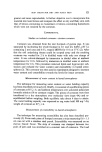
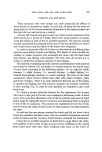
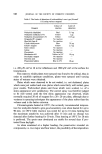
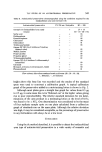
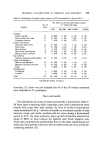
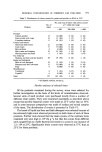
MICROBIAL CONTAMINATION OF COSMETICS AND TOILETRIES 571 Table V. Distribution of colony counts for yeasts and moulds on SDA at 25øC No. of Product items No. and (%) of items with colony counts g-• within the range 300 300-1000 1000 Powders Talcum powder 12 12 (100) 0 (0) 0 (0) Face powder and rouge 14 12 (86) I (7) 1 (7) Completemake-up 11 10 (91) 1 (9) 0 (0) Creams and lotions Hand and body lotion 21 21 (100) 0 (0) 0 (0) Face cream 17 17 (100) 0 (0) 0 (0) Skin perfume 6 6 (100) 0 (0) 0 (0) Hair cream and dressing 16 15 (94) 1 (6) 0 (0) Shaving cream and foam 6 5 (83) 0 (0) 1 (17) Eye make-up Mascara, eye liner and eye shadow 20 19 (95) 0 (0) 1 (5) Soaps and detergents Bath oil and detergent 18 15 (83) 1 (6) 2 (11) Shampoo and hair colourant 13 13 (100) 0 (0) 0 (0) Soap 6 6(100) 0 (0) 0 (0) Miscellaneous Toothpaste 6 5 (83) 1 (17) 0 (0) Lipstick* 6 6 (100) 0 (0) 0 (0) Total 172 162 (94) 5 (3) 5 (3) * cfu/lipstick surface, not per g. Further analyses of selected items Of the products examined during the survey, seven were selected for further investigation on the basis of the levels of contamination observed. Several units of each product were purchased locally from a number of different retail outlets. They were examined essentially as described above except that aerobic bacterial counts were made at 25øC rather than at 30øC and in some instances comparison was made of surface and mixed samples of the items. The distribution of counts is presented in Table VI. The brand of liquid eye liner and bath detergent were selected because of the extremely high count observed previously in both items of each of these products. Further tests showed that the mean counts of the replicate items examined were also high (c. 105 cfu g-•), but that the counts from different units ranged from no viable bacteria recovered to a count in one instance of 1.2 x 10 ø at 25øC. Significantly lower counts were observed at 37øC than at 25øC for these products.

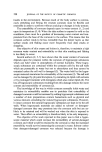
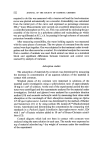
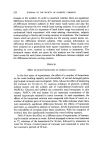
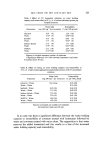
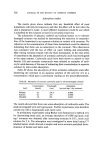
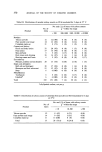
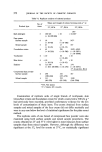
572 JOURNAL OF THE SOCIETY OF COSMETIC CHEMISTS Table VI. Replicate analyses of selected products Product type No. of items Mean and (range) of colony forming units g-• at 25 ø, PCA 37 ø, PCA 25 ø, SDA Bath detergent Face cream Surface sample Mixed sample Foundation cream 6 100 345 10 ( 10-205 000) 6 10 31 ( 10-40) ( 10-100) 6 21 13 ( 10-45) ( 10-35) 6 65 298 ( 10-210) ( 10-700) Toothpaste 6 10 10 (• 10-60) Skin lotion 6 • 10 33 ( 10-10) ( 10-95) Eyeliner 12 121 758 41 ( 10-1 460 000) ( 10-270) Compressed face powder Surface sample Mixed sample 24Y 10-80Y NT* NT 110Y, 65M• ( 10-320Y) ( 10-180M) 10 10 27Y ( 10-160Y) 37 ø Anaerobic, RCA 6 498 352 NT (280-660) (215-470) 6 311 225 1180 (90-550) (85-390) (360-2700) * NT, Not tested. ? Y=Yeasts M =moulds. Examination of replicate units of single brands of toothpaste, skin lotion/face cream and foundation cream for which counts below 300 cfu g-• had previously been recorded, provided confirmatory evidence for the low levels of contamination of these items. The counts obtained from surface samples and mixed samples of the face cream did not differ markedly and were in any case below the level of statistical significance for the plate count method. The replicate units of one brand of compressed face powder were also examined using both surface sample and mixed sample procedures. The counts obtained at 25 ø and 37øC were higher in most instances from surface samples than from mixed samples. However, although the difference was significant at the 5• level for counts at 37øC, no statistically significant
Purchased for the exclusive use of nofirst nolast (unknown)
From: SCC Media Library & Resource Center (library.scconline.org)