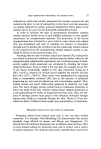
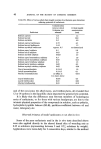
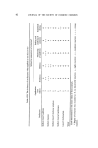
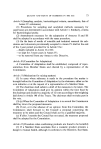
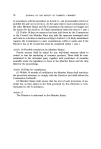
14 JOURNAL OF THE SOCIETY OF COSMETIC CHEMISTS sodium pyridinethione. Elution of the chromatographic paper spots with Rf value of 0.25 for spectrophotometric analysis, provided uv spectra with absorption peaks at wavelengths 217 and 265 mgm which was in agreement with the reference compound pyridine-N-oxide 2 sulphonic acid. Those spots with an Rf value of 0.42 absorbed at wavelengths 243 mgm, 282 mgm and 332 mgm in the uv spectrum confirming that the parent compound was excreted unchanged. Finally, the urine was assayed radiometrically before and after chloroform extraction to separate sodium pyridinethione from the aqueous soluble acid. Results from this separation indicated pyridine-N- oxide 2 sulphonic acid to be the major excretory product along with sodium pyridinethione in an 8:1 ratio. These findings regarding the metabolic fate of sodium pyridinethione in the rabbit support the conclusions of Min et al. (11) following a derreal study on rats and monkeys. However, there was no evidence to support the findings of Kabacoff and his co-workers (12) whose studies proposed a conjugated mechanism with glucuronic acid as the major metabolic pathway for intravenously-administered sodium pyridinethione to rabbits. SUMMARY Sodium pyridinethione was lethal to rabbits at 1 g kg 4 by i.v. infusion, the prime cause of death being respiratory failure. Respiratory and cardio- vascular effects were evident at 50 mg kg -•, a systemic dose level that was not approached by derma! application of 110 mg kg 4 to intact skin. From the findings on absorption, distribution and excretion there appeared to be no tissue concentration and the major proportion of material was excreted via the urine. The metabolic fate of sodium pyridinethione following per- cutaneous absorption in rabbits appears to be oxidation to pyridine-N- oxide-2-sulphonic acid. ACKNOWLEDGMENTS The authors gratefully acknowledge the advice given by Dr Basil Northover in planning and carrying out these studies thanks are also due to Olin Corporation, New Haven, Connecticut, and to Beecham Products, Brentford, England, for generous financial support. (Received: 6th June 1974)

EVALUATION OF SODIUM PYRIDINETHIONE 15 REFERENCES (1) Shaw, oe., Bernstein, J., Losee, Kathryn and Lott, W. A. Analogs of aspergillic acid. IV. Substituted 2-bromopyridine-N-oxides and their conversion to cyclic thiohydroxamic acids. J. Amer. Chem. $oc. 72 4362 (1950). (2) Cox, A. J. Pyridine N-Oxides and their uses. Mfg Chem. 28 463 (1957). (3) Brauer, E. W., Opdyke, D. L. and Burnett, C. M. The Antiseborrhoeic qualities of zinc pyrithione in a cream vehicle. I. A preliminary report. J. Invest. Dermatol. 47 174 (1966). (4) Opdyke, D. L., Burnett, C. M. and Brauer, E. W. The Antiseborrheeic qualities of zinc pyrithione in a cream vehicle. II. Safety evaluation. Fd Cosmet. ToxicoL 5 321 (1967). (5) Davson, H. and Danielli, J. F. The permeability of natural membranes 40-49 (1943) (Macmillan, New York). (6) Pinkus, H. J. Invest. Dermatol. 16 383 (1951). (7) Parekh, C., Min, B. H. and Golberg, L. Experimental studies of sodium pyridinethione. 1. Percutaneous absorption in laboratory animals. Fd Cosmet. Toxicol. 8 147 (1970). (8) Buckley, J.P. Int. J. Appl. Radiat. Isotop. 22 41 (1971). (9) Howleft, H. C.S., Sugden, J. K. and Van Abbe, N.J. Separation and identification of some pyridine derivatives. J. Chromatogr. 90 368 (1974). (10) Cronin, E. and Stoughton, R. B. Percutaneous Absorption. Regional variations and the effect of hydration and epidermal stripping. Brit. J. Dermatol. 74 265 {1962). (11) Min, B. H., Parekh, C., Golberg, L. and McChesney, E. W. Experimental studies of sodium pyridinethione. II. Urinary excretion following topical application to rats and monkeys. Fd. Cosmet. Toxicol. 8 161 (1970). (12) Kabacoff, B. L., Fairchild, C. M. and Burnett, C. Pyridinethione glucoronide as a meta- bolite of sodium pyridinethione. Fd Cosmet. Toxicol. 9 519 (1971).
Purchased for the exclusive use of nofirst nolast (unknown)
From: SCC Media Library & Resource Center (library.scconline.org)