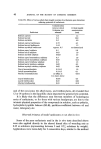
JOURNAL OF THE SOCIETY OF COSMETIC CHEMISTS The heavy metal salts of 2-pyridinethiol-l-oxide first synthesized by Shaw et al. (1) were first demonstrated to have antibacterial properties by Cox (2). Safety of the zinc salt was extensively studied by Brauer, Opdyke and Burnett (3) and by Opdyke et al. (4) and this compound is currently incorporated into several formulations for application to the scalp. Unlike the zinc salt, the sodium salt is readily water soluble, a property which, according to Davson and Danielli (5) can influence percutaneous absorption. The study reported here was intended: (1) to establish the threshold dose levels for signs indicative of sodium pyridinethione toxicity in acute studies (2) to determine the extent of percutaneous absorption and ensuing toxicity of sodium pyridinethione applied to abraded and intact skin (3) to record the distribution and metabolic fate of sodium pyridinethione following dermal application. MATERIALS AND METHODS Materials Sodium pyridinethione and pyridine-N-oxide-2-sulphonic acid were pro- vided by Olin Research Centre, New Haven, Conn. Sodium pyridinethione labelled with •5S was synthesized at Beecham Research Laboratories, Betchworth, Surrey, as a white powder, shown by tlc and ir examination to be 90•o pure. All other chemicals and solvents were of analytical reagent grade and were used without further purification. Throughout the experi- mental work polyethylene apparatus was used to reduce drug losses from adsorption during recovery operations. Preparation of animals Acute toxicity studies Two groups of five New Zealand white rabbits (1-1.5 kg) received an anaesthetic dose of sodium pentobarbitone 35 mg kg -•, before i.v. infusion of sodium pyridinethione as a 4• w/v aqueous solution, at a constant rate of 20 mg (0.5 ml) per min into the cannulated jugular vein. The carotid artery was cannulated for blood pressure studies and the heart rate calcu- lated from the electrocardiograph. One group of anaesthetized rabbits

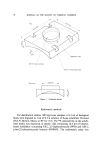
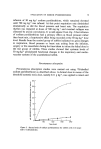
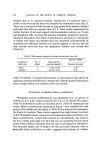
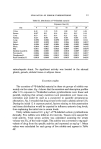
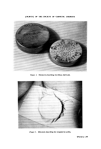
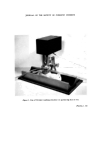
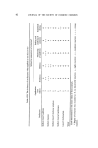
EVALUATION OF SODIUM PYRIDINETHIONE received artificial respiration whereas the other groups breathed spontan- eously for the duration of the infusion. A control group of rabbits anaes- thetized, but breathing spontaneously, was infused with a 1.8•o w/v saline solution (equivalent in tonicity to 4.0•o w/v sodium pyridinethione) at a rate of 0.5 ml rain -• for a period of time in excess of the time required to reach the lethal dose for any rabbit in either of the test groups. This experi- mental arrangement permitted the respiratory and cardiovascular systems to be monitored for the detection of functional changes at threshold dose levols. Dermal application studies All derreal applications were carried out on female New Zealand white rabbits weighing 1.6-2.5 kg. The rabbits were restrained in stocks to isolate the application site in the dorsal-lateral lumbar region. The application site was shaved 24 h prior to derreal administration and the aqueous topical application confined to an area of skin measuring 7.9 cm 2 using a moulded perspex occlusive device (Fig. 1). This device was secured to the skin by means of Stomaseal adhesive discs (Medical Products Division, 3M Com- pany, St Paul, Minnesota) and Ostomy adhesive solution (Salt & Son Ltd, Birmingham). The entire device was harnessed to the animal by an elasticated sleeve positioned around the animal's trunk. An application volume of 4.2 ml was introduced into the device through the aperture designed to accommodate a size 12 hypodermic needle. Abrasion of the application site was produced using a stripping tech- nique employing cellophane tape (6). The net effect was to produce an application site which was erythematous without showing signs of capillary bleeding. The dermal dose of asS-labelled sodium pyridinethione was 0.11 g kg -x (specific activity 0.4 gCi mg -•) in a constant volume of 4.2 ml. The topical application was left in contact with the skin for 4, 8, 12, 16, 20 and 24 h experiments, during which time blood samples were taken at 30 min inter- vals from the marginal ear vein for quantitative studies of drug serum levels. The animals were killed by cervical dislocation and exsanguinated. Per- cutaneous absorption of asS-labelled sodium pyridinethione from the site of application was quantified by a disappearance technique based on the method used by Parekh and co-workers (7). Tissues were removed, blotted and weighed in preparation for radiometric analysis.
Purchased for the exclusive use of nofirst nolast (unknown)
From: SCC Media Library & Resource Center (library.scconline.org)