PERCUTANEOUS ABSORPTION OF ANIONIC SURFACTANTS 49 Test solutions The studies with the [•4C] labelled soaps were conducted from a model soap system in which all five soaps were soluble at 37 ø. This system was a 30 mM soap solution containing each of the five soaps at a concentration of 6 mM. Five such soap solutions were made each one containing a different [1-•4C] acid. The [1-•4C] decanoate soap solution was made in the following manner. The mass of the p•C] labelled acid was determined from its specific activity (14.3 mCi/mM) and total •C activity in the sample (usually 250 pCi), i.e. 3.004 mg or 3.39 mg of sodium [1-$4C) decanoate. A total volume of 4.0 ml of test solution was made up by weighing 5.33 mg Cx•.: 0, 6.00 mg Cx4: 0, 6.67 mg C•6:0 and 7.34 mg Cxs:0 and (4.66-3.39), i.e. 1.27 mg Cx0: 0, soaps into a 'Duall' glass homogenizer (Kontes Glass Co. Ltd). The [1-x•C] C•0:0 acid was added using excess of diethyl ether which was removed in a stream of nitrogen and 4.0 ml of dilute sodium hydroxide solution (172 mg/1) was added. The resulting solution was homogenized and equilibrated for 24 h at 40 ø before adjusting the pH to 9.5 by addition of 0.01 N NaOH or HC1. The other [x4C] soap solutions were made up in a similar manner. 25 mM solutions of the [•C] SDS and [•4C] SDI were used throughout the study. Two test solutions of the [x•C] DOBS were used, the first a 3 mM solution in 25• v/v Polyethylene Glycol 400 in water and a second a 3 mM suspension in water prepared by homogenizing and equilibration in an all- glass homogenizer as described for the soap solutions. Analysis of •4C Liquid scintillation counting in a Packard Tri-carb 4322 spectrometer was used to determine levels of x•C. A channels ratio technique was used to determine the counting efficiency which was standardized using [1-•C] - n-hexadecane (Radiochemical Centre, Amersham). All aqueous samples were counted in a Triton X-100: toluene liquid scintillator described by by Patterson and Green (7). The 50• aqueous ethanolamine samples from the •CO•. absorbers were counted in a dioxan: 2-methoxy-ethanol :toluene scintillator described by Bruno and Christian (8). Freeze-dried faecal samples and carcass homogenates were prepared for counting on a Packard Model 305 sample oxidizer.

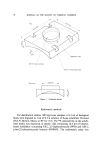
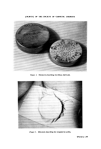
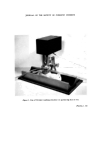
50 JOURNAL OF THE SOCIETY OF COSMETIC CHEMISTS In vitro penetration through rat skin Female Colworth-Wistar rats (100-120 g) were clipped to expose dorsal skin 24 h before cervical dislocation. The skins were excised and mounted in 2.5 cm diameter penetration cells similar to those described by Ainsworth (9). 0.25 ml of' the [•4C] surfactant solution was pipetted onto the epidermal surface of the skin and 10.0 ml of saline was added to the sampling com- partment against the dermis. The cells were kept in a warm room at 37 ø throughout the experiment and the saline was magnetically stirred con- tinuously. The saline was monitored hourly for x4C by removing 1.0 ml and replacing with fresh saline maintaining the volume of 10.0 ml in the sampling compartment. After 24 h the epidermal surface was washed with excess of distilled water and was monitored for •C by solubilizing 1 cm diameter autopsies in 'Soluene' (Packard Instruments Ltd) and counting as recom- mended by the manufacturers. In vitro penetration through human epidermis Female abdominal skin samples obtained at autopsy were frozen and stored at- 70 ø. Samples of the skin were allowed to thaw out and were heated at 58 ø for 2 min and the epidermis removed in sheets. The epidermal samples were mounted in 1 cm diameter penetration cells similar to those described by Ainsworth (9). Saline containing 0.012•o Pencillin and 0.01• Streptomycin was placed in contact with both surfaces of the sample and the cells were equilibrated at 37 ø for 24 h. The electrical resistance of the cells was measured and only cells with a resistance greater than 50 000 12 were used. The saline from the corneum surface was removed and 0.1 ml of the [•4C] surfactant solution was placed on the corneum. 1.0 ml aliquots of the saline in the sampling compartment (8.0 ml) were monitored for •C at 0.5, 1, 2, 3, 4, 6, 7, 8, 24 and 48 h, each time 1.0ml of fresh saline was added to maintain the volume at 8.0 ml. At the end of the experiment the comeurn was washed with excess of distilled water and the epidermal sample monitored for x•C by solubilizing in 'Soluene'. Animals and treatment Female Colworth-Wistar rats weighing 100-120 g were used for all experiments.
Purchased for the exclusive use of nofirst nolast (unknown)
From: SCC Media Library & Resource Center (library.scconline.org)