PERCUTANEOUS ABSORPTION OF ANION1C SURFACTANTS 51 Turnover of surfactants The turnover of each [x4C] labelled surfactant was measured by injecting three animals intraperitoneally and three animals subcutaneously with 0.1 or 0.5 ml of surfactant solution. The animals were then placed in sealed metabolism cages where urine, faeces and expired air were collected and monitored for x4C. The metabolism cages consisted of airtight perspex cages mounted on polythene collection funnels which directed the excreta into 'Metabowl' urine/faeces separators (Jencons Ltd, Hemel Hempstead, Herts). Air was drawn through the cages at 1.5 1 min 4 and bubbled through towers 30 cm deep and containing 240 ml of 50•o aqueous ethanolamine. 1.0 ml aliquots of this solution were monitored for •4C at regular time intervals. Each urinary sample was made up to 25 ml with cage rinsings and faecal samples were freeze-dried. After 6 or 24 h the animals were killed by cervical dislocation. The carcasses of the animals were homogenized in an 'Atomix' blender (M.S.E. Ltd, Crawley, Sussex) and aliquots of the homogenate were freeze dried. Percutaneous absorption The hair from animals' backs was removed with fine bladed clippers 24 h before topical application. Only animals with visibly undamaged skin were used in the topical studies and all animals were lightly anaesthetized with a cyclopropane: carbon dioxide: oxygen gas mixture during treatment. Topical application of 0.1 or 0.5 ml of the [•C] test solution was made from a microlitre syringe on to an area of skin (7.5 or 10 cm 2) previously marked out on the animal's back with a felt-tipped pen. The solution was lathered over the treatment area with a rounded glass rod for 1 min during application. After 15 min contact with the skin the animal was inverted over a 6-inch diameter funnel and the excess of test solution was rinsed off with distilled water at 37 ø from a wash bottle. After about 50 ml of water had been used the treated area of skin was lightly drawn over the top of the funnel to squeeze excess of rinse water from the skin. This process was then repeated and the skin dried with paper tissues. The animals were then fitted with either restraining collars or non-occlusive protection patches and placed in the metabolism cages for collection of excreta as described above.

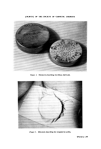
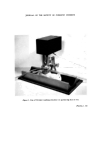
52 JOURNAL OF THE SOCIETY OF COSMETIC CHEMISTS The restraining collar was a thin (0.25 mm) card disc, 10 cm diameter, in which was cut a central hole to fit around the animal's neck. The disc was opened by a single radial cut and placed around the animal's neck. The cut disc was then stapled up slightly overlapping the cut edges to form a shallow cone similar to a large ruff. This type of collar was successful in preventing small rats (up to 150 g) from grooming the treated area for up to 12 h after treatment. The non-occlusive protective patch used in this study was similar to that described by Noakes and Sanderson (10). The treated area of skin was covered with a triple layer of surgical gauze approximately 1 cm larger in each direction to the treated area of skin. Over the surgical gauze a stainless steel gauze (100 mesh), approximately 0.5 cm smaller in each direction to the surgical gauze, was placed and 'Sleek' surgical strapping (Smith & Nephew Ltd, Welwyn Garden City, Herts), which had been punctured to give some 10 X 1 mm holes/cm a over the treated area, was wrapped around the animal. This has been found to be effective in preventing grooming of the treated area of skin for 2 days and for some animals up to 4 days after treatment. The effect of prewashing the skin on the penetration of the [x4C] soaps was examined by washing groups of rats either once or three times with a non-radioactive, 300 m• model soap solution (i.e. 60 m• solution of each of the five soaps studied). This soap solution (2 ml) was lightly lathered over the backs of rats for 1 min, left in contact for a total of 15 min, copiously rinsed with distilled water and dried with paper tissues. 2 h later the animals were treated with either 0.1 ml of the [•4C] soap solution over 7.5 cm • of skin or rewashed with the inactive soap solution twice, at 2 h intervals before treatment with the [•aC] soap solution as described above. The topically-treated animals were treated similarly to the injected animals described above. Before homogenizing the carcasses however, the protective patch was removed and the treated area of skin was excised and frozen between glass plates. Punch autopsies (1 cm diameter) from the frozen skin were monitored for •aC by solubilizing in 'Soluene' and counting. Further samples of treated skin were sectioned histologically for auto- radiographic analysis as described by Rutherford and Black (11).
Purchased for the exclusive use of nofirst nolast (unknown)
From: SCC Media Library & Resource Center (library.scconline.org)