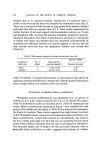
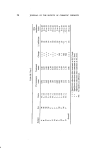
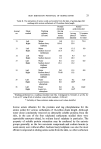
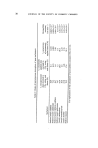
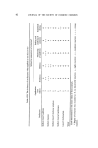
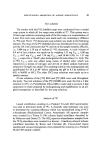
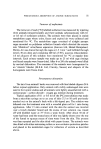
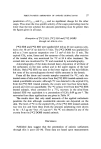
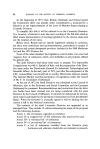
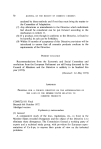
PERCUTANEOUS ABSORPTION OF ANIONIC SURFACTANTS 55 Turnover of [•4C] surfactants in the rat The rate and route of excretion of •4C from intraperitoneally adminis- tered [•C] surfactant solutions were the same as that from subcutaneously administered solutions. The recoveries are given in Table II. Table II. Recoveries of xaC fi'om rats after injection with [•aC] surfactants [•C] surfactant* Dose % Applied dose [tCi (rag) CO2 Urine Faeces Carcass Soaps SDS SDI DOBS Clo: o C12: o C14: o C16: o C18: o 7.25 0.12 575_5 0.1 0.1 374-6 10.49 0.13 65_4-7 0.1 0.1 304-7 8.13 0.15 5 4-3 2.1 4-1.2 0.1 85 4-9 7.74 0.17 21 4-4 0.1 0.1 71 4-8 8.59 0.18 384-9 0.1 0.1 564-16 18.60 3.64 1.54-0.4 774-4 2.64-0.7 154-3 8.29 4.90 804-7 2.74-0.2 1.74-0.5 124-5 8.69 1.02 0.1 78 4-4 1.5 4-0.6 22 4-5 Each result is the mean from six animals 4- SD--three animals injected intraperitoneally and three animals subcutaneously. For the sodium soaps the collection time was 6 h after injection and for the other surfactants 24 h. * All [x4C] surfactants were labelled with x•C in the 1-alkyl position and were sodium salts. These results showed that at 6 h after administration, the Cx0:0 and Cx, 0 soaps were readily metabolized and the main route of excretion was as 1•CO, The Cx•: 0 soap was readily incorporated into the body and the 1•C excretion was slow. The Cx0: 0 and Cxs: 0 soaps showed some metabolism with subsequent •CO2 excretion but most of the 1•C was recovered in the carcass at 6 h. For both the [x4C] SDS and the [1•C] DOBS most of the administered x•C was recovered in the urine at 24 h after dosing. The [x•C] SDI was metabolized and most of the dose was recovered as 1•CO• at 24 h indicating the breakdown of the isethionate ester link. From the results the route of excretion of x•C surfactant giving the most sensitive indication of percutaneously absorbed surfactant was indicated. Absorption of [14C] soaps through rat skin in vivo The amount of the [1-1•C] labelled soaps penetrating through 7.5 cm" of treated skin was calculated from the levels of 1•C recovered in the

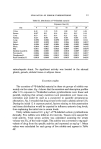
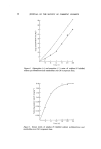
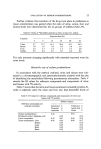
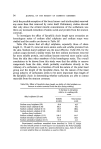
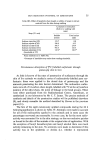
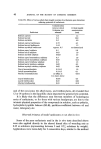
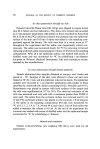
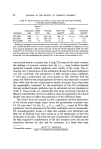
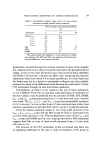
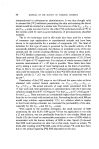
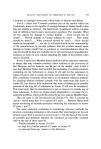
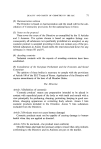
56 JOURNAL OF THE SOCIETY OF COSMETIC CHEMISTS expired CO•., urine, faeces and in the carcass, after excision of the treated area of skin, at 6 h after application. The terminal skin was examined by autoradiography which showed heavy deposition of x4C on the stratum corneum, especially at the entrances of the hair follicles, and in the hair follicles for all soaps. Traces of •4C were seen in the epidermis from all the soaps but only with the Cx•.: o and Cx•: o soaps could detectable amounts of •sC be seen in the upper regions of the dermis. The amounts of [x•C] soap present in the skin at 6 h after application were between 2 and 5 gg/cm •' of skin, but there were no statistically signi- ficant differences between the five soaps even after the prewashing regime with unlabelled soap solution. The amounts of x•C recovered in the expired CO•., urine, faeces and carcass from rats washed for 15 min with the [•4C] soap solutions are sum- marized in Table III where the effect of prewashing the skin is compared with a single wash. The results show that from a single wash and rinse the order of penetra- bility of the soaps was C•.: o C•o: o • C•: o Cx6: o -•- C•s: o. Approxi- mately 10 times more C•.: o penetrated than the C•6: o soap. The results from the prewashed animals are only indications as to the actual amounts penetrating since inactive soap deposited on the skin would have diluted the [•C] soap applied. The results, however, showed an increase in the Table III. Penetration of the sodium salts of n-[1-•4C] fatty acids through rat skin in vivo Amount penetrating over 7.5 cm 2 of skin (11g) Number of prewashes with 300 soap solutions [1-•4C] Application* Soap (Isg) 0 1 3 Cxo: o 116 1.78 5:0.70 2.99 4-1.71 8.92 4-4.26 C•a: o 131 5.06 5:2.59 5.29 5:3.44 9.04 5:2.57 C•4 :o 150 2.044-0.39 1.525:0.42 1.605:0.18 Cxo :o 167 0.53 5:0.18 0.554-0.17 0.634-0.16 C•o :o 184 0.53 5:0.14 0.365:0.13 0.355:0.02 Results are the mean from three animals 4-SD. * 0.1 ml of model soap solution applied over 7.5 cm 2 of skin for 15 min. Model soap solution was 6 mm of each of the five soaps used, i.e. 30 mM total soap concentration, and five solutions used each containing one of the [1-x•C] labelled soaps. 'l' 300 mM soap solution was a 60 mM solution of each of the five soaps used.
Purchased for the exclusive use of nofirst nolast (unknown)
From: SCC Media Library & Resource Center (library.scconline.org)