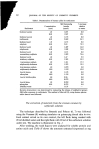
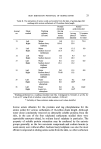
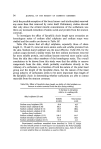
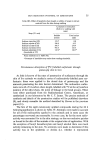
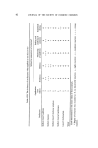
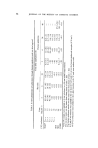
PERCUTANEOUS ABSORPTION OF ANIONIC SURFACTANTS 57 penetration of C10: 0 and C19,: 0 and no significant change for the other soaps. Thus since the true specific activity of the soaps penetrating must be lower than the test solution the amounts penetrating must be greater than the figures given in all cases. Absorption of [x4C] SLS, [•4C] SDI and [•C] DOBS through rat skin in vivo [x4C] SDS and [•4C] SDI were applied (0.5 ml) as 25 mM aqueous solu- tions over 10 cm •' of rat skin for 15 min. The [•4C] DOBS was applied (0.2 ml) as a 3 m•t aqueous suspension over 7.5 cm •' of skin for 15 min. The expired CO•., urine, faeces and the carcasses of the animals, after excision of the treated skin, was monitored for •4C at 24 h after treatment. The excised skin was monitored for •4C and examined by autoradiography. Autoradiography of the skins showed heavy deposition of all three of the surfactants on the skin surface and in the upper regions of the hair follicles. Only [uC] SDS was seen in the lower regions of the hair follicles but some of the autoradiograms showed visible amounts in the dermis. From all the tissue and excreta samples examined for •4C, only the treated areas of skin and the urine from the [•4C] SDS treated animals con- tained quantifiable amounts although •4C was detected in the expired CO•. from the [•C] SDI treated animals, the counts were less than twice back- ground and were not quantifiable. The •C urinary level from the [•4C] SDS treated animals, when corrected for a 775/0 recovery in the urine from injected SDS was equivalent to a penetration of 0.264-0.09 [tg cm -•'. The recoveries from these applications are given in Table IV. The results show that only small amounts of the applied surfactants penetrate the skin although considerable amounts are deposited on the skin. The level of •4C in the expired CO•. of the [•4C] SDI treated animals was very low and from these levels the amounts penetrating were shown to be :0.3 [tg cm -x but 0.1 [tg cm -•'. No 14C was detected in any of the excreta from the [•4C] DOBS treated animals. DISCUSSION Published data suggest that the penetration of anionic surfactants through skin is poor (12-14). These data are based upon measurements

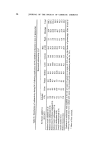
58 JOURNAL OF THE SOCIETY OF COSMETIC CHEMISTS Table IV. Recoveries from rats after a 15 min wash and rinse with [uC] SDS, [x•C] SDI and [x•C] DOBS solutions Area of skin Protective Application treated Rinsings Skin levels patch Penetration Surfactant (•tg) (cm •) (t•g) (t•g/cm •) (t•g) (t•g/cm a) [uC] SDS 3640 10 1929 4-90 202 4-37 36 •16 0.26 4-0.09 [uC] SD1 4900 10 4297 4-353 75 4-18 5 0.3 [•C] DOBS 250 7.5 135 4-27 11 4-4 2 0.1 Results are expressed as gg recovered and are the mean 4- SD from six animals. The applica- tion of SDS and SDI were 0.5 ml of an aqueous solution and the DOBS was applied as 0.2 ml of an aqueous suspension. The contact time was 15 min for all the surfactants which were then rinsed off. The •C levels in the skin and protective patch were determined 24 h after application and the penetration results are based on levels of uC excreted in urine, faeces and expired COa during the 24 h after application plus levels of •sC in the carcass of the animals at 24 h. with excised human or animal skin. Using [x4C] soaps in this study confirms the findings of previous workers that the Cx2:0 soap (sodium laurate) penetrates isolated human epidermis most readily of the soaps. The in- creasing rate of penetration of the surfactants during prolonged application was also confirmed. The penetration of SDI through human epidermis in vitro gave a penetration rate curve similar to that obtained with the soaps, but SDS showed a long lag time (6 h) before any penetration occurred after which time the rate of penetration rapidly increased. From these data the permeability constants* for the penetration of the [•4C] surfactants through isolated human epidermis may be calculated and are presented in Table V. These results are comparable with those previously reported by Blank (12) and Bettley (13) but in addition show that application of a mixed micelle soap does not affect the penetration of the individual soaps. The results from the excised rat skin experiments showed penetration of the shorter chain length soaps, where the permeability constants were 2.5-3.9 gcm min -1 for the C10: 0, C12:0 and C14: 0 soaps at 24 h after application, but the penetration of the other surfactants was not measurable. No autoradiographic studies on these skin samples were performed and little can be deduced from these results as to the distribution of the [laC] surfactants in the skin. The observed rate of penetration will depend upon the time required for equilibration of the skin samples in the cell and the interaction between the skin and the surfactant. It is likely that some gg cm -• m -• penetrating * Permeability constant = [tg/cm -• (concentration of applied solution)'
Purchased for the exclusive use of nofirst nolast (unknown)
From: SCC Media Library & Resource Center (library.scconline.org)