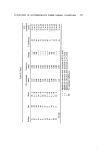
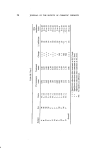
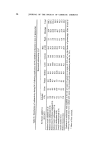
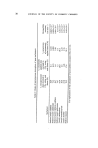
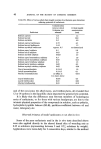
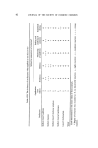
66 JOURNAL OF THE SOCIETY OF COSMETIC CHEMISTS At the beginning of 1973 when Britain, Denmark and Ireland joined the Community there was already under consideration a proposal for a Directive on the Approximation of the Laws of Member States relating to Cosmetic Products. To simplify this title it will be referred to as the Cosmetics Directive. It is, however, of interest to note the exact wording of the full title which in e•ct means harmonization of existing legislation in the various states and not the creation of new laws. Before entry, Britain had no specific legislation relating to cosmetics, but there were restrictions and recommendations, particularly in respect of hormones and certain therapeutic products, included in the 1968 Medicines Act and the 1972 Poisons Act. None of the other members had legislative control either, but some had 'negative lists' of substances which were forbidden in all products offered for general sale. The draft Directive had taken some years to prepare. The responsible Commissioner was Mr A. Spinelli of Italy, and the preparation of the Direc- tive came under the Directorate General for Industrial, Technological and Scientific Affairs. In the early part of 1973, just after the enlargement of the EEC, responsibility was transferred to another Directorate General, namely The Internal Market and Harmonization of Legislation under the control of Mr F. O. Gundelach of Denmark. At the end of 1972 the Draft Directlye was submitted to the Council of Ministers, also to the Economic and Social Committee and the European Parliament for comment. Recommendations and resolutions from the latter two bodies have been received and are being considered with the main Directive by the Council of Ministers. It will then be rediscussed by Govern- ment experts and finally by the permanent representatives from the Member States. When the Directive is evenually agreed it will be binding but dis- cretion is left to the' National Authorities. The contents of the draft Cosmetics Directive are appended in an abridged form. They include 15 articles embracing the scope of the proposal and the following Annexes. Annex I--list of products regarded as cosmetics. Annex I[--a 'negative list' of 425 substances that must not be used. Annex III--a 'restricted list' of substances. Annex IV--a 'provisional list' of substances. Annex V--a list of substances excluded from the Directive (only hormones and selenium disulphide are included at present).

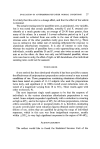
QUALITY AND SAFETY OF COSMETICS IN THE EEC 67 I propose to highlight those parts which relate to Quality and Safety. Article 2 states that 'Cosmetic products put on the market within the Community must not be capable of causing damage to human health when they are applied as directed'. The bland kind of statement with its complete lack of definition leaves many unanswered questions. For example: What are the criteria for damage to human health?... How should this be tested?... Should animals or human subjects be used?... How many should be tested?... What protocol should be used?... How should results be interpreted ?... etc. etc. It will undoubtedly be the responsibility of the manufacturer to provide evidence that his product cannot cause damage to human health but no guidance or recommendations about the way this should be done are available. So for the time being the manufacturer continues to meet his own criteria regarding the safety of his product when used as directed. Article 3 states that 'Member States shall take all the necessary measures to ensure that only cosmetic products which conform to the provisions of this Directive and its Annexes can be put on the market', and Article 4 says that 'Member States shall prohibit the marketing of cosmetic products containing (a) the Substances in Annex II, (b) and (c) the substances in Annex III part 1 and 2 outside the limits and conditions fixed'. There is an EEC committee of analysts whose task is to recommend reference methods for checking whether products comply with the restrictions laid down in Annex IlI, but there is little indication that ways of detecting the possible presence of the long list of substances in Annex II will ever be considered. This must imply that the manufacturer is put on trust not to include any of these substances. It does not require much imagination to envisage the in- superable problems which could be created by an over-zealous Member State. Then we come to the Provisional List (Annex IV). This is covered by Article 5 which states that 'For a period of 3 years... Member States shall accept marketing of cosmetic products containing the substances in Annex IV parts 1 and 2'. The same analytical committee is considering reference methods for products containing substances in this Annex. But what happens at the end of three years ? This is covered in Article 9 part 3: 'On the basis of the results of scientific and technical research the substance provisionally accepted shall at the end of three years be --Finally included in Annex II or Ill --or kept for a further period of 3 years in Annex IV --or removed from any Annex to this Directive.'
Purchased for the exclusive use of nofirst nolast (unknown)
From: SCC Media Library & Resource Center (library.scconline.org)