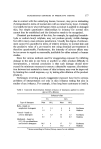
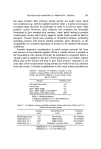
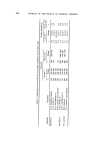
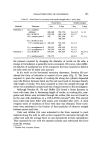
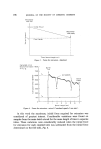
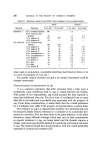
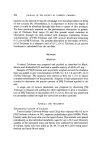
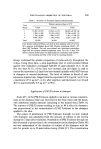
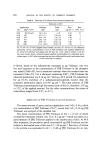
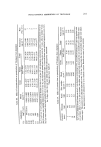
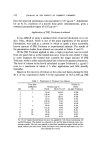
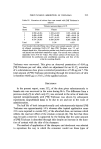
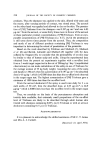
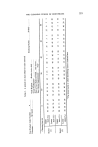
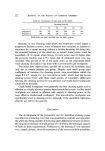
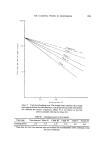
PERCUTANEOUS ABSORPTION OF TRICLOSAN Table VI. Excretion of tritium from rats treated with [all] Triclosan in ethanol 213 Tritium recovery (dpm x 10 -6) Time (days) Urine Faeces Total I 0.702 4-0.216 1.233 4-0.353 1.935 4-0.240 (4) 2 0.406 +0.095 1.277 -•0.481 1.683 4-0.410 (3) 3 0,234 -•0.064 0.437 +0.153 0.671 4-0.089 (2) 4 0.197 4-0.016 0.189 4-0.047 0.386 +0.062 (2) Total 1.539 3.136 4.675 Four female Colworth-Wistar rats (120 g) were treated topically with 0.2 ml ethanol containing 16.09x10⁶ dpm [aH] Triclosan over 7.5 cm a clipped dorsal skin. Non-occlusive patches were fixed in position and the rats placed into individual metabolism cages. The excreta were collected separately every 24 h for 4 days. The tritium content of the faeces was determined by combusion and scintillation counting and that of the urine by counting directly. Triclosan were recovered. This gives an observed penetration of 4.84 txg [3H] Triclosan per cm • skin, which on adjustment for an 81.3•o excretion of a subcutaneous dose gives a corrected penetration of 5.96 gg cm -•'. The total amount of [alii Triclosan penetrating through the treated area of skin is therefore 44.68 [tg or 27.65/0 of the applied amount. DISCUSSION In the present report, some 33•o of the dose given subcutaneously to female rats was recovered in the urine during 96 h. The difference from a previous study (5) in which only 8•o was excreted in the urine of male rats injected intraperitoneally with [all] Triclosan was shown by subsequent experiments (unpublished data) to be due to sex and not to the route of administration. The half life of both intraperitoneally and subcutaneously-injected [alii Triclosan was approximately 14 h whereas after topical application some 23 h were required to excrete 50•o of the absorbed dose, an increase which reflects the reservoir effect of the stratum corneum (6). The fact that there may be such a reservoir is supported by the finding that the same amount of [all] Triclosan is absorbed through skin despite an increase in the dura- tion of contact with the skin of the shampoo. The method of application of the shampoo and deodorant was selected to reproduce the way in which the consumer would use these types of

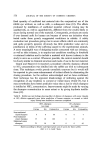
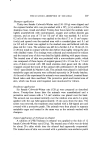
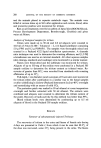
214 JOURNAL OF THE SOCIETY OF COSMETIC CHEMISTS products. Thus the shampoo was applied to the skin, diluted with water and the excess, after varying periods of contact, was rinsed away. The aerosol on the other hand was applied and allowed to dry on the skin. The penetra- tion of [all] Triclosan from the shampoo was 0.197 lag cm -2 and was 6.85 lag cm -2 from the aerosol, or some thirty times more in favour of the aerosol at these particular product concentrations of [all] Triclosan. Even at com- parable concentrations of [aH] Triclosan (i.e. 0.1• (w/v)) the penetration is still some eleven times greater from the aerosol. Thus, the composition and mode of use of different products containing [aH] Triclosan is very important in determining the extent of penetration of the germicide. Based on the work described by Feldman and Maibach (7), Maibach eta/. (8) and Bartek, Labudde and Maibach (9) together with the data collated by Tregear (10), we consider that the permeability of rat skin may be similar to that of human scalp and axilla. Using the experimental data obtained from the present rat experiments together with a no-effect level from a 3-week target organ test in the rat of 200 mg kg -• day -1 (unpublished observations) we can make calculations of the safety-in-use of Triclosan for the average woman of 55 kg body weight. Assuming the area of the scalp and hands is 1350 cm 2, then for a penetration of 0.197 lag cm -2, the absorbed dose is 4.8 lag kg -•, which is 42 000 times less than the no-effect level observed in the target organ test. The highest concentration of [all] Triclosan gave a minimum of 1000 times less than the no-effect level. From the aerosol deodorant if the spray is used twice daily for 2 s on each axilla of 50 cm •, then the absorbed dose, at 6.85 lag cm -2, is 24.9 lag kg -1 which is 8000 times less than the no-effect level in the target organ test. Thus, we conclude on the basis of the percutaneous absorption and toxicity data available, that extremely small proportions of the no-effect level of Triclosan are likely to be absorbed through adult human skin treated with shampoo containing 0.05•o (w/v) Triclosan or with an aerosol deodorant containing 0.1 •o (w/v) Triclosan. ACKNOWLEDGMENTS It is a pleasure to acknowledge the skilled assistance of Mr C. T. James and Mrs A. J. Cordell. (Received: 1st April 1974)
Purchased for the exclusive use of nofirst nolast (unknown)
From: SCC Media Library & Resource Center (library.scconline.org)