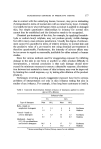
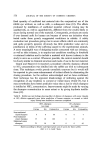
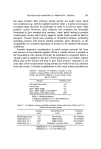
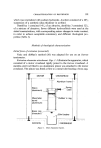
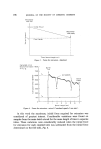
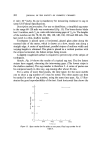
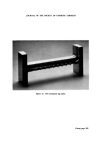
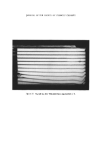
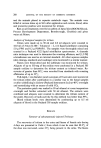
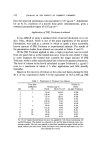
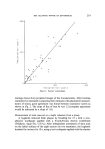
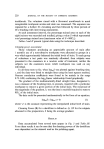
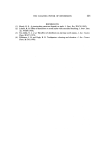
THE CLEANING POWER OF DENTIFRICES 219 400 200 Ii :/ .? 200 Total per cent stain scorer Figure 2. Scorers' concordance. 4OO tracings drawn from projected images of the transparencies. After training examiners by repeatedly comparing their estimates with planimeter measure- ments of traces, good agreement was found between examiners' scores as shown in Fig. 2. The slope of line of best fit was 1.2 (complete agreement would be indicated by a slope of 1.0). Measurement of stain removal on a single volunteer from a group A hygienist removed fresh plaque by brushing for 15 s with a non- abrasive toothpaste applied with a Touch-Tronic electric toothbrush (Teledyne, Aqua-Tec, U.S.A.). After independent assessment of stain area on the labial surfaces of the eight incisors by two examiners, the hygienist brushed the incisors for 10 s, using a test toothpaste applied with the electric

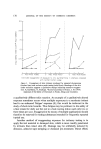
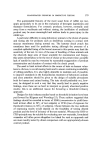
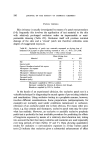
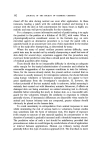
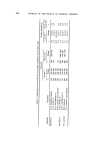
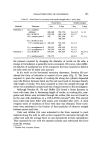
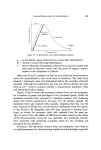
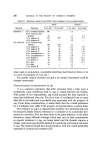
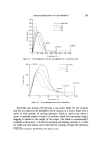
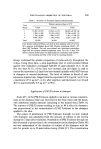
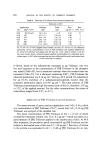
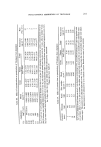
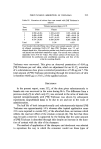
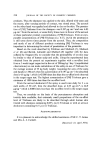
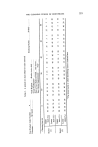
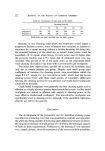
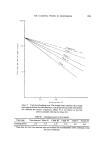
220 JOURNAL OF THE SOCIETY OF COSMETIC CHEMISTS toothbrush. The volunteer rinsed with a flavoured mouthwash to mask recognizable toothpaste aroma and stain was reassessed. The sequence was repeated for a further 10 s brushing and then followed by three periods of 20 s brushing with intervening assessments. At each assessment interval, the percentage stained area on each of the eight incisors was recorded and totalled, giving a value S which represented total percentage stained area (maximum value of S = 800•o). Tables I and H present typical data using the technique described. Cleaning po wet assessmen t Those volunteers producing an appreciable amount of stain after 1 month's use of a non-abrasive toothpaste were allocated to groups in a way which approximately balanced the initial levels of stain. To each group of volunteers a test paste was randomly allocated, then subjects were presented to the examiners in a random order of treatment neither the subjects nor the examiners knew which toothpaste was used on any individual. In all these tests so far, when log•0S was plotted against brushing time, t, and the data were fitted to straight lines using the least squares method, Pearson correlation coefficients were found to be mainly in the range 0.75-0.99, confirming the logx0/linear relationship found graphically. The gradient of the mathematically-fitted straight lines, designated b, was a measure of the brushing time, in seconds, required with a particular toothpaste to remove a given portion of the initial stain. The reciprocal of the magnitude of the gradient, b, was the time in seconds required to remove 90•o of the initial stain. The data could be presented mathematically in the form of an equation. log•0S = log•0 a + bt where 'a' is the constant representing the interpolated initial level of stain. Cleaning Power (B) for a dentifrice is defined as -3. 10 a for the subjects allocated to this preparation, • being the average gradient. RESULTS Data accumulated from several tests appear in Fig. 3 and Table III. From these results it can be seen that the cleaning powers of the dentifrices were dependent on the mineral used as the polishing agent.
Purchased for the exclusive use of nofirst nolast (unknown)
From: SCC Media Library & Resource Center (library.scconline.org)