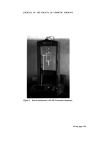
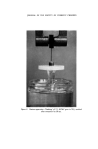
218 IOURNAL OF THE SOCIETY OF COSMETIC CHEMISTS a photometric method to assess the extent of stain on teeth cleaned for 2 weeks with a test toothpaste, after an initial scale and polish. These techiques detected differences in the stain-removing properties of toothpastes, but employed non-parametric data. Moreover, stain colour and intensity, and the presence of plaque complicated the assessment. A technique has now been developed which uses quantitative measure- ment on a parametric basis, to generate a value of cleaning power for tooth- paste. It is uncomplicated by stain colour and intensity or plaque and gives repeatable results. EXPERIMENTAL Formation of stain for study of cleaning power When volunteers used a non-abrasive toothpaste for cleaning their teeth, a natural stain, not related to their smoking habits, developed visibly in approximately one-third of the subjects and increased in area during the course of 1 month. Satisfactory plaque removal and oral hygiene was achieved, however, with no adverse effect on the gingivae. Quantitative assessment of stain By examining the incisors of each volunteer through a horizontally mounted Nikon stereoscopic binocular microscope (model SMZ-2), fitted with double spotlight tungsten illumination, the stained areas were easy to identify. Ektachrome X photographic transparencies of the teeth were taken with a Miranda Sensomat camera through the binocular microscope using crossed polaroid screens over the Multiblitz photographic flash* and objec- tive lens. This method of illumination eliminated specular reflection and permitted clear identification of the stained areas, although giving a slightly out-of-focus effect. Examiners were trained to estimate visually the percentage area of the labial surfaces of the eight incisors covered by stain and their estimates were found not to differ from the planimeter-derived measurements by more than one-sixth. The percentage area of the labial surfaces of the eight incisor teeth covered by stain was calculated from planimeter measurements of boundary * Dr Ing. D. A. Mannesmann, GmbH & Co. KT, Porz-Westhoven, West Germany.

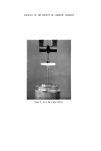
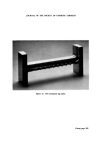
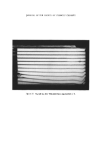
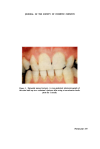
JOURNAL OF THE SOCIETY OF COSMETIC CHEMISTS Figure 1. Naturally stained incisors. A cross-polarized photomicrograph of the stain built up on a volunteer's incisors after using a non-abrasive tooth- paste for 1 month. Facing page 218
Purchased for the exclusive use of nofirst nolast (unknown)
From: SCC Media Library & Resource Center (library.scconline.org)