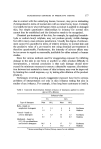
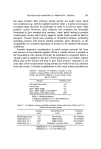
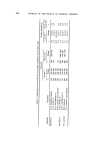
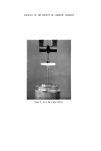
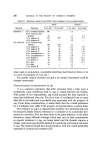
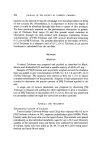
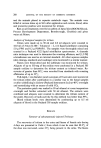
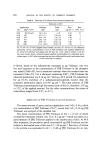
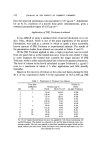
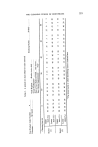
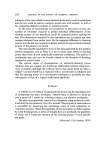
180 JOURNAL OF THE SOCIETY OF COSMETIC CHEMISTS PATCH TESTING Skin irritancy is usually investigated by means of a patch test procedure (!4) frequently this involves the application of test material to the skin with relatively prolonged occlusion under an impermeable or semi- permeable dressing (Table III). Occlusion itself will produce minimal damage of the skin and a 'closed' patch test therefore embodies some degree of exaggerated exposure. Table Ill. Occlusivity olr patch test materials expressed as drying time ooe hydrated CoCI2 paper on glass backing, exposed at 19.5 -4-1 ø, 49.5 4-1.5% RH, beneath the patches, for pink -- blue colour change Mean drying time Material (min) n• SD Nil 20 7 6.3 Gauze (only) 45 6 7.8 Gauze+ blenderre-backed lint square 65 6 8.4 Micropore+ lint square 80 6 6.3 Micropore (only) 155 7 6.3 Micropore+blenderm-backed lint square 200 7 33.0 Dermicel + blenderm-backed lint square 230 6 21.0 Dermicel (only) 390 7 8.4 Blenderm (only) 1145 7 43.0 Micropore: supplied by 3M Co, London. Dermicel: supplied by Johnson & Johnson Ltd, Slough. Blenderm: supplied by 3M Co, London. In the hands of an experienced clinician, the occlusive patch test is a valuable technique for diagnosing the causal agents of pre-existing irritation and sensitization. Using occlusive testing in a prophetic manner, however, involves different considerations. Some preparations (antiperspirants, for example) are normally used under conditions tantamount to occlusion relevance of an occlusive patch test is then obvious. For many other pro- ducts, e.g. face creams and shampoos, occlusive patch tests may be some- what less realistic. However, an occlusive or partially occlusive prophetic patch test is probably the best available procedure for predicting the effects of long-term exposure by means of a relatively short-duration test, taking into account the fact that many toiletties and cosmetics are used repeatedly over long periods of time (Tables IV and V). Data showing quantitative results for occlusive vs non-occlusive exposure in 21-day human patch tests (2) indicate that occlusion gives a substantial enhancement of effect

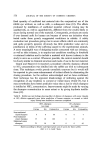
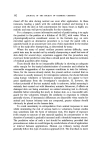
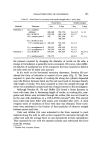
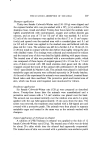
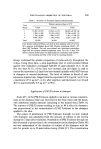
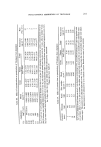
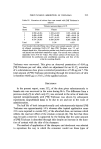
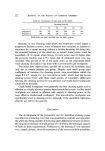
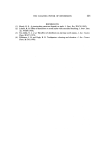
EXAGGERATED EXPOSURE IN PREDICTIVE TESTING 181 for many irritants. Skin irritancy testing carried out under 'open' patch test conditions (e.g. with the applied material under a loosely-woven gauze covering) might therefore be preferable in order to avoid too many 'false positive' results. However, since toiletries and cosmetics are invariably formulated to give minimal skin reaction, 'open' patch testing in practice would nearly always yield wholly negative results which would be hard to interpret. 'Closed' patch tests resulting in threshold irritation, preferably including controls with known irritant potential, allow decisions on the acceptability of a cosmetic ingredient or product to be reached with greater confidence. Another important consideration in patch testing concerns the form and amount of test material applied. When a volatile solvent is present in the formulation, this should obviously be permitted to evaporate before a 'closed' patch is applied to the skin if this precaution is not taken, irritant effects due to the solvent will tend to give 'false positive' responses in the sense that solvent evaporation during normal use would avoid any irritation from this source. A further complication is that some toiletry products are Table IV. Detection of moderate increases in skin irritation, using partially occlusive human patch test (Uttley, M. and Van Abb6, N.J. J. Soc. Cosmet. Chem. 24, 217 (1973)) Product Irritancy score Nil (blank lint patch) 6.6* Lotion base 6.6 Base + DHA (aged) 8.4 Base+DHA (aged) +fresh DHA** 9.3 Base (fresh)+ fresh DHA (10%) 10.9' DHA = Dihydroxyacetone. * Difference significant at 1% level (Wilcoxon). ** Adjusted to 10 •o concentration. Table V. Correlation between partially-occlusive human patch test (Uttley and Van Abb6) and consumer reports Irritancy Interpretation of Consumer score score reports Moisturizing cream 6.3' Cheek gloss no. 1 11.0+ Cheek gloss no. 2 12.6* Cheek gloss no. 3 18.1 Non-irritant No irritation Slight irritant No irritation Slight irritant No irritation Moderate •- severe irritant Irritation * Significant at 1% level (Wilcoxon). + Significant at 2% level (Wilcoxon).
Purchased for the exclusive use of nofirst nolast (unknown)
From: SCC Media Library & Resource Center (library.scconline.org)