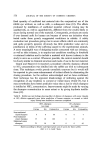
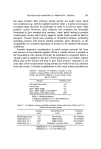
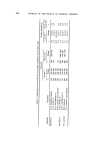
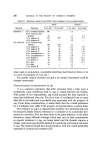
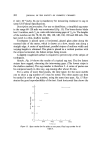
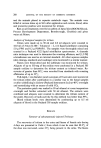
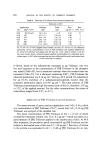
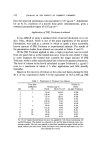
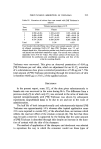
178 JOURNAL OF THE SOCIETY OF COSMETIC CHEMISTS fixed quantity of undiluted test material into the conjunctival sac of the rabbit eye without, as well as with, a subsequent rinse (10). The effects produced by instillation of undiluted material without rinsing may be qualitatively, as well as quantitatively, different from the results likely to occur during normal use of the material. Consequently, products are rarely if ever deemed unfit for human use because of severe eye irritation when tested under these grossly exaggerated conditions in rabbits. A safety evaluation test procedure giving rise to severe effects which are commonly and quite properly ignored, obviously has little predictive value and no justification in terms of the suffering caused to the experimental animals. A more meaningful way of designing studies concerned with eye irritancy, as well as skin irritancy, is to employ test conditions resulting in threshold or minimal irritation and to include a material with known irritancy in the study to serve as a control. Whenever possible, the control material should be closely similar in chemical structure and mode of use to the test material. Gaunt and Harper (11) reported a procedure whereby shampoo diluted to 10•o concentration was instilled into the rabbit eye with no subsequent rinse. This technique avoids grossly unrealistic exposure but it would still be expected to give some enhancement of irritant effects by eliminating the rinsing procedure. As the authors acknowledged and we have confirmed, their technique has the apparent disadvantage of militating against the recognition of any tendency to corneal or iridial injury (Table II), but it may nevertheless have better predictive value than a test in which shampoo is instilled at 100•o concentration. Improvements might be made by varying the shampoo concentration to some extent or by giving duplicate instilla- tions (12). Table II. Rabbit eye test findings showing effect of dilution of shampoos with water. Results at 10% dilution apparently gave better prediction of human response, no corneal or iridial injury having been notified as consumer complaints 100% shampoo 10% shampoo (no rinse) (no rinse) Cornea Iris Conjunctiva Cornea Iris Conjunctiva Non-medicated liquid shampoo 0 0 68 0 0 4 Non-medicated cream shampoo 35 10 108 0 0 12 Medicated cream shampoo 25 10 90 0 0 62 Scores according to Draize each figure gives sum of scores for three rabbits after 1, 2, 3, 4 and 7 days.

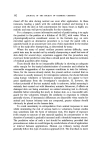
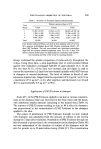
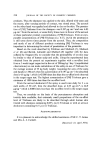
EXAGGERATED EXPOSURE IN PREDICTIVE TESTING 179 The questionable features of the more usual form of rabbit eye test, apply particularly to its use in the evaluation of detergent ingredients and shampoo formulations. For cosmetic products, however, normally used away from a washbasin and without rinsing, the instillation of undiluted product may be more meaningful and seldom leads to gross injury in the rabbit eye. A particular difficulty in using laboratory animals is the choice of species and testing site for products such as dentifrices coming in contact with mucous membranes during normal use. The hamster cheek pouch has sometimes been used for predictive testing although the presence of a cornified epithelial lining of the buccal mucosa in this species may limit the sensitivity of the test. In view of the ease of handling of these animals and the relatively large area of tissue available for examination and biopsy, this seems nevertheless to be the test of choice at the present time possible lack of sensitivity may be overcome by reasonable exaggeration of product concentration and duration of contact with the cheek pouch. The need to limit irritant effects in the course of tests on human volun- teers is obvious, to avoid causing harm and to ensure continuing availability of willing panellists. It is also highly desirable to maintain and, if possible, to improve standards in the humanitarian treatment of laboratory animals and close attention should be given to the design of suitable procedures both for human and animal testing. The tests should preferably not, how- ever, be designed in such a way that they mostly lead to purely negative findings, since these are as hard to interpret as grossly abnormal positive results this is an additional reason for favouring a threshold irritancy approach. Designs for skin irritancy studies based on threshold irritation have been put forward by Kligrnan and Wooding (13). These authors suggested that findings should be recorded in terms of ID50 (concentration to yield thres- hold irritant effect in 505/0 of test subjects) or IT50 (time of exposure for threshold irritation in 505/0 of subjects). Choice between the two methods of expressing results would depend on the feasibility of testing diluted product and the level of irritancy of the test material. Whereas the ID50 or IT50 principle may be suitable for evaluating new raw materials, formulated cosmetics will often prove altogether too bland for such an approach and are more readily tested by direct comparison with an appropriately-chosen control product.
Purchased for the exclusive use of nofirst nolast (unknown)
From: SCC Media Library & Resource Center (library.scconline.org)