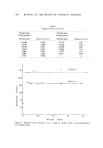
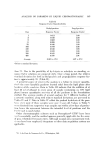
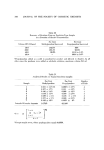
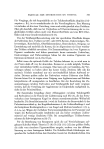
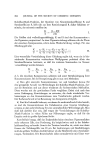
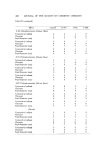
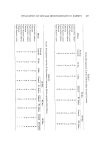
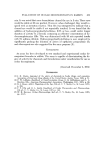
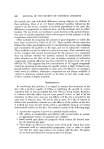
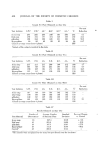
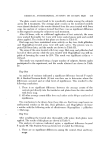
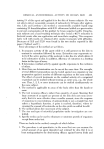
386 JOURNAL OF THE SOCIETY OF COSMETIC CHEMISTS Table III Recovery of Parabens From an Emulsion-Type Sample as a Function of Alcohol Concentration Per Cent Per Cent Volume 95% Ethanol Methylparaben Recovered Propylparaben Recovered 20.0 102.0% 85% 35.0 100.1% 93.5% 40.0 98.5% 101.8 ___ 1.2% 40.0 a -- 100.4 ___ 2.6% apropylparaben added as a solid to paraben-free product and allo•ved to dissolve. In all other cases the parabens •vere added as alcoholic solutions, maximum volume 5.0 mi. Table IV Analytical Results on Typical Emulsion Samples Per Cent Per Cent Number Sample Methylparaben Propylparaben of Trials 1 2 3 4 5 6 7 Intended Formula Amounts 0.163 __+ 3.0% S a 0.0,88% __+ 3.7% 4 0.167 __+ 1.7% 0.101 _+ 4.3% 5 0.146 ___ 1.4% 0.08'8 __+ 4.2% 4 0.148 __+ 1.7% 0.096 __+ 2.7% 3 0.186ñ 1% 0.105 ___ 1% 3 0.157 ___ 1% 0.093 __+ 6.3% 5 0.143 ___ 1.2% 0.665 b ___ 9% 5 0.170% 0.100% aS__--- 2 (x i _ i=l n--I bExcept sample seven, where proplyparaben equals 0.075%.

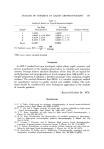
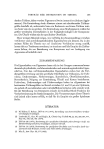
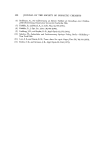
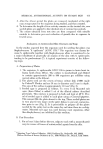
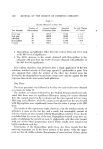
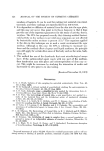
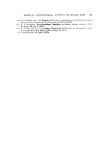
ANALYSIS OF PARABENS BY LIQUID CHROMATOGRAPHY Table V Analytical Results on Typical Suspension Samples 387 Per Cent Per Cent Sample Methylparaben Propylparaben Number of Trials 1 0.105% 0.052% l 2 0.099% q- 1.0% RSD a 0.054% _ 1% 2 3 0.101% q- 1.0% 0.054% _ 1% 3 4 0.102% q- 1.5% 0.048% _ • 1% 2 theory 0.100% 0.050% For duplicate assays RSD • range 100 X 2 Average aRSD means relative standard deviation SUMMARY An HPLC method has been developed, which allows rapid, accurate, and precise quantitation of the paraben preservatives in emulsion and suspension systems. Average relative standard deviations of less than 3% are typical for methylparaben and propylparaben at levels ranging from 0.05-to-0.2% w/w. Sample preparation is minimal, a decided advantage when analyzing complex mixtures. The method illustrates that HPLC is a valuable analytical method for quantitative analysis in quality control and stability testing. The tech- nique should be considered for more widespread application in the analysis of cosmetic products. (Received October 24, 1974) REFERENCES (1) C. P. Talley, High-sr•eed ion exchange chromatography of several mono-substituted pyridine isomers, Anal. Chem., 43, 1512-4 (1971). (2) C. Y. Wu and S. Siggia, Analysis of purine and strychnos alkaloids by high speed liquid chromatography, Anal. Chem., 44, 1499-1501 (1972). (3) T. C. Kram, Separation of sulfa drugs by high speed liquid chromatography, J. Pharm. Sci., 61, 254-56 (1972). (4) R. W. Ross, Identification and determination of synthetic estrogens in pharmaceu- ticals by high-speed, reversed-phase partition chromatography, J. Pharm. Sci., 63, 594-9 (1974). (5) P. Casman, J. Thornton, and D. Shelman, High pressure liquid chromatographic separation of phenetylamines of forensic interest, J. Chrom. Sci., 11, 7-9 (1973). (6) J. J. Nelson, Quantitation of sodium saccharin, sodium benzoate and other food ad- ditives by high speed liquid chromatography, J. Chrom. Sci, 11, 28-35 (1973). (7) M. Batchelder, H. Tarlin, and G. Williamson, Chromatographic separation and de- termination of methyl p-hydroxybenzoate, J. Pharm. Sci., 61, 252-3 (1972).
Purchased for the exclusive use of nofirst nolast (unknown)
From: SCC Media Library & Resource Center (library.scconline.org)