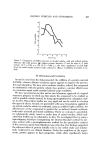
STING POTENTIAL OF SHAMPOOS 583 tor and exploratory behavior, and excessive preening or licking of the injec- tion site. It was the combination of these symptoms, with or without those of the actual writhing syndrome itself, which was utilized in assessing whether or not the animal was perceiving pain/discomfort. Initial investigations of a single reference control shampoo involved quan- titative assessments of the number of writhing episodes within a 15-rain time period. These were eventually discontinued due to the variability observed in both the sensitivity of individual mice to pain and the range of symptomatol- ogy indicative of pain other than the presence or absence of writhing. In addi- tion, this method of observation was tedious, time-consuming, and did not lend itself to a rapid and reproducible screening procedure for the early evaluation of discomfort potential. For these reasons, a more rapid and fruitful approach was developed, which involved a simpler all-or-none observation. The mice either displayed overt symptoms of discomfort or they did not. By this method o[ observation the writhing test more completely fulfilled the criteria for an early screening procedure, as it was rapid, inexpensive, quantifiable, and reproducible. MATERIALS AND METHODS Mouse Writhing Studies Crl: COBS CD-1 (1 CR) BR* male mice weighing between 15 and 25 g were used throughout. All injections were made intraperitoneally (I.P.) util- izing a % in., 26-gauge needle attached to a 1-ml disposable tuberculin syringe. Graded shampoo concentrations were made on a v/v basis with dis- tilled water. The volume injected was 0.2 ml throughout the study. During the initial investigations, for the purpose of determining onset, duration, and characteristics of the writhing syndrome, the mice were ob- served in pairs for a period of 15 min. A single commercially available baby shampoo (designated "J") was used for these studies. Subsequent all-or-none observations were made on groups of 5 mice for a period of 6 min. Immediately following injection, the mice were placed in a 12 in. length x 6 in. width x 5 in. depth opaque plastic box containing approxi- mately 1/2 in. wood shaving bedding, for observation. One writhe per mouse or other overt symptoms indicative of pain or discomfort were considered a posi- tive response. A total of 10 mice (two groups of 5) was used for each shampoo dilution tested. From 3 to 7 dilutions were required to obtain adequate dose/ response effects. When a pain response was observed, the mouse was removed from the observation box and a positive reaction was recorded. *Charles River Laboratories, Wilmington, Mass.

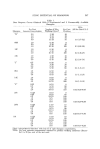
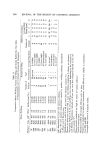
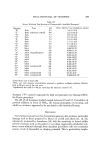
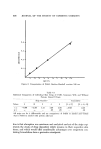
584 JOURNAL OF THE SOCIETY OF COSMETIC CHEMISTS The percentage of mice showing pain reponses at each shampoo dilution was plotted on logarithmic probability paper* and the concentration (writh- ing dose) necessary to elicit discomfort in 50 per cent of the population (WD50) calculated. WD50 levels, 95 per cent confidence limits, and potency ratios were determined by the method of Litchfield and Wilcoxon (9). The potency ratios between each test shampoo and the control reference product were utilized to determine if the two materials being compared differed sig- nificantly in mildness. Determinations of a starting dose for each of the shampoos studied indi- cated i or 2 per cent concentrations were reasonable first-observation levels. To obtain dose/response relationships, further concentrations were subse- quently increased or decreased depending on the number of animals exhibit- ing a positive response at the starting dose level. To determine if hydrogen ion concentration had any influence on eliciting discomfort responses, the pH of each shampoo was determined with a Beck- man Zeromatic© pH Meter* using 2 per cent solutions in distilled water. Commercially available shampoos (designated by alphabetical code) were purchased in local stores during the period January 1974 through June 1974 and represent formulations marketed and distributed during the time. Human Eye Sting Studies• The eye sting characteristics of selected experimental shampoos were tested under the supervision of an ophthalmologist. Testing started with a 1 per cent dilution employing 5 subjects per shampoo. Subsequent dilutions of 5, 10, 15, and 20 per cent were tested depending on the tolerance to each previous dilution. Formulations tolerable at 20 per cent were then compared directly to a reference control. The desired concentrations were prepared by dilution with Sterile Water for Injection.** Each .dilution was placed in a coded plastic bottle equipped with a dropper plug designed to deliver a drop of approxi- mately 0.04 ml. All subjects received the indicated test shampoo dilution in the coniunctival sac of i eye and a control shampoo ("J") of the same dilution in the other eye. Assignment of test and control dilutions in the right or left eye was done on a random basis. One eye was treated first by placing a drop of the predetermined treatment in the conjunctival sac. The volunteer was then requested to score the intensity of the sting using the following scale: (0) no sting (1) very slight sting (2) slight sting (3) mild sting (4) moderate sting (5) severe sting. *Codex No. 3128, Norwood, Mass. ?Beckman Instruments, Inc., Fullerton, Calif. $Conducted by Industrial Bio-Test Laboratories, Northbrook, Illinois. **U.S.P.
Purchased for the exclusive use of nofirst nolast (unknown)
From: SCC Media Library & Resource Center (library.scconline.org)