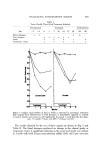
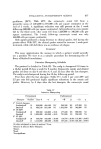
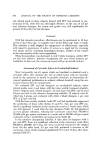
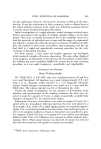
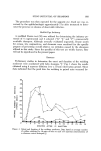
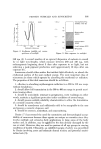
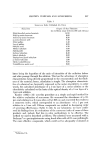
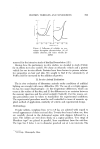
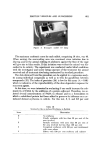
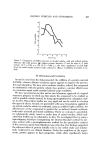
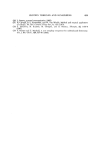
PROTEIN VEHICLES AND SUNSCREENS / • •0 ,n pomthn ofl• - • 40 20 0280 •'l 3•0 ' 3'20 I 34 • .... I $ 0 I $•0 ' 3140 Wavelength (nm) • Figure 4. Influence of vehicles on sun- screens absorption characteristics: (A) oil soluble absorber (B) water soluble ab- sorber B m g•ycerol nol 599 reserved for the intensive study of the final formulation ( 21 ). Having done the preliminary in vitro studies, we decided to study (PABA) for its effects in in vivo models. We chose an ethanolic vehicle and a protein vehicle for our in vivo effects. Proteins have been known to possess substan- tive properties on hair and skin. We sought to find if the substantivity of PABA could be increased by the addition of protein. II. In vivo Anima[ Evaluation The in vivo evaluation of laboratory animals under conditions of artificial lighting are wrought with many difficulties (92). The use of a uv-light appara- tus has t•vo major disadvantages: (1) the temperattire differences, which can occur at the surface of the skin, and 2) the differences in uv emission between the mercury spectrum and the actual sunlight (Table II). For this reason, cer- tain precautions must be taken to standardize the experimental conditions. The experimental procedure must be well controlled in terms of amounts ap- plied, method of application, similarity of vehicle, and experimental design. Methodology Female rabbits, weighing from 1.7 to 1.9 kg, are selected with regard to overall appearance of their coat and skin. Twenty-four hours before use, they are carefully shaved in the abdominal region with clippers followed by a razor. The rabbits are tied down firmly in a supine position. Two strips of Blendrem tape* are placed in parallel, 5ram equidistant from the mid-line. The tape has 5 holes 1 cm in diameter punched out at l-era intervals. The Corp., Minneapolis, Minn.

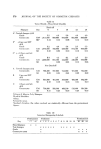
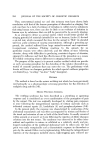
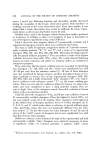
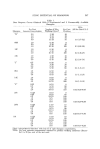
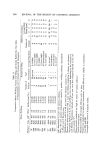
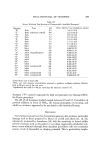
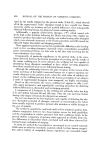
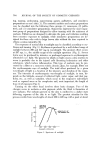
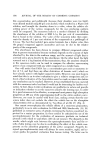
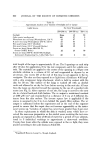
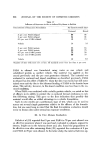
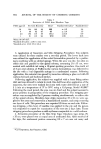
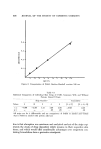
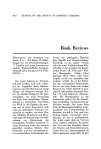
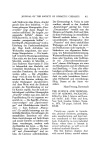
600 JOURNAL OF THE SOCIETY OF COSMETIC CHEMISTS Table II Approximate Analysis of uv Content of Sunlight and uv Lamps Light Source Per Cent Wavelengfl• 250-280 mv 280-320 mv 320+ Sunlight None 40 60 Code quartz (mediquartz) 100 57 2 Fluorescent sun ray lamp (Westinghouse, 110 V) 41 57 2 R and S sun lamp Westinghouse 275 W, 110 V) 35 63 2 Hot quartz lamp, 100 V (Burdick) 63 35 2 Hot quartz lamp, 110 V (General Electric) 611 36 2 Xenon arc lamp (Osram SBO-501 W, Osram GMBH, Berlin) 12 28 60 Xenon arc ]amp (450 W, Model 609, Rudolph Instruments Engineering Co., Little Falls, N.J.) 66 8 26 total length of the tape is approximately 12 cm. The 5 openings on each strip offer 10 sites for application, 6 for the test compound, and 4 for vehicle con- trols. The materials are applied to the center of the opening in a 95-per cent alcoholic solution in a volume of 0.1 ml and evaporated to dryness by an air stream. Any excess left at the end of this time is not apparent to the in- vestigator. The sites are then exposed to uv light from a Kromayer # 10 lamp* with a skin compressor lamp attachment, which is held in contact with the skin for 30 sec. The surface of the lamp is washed off with an alcohol swab and allowed to air dry for 5 sec before moving to the next site. All rays from the lamp are directed toward the opening by the use of a guarded coli- mator (see Fig. 5). After exposure of one site, the lamp is moved to the next site in a lateral back-and-forth fashion. The uv output is maintained constant at 2100 txW/cm "• and standardized at a distance of 5 cm at 5 different dis- tances from the skin surface. The inverse square law is applicable if the source is assumed to be 2 to 4 cm behind the quartz filter surface. The uv output is calibrated before the experiment and at the end of the exposure period to ensure that the ouput does not increase appreciably as the instru- ment warms up. Variation of output has never been greater than 2 per cent. In those experiments in which the skin is washed, areas which have re- ceived the sunscreen preparation or the circled areas receiving the test com- pounds are exposed to a flow of 50 ml of water for a period of 5 sec adminis- tered in 5 individual washings to approximate a rinse-wash condition. Twenty-four hours after the rabbits were exposed to the uv light, they vere graded according to the scale shown in Table III. *Engelhardt Hanovia Lamp Co., Slough, England.
Purchased for the exclusive use of nofirst nolast (unknown)
From: SCC Media Library & Resource Center (library.scconline.org)