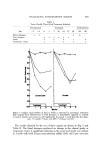
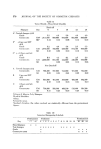
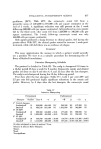
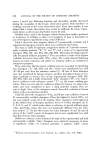
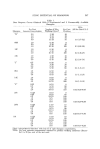
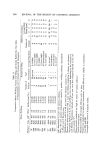
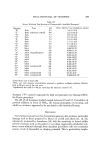
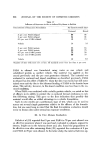
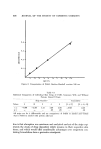
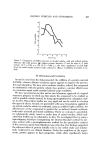
EVALUATING ANTIDANDRUFF AGENTS 579 Comment With ZPT and SeS, the same pattern of corneocyte reduction was obtained in subjects with and without dandruff. Because subjects with grades of less than 5 are about 5 times more numerous than subjects with moderate to se- vere dandruff, it is advantageous to employ these methods in the evaluating of agents wlfich exert their effect through cytostatic activity. DISCUSSION Our aim has been to devise simple, workable assays for evaluating anti- dandruff preparations. Agents which truly affect dandruff must do more than merely remove scales. With any surfactant, shampooing daily or every other day, will remove scales as fast as they are formed the condition simply be- comes invisible. Agents, which affect the basic process, must either suppress the production of horny cells or prevent them from aggregating into large flakes. In dandruff subjects, we employ both the subjective method of clini- cal grading and the objective corneocyte count. The twice weekly 3-week schedule is utilized for evaluation of final formulations, while the intensive shampooing schedule is perhaps best suited for screening and evaluating formulation changes. Cytostatic agents can be evaluated by either schedule in subjects free of dandruff. To date, our studies have concentrated on two time tested and proven agents, SeS and ZPT, which now serve as our bench-marks for comparison of the efficacy of other agents. However, even within these standards, there can be significant variations with different formulations. For example, one formulation of ZPT (product D, i per cent ZPT) proved equally effective as 2 per cent ZPT (product B). Obviously, the vehicle plays an important role in the effectiveness of the final product. The two formulations of 2.5 per cent SeS were equivalent. We have also had other experiences in which various other formulations of these agents resulted in a difference both in clinical efficacy and ability to suppress the production of horny cells. It is possible that there are agents, which do not work by suppressing the production of horny cells, but rather prevent aggregation of cells into visible flakes. Coal tar might be one of these. With such agents, the corneo- cyte count might remain unchanged, while the clinical grade could decrease. At the moment, we lack adequate experience with agents that are com- monly used in antidandruff shampoos such as tars, sulfur, salicylic acid, and quaternary ammonium salts. These formulations are now being investigated. ACKNOWLEDGMENT We would like to thank Mr. Ferdinand Huber for his expert assistance. (Received March 27, 1975)

580 JOUBNAL OF THE SOCIETY OF COSMETIC CHEMISTS REFERENCES (1) A.M. Kligman, B. R. Marples, L. R. Lantis, and K. J. McGinley, App•raisal of efficacy of antidandruff formulations, J. Soc. Cosmet. Chem., 25, 73 (1974). (2) A.M. Kligman, K. J. McGinley, and J. J. Leyden, The nature of dandruff, J. Soc. Cosmet. Chem., in press. (3) K. J. McGinley, R. B. Marples, and G. Piewig, A method for visualizing and quan- titating the desquamating port/on of the human stratum corneum, J. Invest. Dermatol., 53, 107 (1969).
Purchased for the exclusive use of nofirst nolast (unknown)
From: SCC Media Library & Resource Center (library.scconline.org)