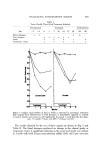
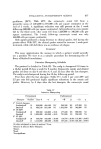
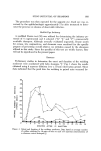
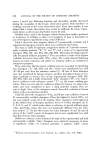
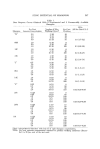
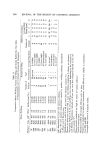
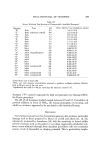
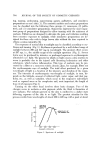
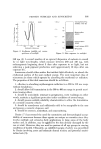
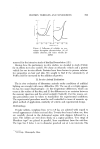
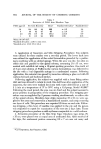
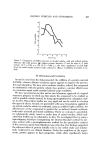
PROTEIN VEHICLES AND SUNSCREENS 607 14 • I I I I I i I • I I I I 2 4 6 I0 I2 Skin Strips Figure 7. Comparison of PABA sunscreen in alcohol vehicle, with and without protein adjuvant: (1) with protein (•) without protein. Statistics: T-test for strips 4, 5, with protein: (4) T ---- 3.56, p ( .05 (5) T = 3.09, p ( .05. Note: significance at such high levels for small sample numbers lends credence to efficacy of addition of protein to ve- hicle VI. Discussion and Conclusion As can be seen from the data presented, the addition of a protein material to PABA, a known effective sunscreen agent, appears to improve the penetra- tion and adsorption. We have yet to evaluate whether, indeed, this compound in combination with the protein vehicle does produce a greater effectiveness as a sunscreen agent under standard clinical usage conditions. We have presented an in vitro and in vivo laboratory approach of a typical sunscreen program in which one first selects the compound to be studied, as well as possible vehicle desired, by doing spectrophotometric adsorption stud- ies in vitro. These latter studies are very rapid and can be useful in selecting the agent of choice. Second, we proceeded with some formulations applied to an animal model in which we evaluated, using an artificial light condition, the effectiveness of the compound to protect the uv-induced derreal erythema, both under unrinsed and rinsed conditions. Third, we evaluated a penetrabil~ ity/substantivity study, based on earlier data of animal studies, which indi- cated that PABA may be substantive to skin. We investigated this by using a tape-stripping technique incorporating the Bratton-Marshall method for pri- mary amines with a spectrophotometric method for the quantitative analysis of the sunscreen agents from Blenderm tape strip skin. Our findings supported the adjuvant effect of protein initially seen in our rabbit study and substan- tially confirmed in our clinical situation. Under the conditions of the experi- ments, protein appears to have properties, which allow significantly larger

608 JOURNAL OF THE SOCIETY OF COSMETIC CHEMISTS quantities of drugs to be retained near the epidermal surface. The test meth- odology presented represents a typical screening method for sunscreen eval- uation and, hopefully, will lead to better agents which will meet the criteria of an ideal sunscreen formulation. (Received March 17, 1975' REFERENCES (1) I. Willis, Sunlight and the skin, ]. Amer. Med. Assoc., 217, 1088-93 (1971). (2) J. D. Cuin and J. M Knox, Adverse effects of sunlight on the skin, Southern Med ]., 63, 1165 (1960). (3) S. I. Krcps, The structure, function, and formulation of topical sunscreen. I. Theoreti- cal considerations, 1. Soc. Cosmet. Chem., 14, 625-30 (1963). (4) D. J. Cripts and S. Hedgues, Protection facto,' of sunscreen to monochromatic rat- ings, Arch. Dermatol., 109, 202-4 (1974). (5) T. B. Fitzpatrick, M. Sciji, and A.D. McCugan, Melanin pigmentation, New England 1. Med., 265, 328-32 (1961). (6) J. C. Et]isario, Sunlight and the skin, Int. ]. Dermatol., 11, 200-11 (1972). (7) T. H. Draize, Derreal Toxicity in Appraisal of the Safety of Chemicals in Foods, Drug, and Cosmetics, Association of Food and Drug Officials of the United States, Topeka, Kansas, 1965, Pp. 46-59. (8) C. B. Rottier, Biological p•'oblems concerning sunscreen, J. Soc. Cosmet. Chem., 19, 85-92 (1968). (9) I. Willis and A. N. Klingman, Aminobenzoic acid and its esters, Arch. Dermatol., 102, 405-17 (1970). (10) M.D. Pathal, T. B. Fitzpatrick, and E. Frenk, Evaluation of topical agents that pre- vent sunburn-superiority o.f para •aminobenzoic acid and its ester in ethyl alcohol, New England J. Med., 280, 1459-63 (1969). S. I. Kreps, Spectrophotometric evaluation of sunscreen, Proc. Sci. Sec. Toilet Goods Ass., 23, 13:8 (1955). W. D. Kumler, Relative action of sunscreen compound, 1. Amer. Pharm. Ass., 41, 492-3 (1952). Alexander, U.S. Pat. #2974089 (1961). C. I,. Pan[,•s, CLC characterization of sunscreen using suntan preparations, 1. AOAC, 59, 47-50 (1971). S. Riegelman and R. E. Penna, Effect of vehicle component on the absorption char- aeteristie of sunscreen compounds, J. Soc. Cosmet. Chem., 11, 1-12 (1960). J. W. Van Ham and W. 1-'. Herzoc. Molecular Pharmacology, E. J. Ariens, ed., The Design o[ Sunscreen Preparations, Vol. 3, Academic Press, New York, 1973, Pp. 193- 335. (17) S. Riegelmann, N. A. Allawala, M. K. Hrenoff, and L. A. Strait, Vehicle effects ooe sun- screen compounds, J. Colloid. Soc., 13, 208-14 (1958). L. Stambovsky, The suntan industry, Drug Cosmet. Ind., 75, 309-11 & 408-14 (1954). L. Stambovsky, Sunscreen protection, Drug Cosmet. Ind., 76, 44-53 (1955). H. B. Cass, The structure, function, and formulation ooe topical sunscreen II., J. Soc. Cosmet. Chem., 14, 631-40 (1963). S. Daniels, Some comments and suggestions for the measurements of the protection effects of sunscreens, 1. Soc. Cosmet. Chem., 15 709-16 (19•4). A. Langner and A.M. Klingman, Tanning without sunburn with aminobenzoic acid type sunscreen, Arch. Dermatol., 106, 33B-43 (1972). C. W. Emmens, Principles of Biological Assay, in Chapman et al., Ltd., London, En- gland, 1948, Pp. 88-97. A. Goldstein, Biostatistics in Introductory Text, MacMillan, New York, 1967, Pp. 72. S. I. Katz, Relative effectiveness ooe selected sunscreen, Arch. Dermatol., 101, 466-8 (1970). (11) (12) (13) (1•) (1• (16) (18) (19) (20) (21) (•,) (23) (24) (25)
Purchased for the exclusive use of nofirst nolast (unknown)
From: SCC Media Library & Resource Center (library.scconline.org)