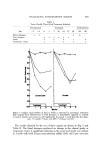
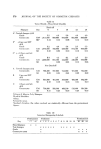
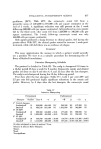
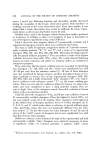
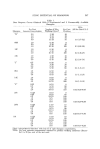
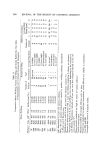
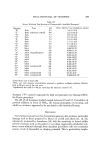
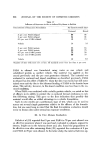
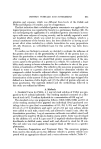
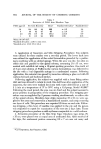
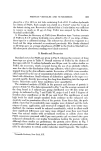
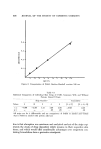
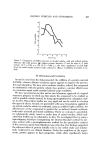
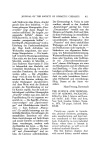
STING POTENTIAL OF SHAMPOOS 591 goals for the purpose of mildness. The investigator is cautioned against scor- ing a positive pain response unless completely convinced that the animal is feeling discomfort and responding to the injected material. An apparent stretch when the animal attempts to reach or peer over the edge of the ob- servation box or other misleading activity should not be construed as a part of the writhing syndrome. In addition, because of the inherent curiosity and ex- plorative nature of the mouse, the test should be conducted in a quiet area, one which provides no distraction to the animal in the form or noise, smoking, strong odors, or laboratory personnel working nearby. The low levels of pain or discomfort being elicited by mild formulations or low concentrations can often go unnoticed by an animal being distracted in its environment. The writhing test may not be limited to a specific product type such as shampoos. Further studies should be conducted to ascertain its value in de- terrushing possible differences in "discomfort" potential of other cosmetic ma- terials such as face and eye makeups, hair products, creams, lotions, and other product types, which can be diluted, put into aqueous solution, or suspended in other innocuous, injectable vehicle types. These vehicles by themselves should not elicit writhing-like overt symptoms. In the present study, there was a lack of correlation between the narrow pH range of the shampoos tested and their mildness in terms of both human eye sting evaluations and mouse WD,•0 values. This lends support to the work of Laden (1), who indicated that no general conclusions could be drawn in predicting the stinging potential of solutions of acidic materials by con- sidering only the pH, tonicity, or nature of anionic materials. S U1v•Iv[ABY Comparative studies of various experimental and commercially available shampoos, utilizing the mouse writhing test as an assessment of pain, discom- fort or stinging, showed a reasonable rank-order correlation of mildness with that found through controlled eye-sting studies in man. In view of the poor predictive value of conventional animal primary irri- tancy studies in determining discomfort or eye-stinging properties of cosmetic materials, the mouse writhing test can provide a valuable adjunct in predict- ing the potential for discomfort and stinging. The limited pH range (5.5 to 7.7) of the shampoos studied did not appear to influence the potential for eye-sting. ACKNOWLEDGMENT The authors wish to thank Avon Products, Inc., for its support in providing facilities, materials, and full cooperation in making this study possible. (Received February 14, 1975)

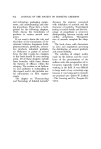
592 JOURNAL OF THE SOCIETY OF COSMETIC CHEMISTS REFERENCES (1) K. Laden, Studies on irritancy and sting potential, J. Soc. Cosmet. Chem., 24, 385- 393 (1973). (2) N. I. Van Abb•, Eye Irritation: studies relating to responses in man and laboratory animals, J. Soc. Cosmet. Chem., 24, 685-92 (1973). (3) C. Vander Wende and S. Margolin, Analgesic tests based upon experimentally in- duced acute adbominal pain, Fed. Proc., 15, 494, (1956). (4) J. F. Emele and J. Shanaman, Bradykinin writhing: a method for measuring analgesia, Proc. Soc. Exp. Biol. Med., 114, 680-2 (1963). (5) E. A. Siegmund, R. A. Cadmus, and Go Lu, Screening of analgesics including aspirin- type compounds, based upon the antagonism of chemically induced "writhing" in mice, J. Pharmacol. Exp. Ther., 119, 184 (1957). (6) L. C. Hendershot and J. Forsaith, Antagonism of the frequency of phenyl-quinone- induced writhing in the mouse by weak analgesics and nonanalgesics, J. Pharmacol. Exit. Ther., 125, 237-40 (1959). (7) M. W. Parkes and J. T. Pickens, Conditions influencing the inhibition by analgesic drugs, of the response to intraperitoneal injections of phenyl-benzoquinone in mice, Brit. J. Pharmacol., 25, 81-7 (1965). (8) J. Pearl, M.D. Aceto, and L. S. Harris, Prevention of writhing and other effects of narcotics and narcotic antagonists in mice, J. Pharmacol. Exp. Ther., 160, 217- 30 (1968). (9) J. T. Litchfield and F. Wilcoxon, A simplified method of evaluating dose-effect ex- periments, J. Pharmacol. Exp. Ther., 96, 99-113 (1949). (10) J. H. Draize, G. Woodard, and H. O. Calvary, Methods for the study of irritation and toxicity of substances applied topically to the skin and mucous membranes, J. Pharmacol, Exp. Ther., 82, 377-90 (1944). (11) K. L. Russell and S. G. Hoch, Product development and rabbit eye irritation, Proc. Sci. Sect. Toilet Goods Ass., 37, 27-32 (1962). (12) S. G. Hoch and K. L. Russell, Low eye irritation shampoos, Proc. Sci. Sect. Toilet Goods Ass., 42, 40-42 (Dec. 1964). (13) C. T. Bonfield and R. A. Scala, The paradox in testing for eye irritation. A report on thirteen shampoos, Proc. Sci. Sect. Toilet Goods Ass., 43, 34-43 (May 1965). (14) A. B. Lansdown, An appraisal of methods for detecting primary skin irritants, J. Soc. Cosmet. Chem., 23, 739-772 (1972).
Purchased for the exclusive use of nofirst nolast (unknown)
From: SCC Media Library & Resource Center (library.scconline.org)