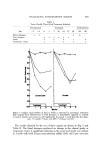
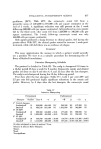
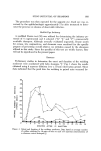
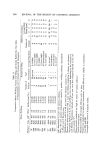
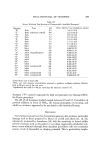
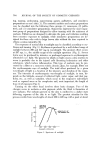
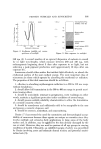
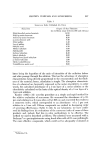
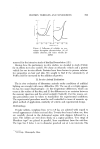
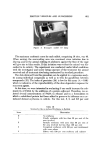
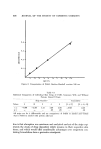
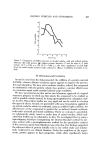
PROTEIN VEHICLES AND SUNSCREENS Figure 5. Kromayer model 10 lamp 601 The maximum erythemic score for each rabbit, comprising 10 sites, was 40. When scoring, the surrounding area was examined, since irritation due to shaving and/or the animal rubbing its abdomen against the floor of the cage will give rise to false results. If this irritation was evident the animal was dis- carded in its entirety. The experiment was conducted under blind conditions with the investigator and scorer being unaware of the treatment the animal received and all treatment sites being randomized by standard procedure. The data obtained from this procedure can be applied to a regression analy- sis among individual compounds as well as to tests for parallelism between compounds (23). The index of precision (24) is low for this assay ( X = 0.46) which is indicative of the reproducibility of the dose-dependent response for sunscreen agents. At this time, we were interested in evaluath•g if one could increase the sub- stantivity of PABA by the additions of a protein ad•uvant. Therefore, we se- lected several concentrations of ?ABA in ethanol and in a formulation in which a solubilized protein had been added to preserve its influence on a uv- induced dermal erythrema in rabbits. For this test, 5, oe, and 0.5 per cent Table II! Scoring for the uv-induced Erythema in Rabbits Score Observation No erythema Faintly erythemic with less than 50 per cent of the area involved Partially erythemic with more than 50 per cent of the area involved but less than 100 per cent Completely erythemic with 100 per cent involvement xvith some edema Edema with 100 per cent erythema and scaliness

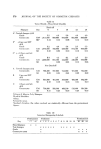
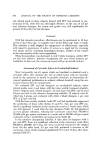
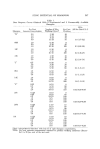
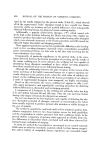
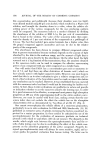
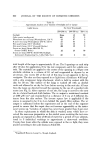
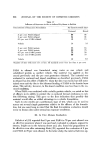
602 JOURNAL OF THE SOCIETY OF COSMETIC CHEMISTS Table IV Influence of Sunscreen in the uv-induced Erythema in Rabbits Concentration of Sunscreen Formulation Per Cent Protected Sites" Unrinsed Rinsed 5 per cent PABA/ethanol 2 per cent PABA/ethanol 0.5 per cent PABA/ethanol Vehicle 5 per cent PABA/protein 2 per cent PABA/protein 0.5 per cent PABA/protein 0.2 per cent PABA/protein 86 58 54 32 18 15 10 3.3 96 93 85 75 75 5O •5 33 Vehicle 19 8.7 "Number of sites •vith score of 1 or less. All standard errors xvere less than 4 per cent. PABA in ethanol xvas formulated using water as one vehicle and solubilized protein as another vehicle. The material was applied as dis- cussed previously and the per cent protection obtained. The material was evaluated in unrinsed and rinsed conditions as described previously. PABA in ethanol has less effect (Table IV) when the skin was rinsed, but still main- tained some activity due to the inherent binding of PABA to the keratin layer alone. This activity, however, in the rinsed condition was less than in the un- rinsed condition. When PABA was combined with a soluble protein vehicle, we noted no loss of efficacy in its ability to protect the uv-induced dermal erythrema in rab- bits following rinsing. This gave us the first indication that possibly this material would offer an added advantage in a vehicle formulation. Such in vivo results are a preliminary type of test, which can be used to screen out several simple parameters relative to the efficacy of the formula- tion, but one must keep in mind that the final formulation evaluation should occur on human skin under normal sun exposure conditions. III. In Vivo Human Evaluation Pathak et al (10) reported that 5 per cent PABA in 70 per cent ethanol was an effective sunscreen when it was used and evaluated in subjects exposed to intense, bright sun in the Arizona desert and, also, found the preparations to be effective even after swimming. Katz (25) repeated the evaluation of 5 per cent PABA in 70 per cent ethanol. In the latter study, the interval between ap-
Purchased for the exclusive use of nofirst nolast (unknown)
From: SCC Media Library & Resource Center (library.scconline.org)