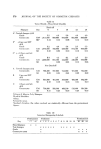
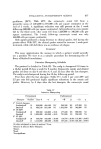
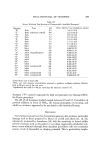
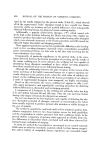
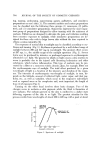
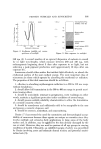
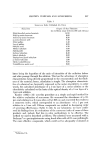
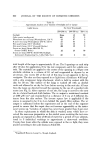
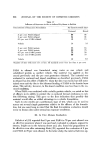
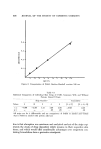
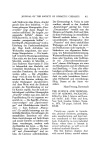
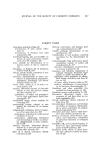
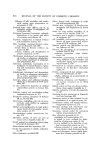
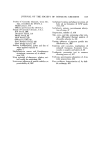
STING POTENTIAL OF SHAMPOOS Table III Mouse Writhing Test Ranking of Commercially Available Shampoos a 589 Shampoo Type pH WD,0 • (95 Per Cent Confidence Limits) "B" Baby 6.6 3.0 (1.7-5.2) "]"' Baby (reference control) 6.6 2.1 (1.5-3.1) "N" Baby 7.3 2.0 (1.2-3.2) "U" Baby 7.6 2.0 (1.2-3.2) "S" Baby 7.4 1.9 (1.3-2.9) "K" Baby 7.3 1.7 (1.1-2.9) "C" Baby 6.6 1.6 (1.0-2.3) "V" Baby 7.4 1.3 (0.8-2.1) "G" Baby 7.7 1.0(0.7-1.5) e "L" Adult 7.0 0.9(0.6-1.3) e "A" Adult ((hypoallergenic) 6.8 0.7(0.5-1.0) • "V" Adult 6.5 0.6(0.4-1.0) c "r' Adult 6.9 0.6(0.4-0.9) • "B" Adult 7.6 0.5(0.3-0.7) • "H" Baby 7.0 0.4(0.3-0.7) • "P" Adult 7.0 0.4(0.3-0.7) c "E" Adult (antidandruff) 5.5 0.4(0.3-0.6) e "G" Adult 7.6 0.3(0.3-0.5) • "0" Adult 7.1 0.3(0.3-0.5) • "D" Adult (antidandruff) 7.3 0.1(0.1-0.2) ½ "B" Adult (antidandruff) 7.2 0.09(0.06-0.13) • •Listed from most to least mild. uWD•0: per cent aqueous concentration required to produce writhing syndrome (d.iscom- fort) in 50 per cent of the test mice. cSignificantly less mild (P • 95 per cent) than the reference control ("J"). shampoo ("P") caused comparatively high and persistent eye damage follow- the Draize procedure. The pH of all shampoos studied ranged between 5.5 and 7.7. Correlation of product mildness in terms of WDao, the human perception of eye-sting, and rabbit eye irritancy appeared to be unrelated to this limited pH range. DIscussioN Conventional animal tests for determining primary skin irritancy and ocular damage such as those proposed by Dra ze et al (10) and others (11, 12, 13), extensively reviewed by Lansdown (14), lack the sensitivity to detect milder adverse reactions such as discomfort or eye-sting. Apparently satisfactory irri- tancy scores obtained through these standard procedures will not necessarily ensure a lack of discomfort or stinging potential. This is particularly empha-

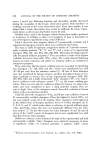
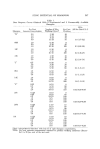
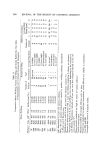
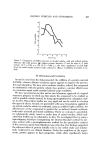
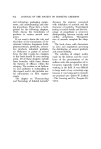
590 JOURNAL OF THE SOCIETY OF COSMETIC CHEMISTS sized by the results obtained in the present study (Table II), which showed all of the experimental "baby" shampoos tested to have equally low Draize scores for visible eye irritancy and yet marked differences were subsequently obtained following human eye-sting and mouse writhing studies. Additionally, a popular adult-variety shampoo ("P"), which caused rela- tively high ocular irritation following the Draize test along with a higher po- tentiaI to produce discomfort and stinging, was ranked among other shampoos which were relatively innocuous in the Draize procedure and still caused sig- nificantly higher discomfort and stinging potential. These apparent paradoxes can lead to considerable difficulty in the develop- ment on low eye-sting shampoos, especially when a formulation successfully passes conventional Draize eye tests only to fail later tests invoIving the hu~ man evaluations of eye-sting. Consequently, of particular significance in the present study, is the corre- lation observed between the human perception of eye-sting and the results of the mouse writhing test. In every instance, the writhing test was capable of identifying those shampoos considered to have milder eye-sting properties from those considered more severe foliowing human testing. A/though the relationship between the pain receptors in the viscera of the mouse and those of the highly innervated human eye is open to question, the results obtained in the present study, when the rank order of mildness ob~ rained via the writhing test and that of the human perception of eye-sting in a series of experimental shampoos were compared, are highly encouraging. Based on this correlation, the mouse writhing test appears to offer a reli- able, rapid, inexpensive, and reproducible screening procedure for detecting relative differences in discomfort and/or stinging potential. A comparison of 2 shampoos by the writhing test ordinarily takes less than 2 hr and utilizes between 60 and 120 mice. Thus the cost and time factors during early stages of formula development are minimal. The test was found to be dose-responsive and capable of detecting the rela- tive discomfort potential of shampoo materials at concentrations far below those usually required to produce primary skin irritation or visible damage to the eyes of animals. The method is quantitative and lends itself well to statistical analysis. It fa- cilitates comparison between two dose-response curves for both parallelism and the computation of relative potencies with their confidence limits. In the present studies, comparison of potency ratios appeared to reIiably show rela- tive differences in discomfort which correlated well with those observed fol- /owing human evaluations of stinging. In using the method the investigator is encouraged to use control materials which serve as reference standards, materials which, by their known composi- tion and/or history of acceptable human experience, are reasonable target
Purchased for the exclusive use of nofirst nolast (unknown)
From: SCC Media Library & Resource Center (library.scconline.org)