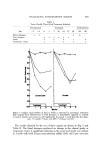
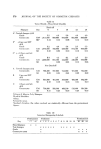
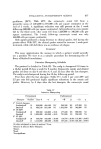
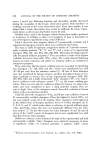
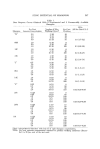
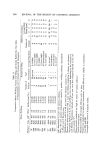
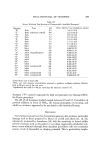
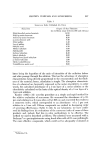
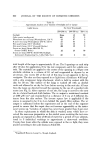
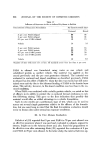
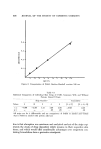
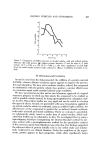
EVALUATING ANTIDANDRUFF AGENTS 577 pyrithione (ZPT). With ZPT, the corneocyte count fell from a geometric mean of 1,074,000 to 677,000 cells per square centimeter at the end of 3 weeks. A significant reduction was still present at the 1 week follow-up (695,000 cells per square centimeter). SeS produced an even greater fall by the third week (the count fell from 1,205,000 to 340,200 cells per square centimeter). The 1-week follow-up corncocytc count was only 444,000 cells per square centimeter. Both agents produced a sharp decrease in clinical grades, SeS having the greater effect. With ZPT, the clinical grades started to increase 1 week post- treatment, while with SeS there was no evidence of relapse. Comment This assay approximates the manner in which a patient would normally use a product. We view it as a suitable procedure for determining the ef- ficacy of finished formulations. Intensive Shampooing Schedule The protocol is detailed in Table III. The scalp is shampooed 10 times in a 12-day period (5 days a week for 2 weeks). Corneocyte counts and clinical grades are done on day 0 and then 4, 8, and 12 days after the last shampoo. The scalp is not shampooed during this 12 day follow-up period. Four days after the last shampoo (Table IV), both i per cent ZPT and 2.5 per cent SeS produced highly significant reductions in the counts and grades. However, by 8 days after the last shampoo, the corneocyte count Table IV Intensive Shampooing Pretreatment Sh, ampoo Nulnber Day 0 Posttreatment --4 p• --8 p --12 p A b Control shampoo Nondandruff 12 629,800 494,100 NS e Dandruff 12 989,100 893,100 NS D c 1% ZPT Nondandruff 10 650,300 249,800 0.01 Dandruff 12 1,054,000 493,900 0.01 E a 5% SES Nondandruff 10 495,700 160,300 0.001 Dandruff 11 1,134,000 406,200 0.001 546,300 NS 437,200 NS 1,042,000 NS 942,200 NS 477,400 NS 688,700 NS 721,000 NS 852,100 NS 130,700 0.001 115,400 0.001 307,200 0.001 348,100 0.001 "P value calculated on basis of students' T-test. bJohnson & Johnson Baby Shampoo. ½Danex. aExsel. eNonsignificant.

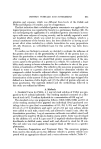
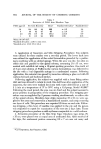
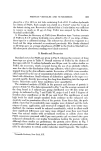
578 JOUBNAL OF THE SOCIETY OF COSMETIC CHEMISTS and clinical grade in those subjects treated with ZPT had returned to pre- treatment levels, while SeS was still highly effective. In the case of 2.5 per cent selenium shampoo, the counts and grades were still significantly de- pressed 12 days after the last shampoo. Comment With this intensive procedure, effectiveness can be ascertained in 18 days (at the 4 day follow-up). A complete test (12 day follow-up) takes 1 month. This schedule is well adapted for comparisons of effectiveness, especially with regard to persistence of action. It serves as a rapid test for screening new agents and for evaluating formulation changes, whether of the vehicle or the concentration of the active ingredients. When the procedure was shortened to only 5 daily shampoos, neither ZPT nor SeS were effective. Intensive shampooing also may reveal irritancy po- tentialities. In that case, the corneocyte counts will go up instead of down. Assessment of Cytostatic Effects in Nondandruff Subjects Most, but possibly not all, agents which are beneficial in dandruff exert a cytostatic effect they decrease the rate at which horny cells are manufac- tured by the epidermis. It should be possible, therefore, to demonstrate de- creased epidermal proliferation in subjects without dandruff, using the cor- neocyte count as the sole measurement. We evaluated ZPT and SeS shampoos on nondandruff subjects, whose clinical grades were 3 and below with the twice weekly treatment schedule. Twelve subjects used a bland shampoo 13 used 2 per cent ZPT and 12 used 2.5 per cent SeS. In the intensive shampooing schedule, 32 subjects were di- vided into 3 groups and evaluated with either a bland shampoo i per cent ZPT, or 2.5 per cent SeS. With the twice weekly schedule, both ZPT and SeS significantly suppressed the production of horny cells (Tables II and IV). Two per cent ZPT pro- duced a significant reduction in the corneocyte count in I week's time, which was still apparent I week after the last shampoo (Table II). SeS produced an even greater reduction, reducing the corneocyte count from 779,300 to 319,400 cells per square centimeter in 3 weeks and to 384,300 cells per square centimeter at the I week follow-up measurement (Table II). In the intensive shampooing schedule, 4 days after 10 shampoos with 1 per cent ZPT, there was significant reduction in the corneocyte count (from 650,300 to 249,800). By 8 days, the mean count had returned to the original level. On the other hand, 2.5 per cent SeS, produced a decrease in the corneocyte count, which remained significantly low 8 and 12 days after sham- pooing (Table IV).
Purchased for the exclusive use of nofirst nolast (unknown)
From: SCC Media Library & Resource Center (library.scconline.org)