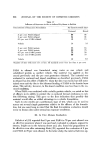
]. Soc. Cosmet. Chem., 26, 593-609 (December 1975) The Influence of Protein Vehicles on the Penetrability of Sunscreens O. J. LORENZETTI, Ph.D., J. BOLTRALIK, E. BUSBY, and B. FORTENBERRY* Presented December 3, 1974, New York City Synopsis-The development of SUNSCBEENS utilizing several established in vitro and in vivo products has been well documented in the literature however, continuing publica- tions in search of the optimal sunscreen indicates that the ideality in sunscreens has not yet been achieved. The objective of this paper is to outline a rational scientific approach for the evaluation of sunscreens using our investigations on PBOTEIN VEHICLES as an example. Technology in in vitro and in vivo investigations are discussed. In vitro investigations utilizing Kumler's "SUNSCBEENS INDEX" provide a rapid means of assessing that AMINOBEZOIC ACID DEBIVATIVES are choice agents, which absorb in the EBYTHEMOGENIC BANGE of 290 to 317 mix in wavelength. Results in in vivo investigations in the rabbit-ultraviolet (uv) light-induced erythema demonstrated that PABA-AMINOBENZOIC ACID (PABA) was effective on both unrinsed and rinsed skin surfaces. For the confirmation of the nonwashability of the selected aminobenzoic acid derivatives, analysis of tape stripped layers of epidermis was undertaken using the Bratton-Marshall method for primary amines for the quantitative analysis of sunscreen agents from tape stripped skin. PABA in an ethanolic protein vehicle appears to retard absorption into the tissue as well as to increase the amount of drug that is held at various tissue depths. This investigation confirmed the improved substantivity of PABA when it was combined with a protein vehicle. INTRODUCTION There are many detrimental effects of sunlight, which until recently, have received too little publicity. Because of the high incidence of skin cancer and other diseases precipitated by sunlight, dermatologists have become acutely aware of the harmful effects which the sun may have on the skin. The practic- ing physician is often questioned by patients about the effects of sun bath- *Alcon Laboratories, Inc., P.O. Box 1959, Fort Worth, Texas 76101. 593

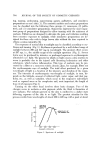
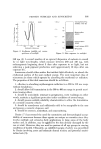
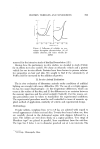
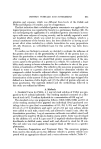
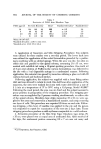
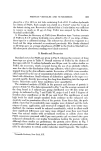
594 JOURNAL OF THE SOCIETY OF COSMETIC CHEMISTS ing, tanning, sunburning, sunscreening agents, palliatives, and simulative preparations on one's skin (1). The cosmetic sunburn and suntan preparations may be classified into the following three groups: (1) sunscreens, (2) pallia- tives, and (3) simulative preparations. Sunscreens represent the most impor- tant group of preparations designed to allow tanning with the minimum of sunburn. Palliatives are designed to alleviate the pain and irritation resulting from excessive exposure to sunlight, while simulative preparations are de- signed for those who wish to feign brown skin without the time required to obtain a suntan naturally (g). The responses of normal skin to sunlight may be classified according to ery- thema and tanning (Fig. 1). Erythema is produced by a well-defined range of sunlight between 9.90 and 317 m/x in wavelength. The greatest effect occurs at 9.97 m/•, i.e., the middle range ot? the sunlight spectrum (Fig. 9.). Severe burns may be produced by intensive or prolonged exposure to erythemogenic ultraviolet (uv) light. The process by which uv light causes a skin reaction to occur is probably due to the injured cells liberating leukotaxine and other substances, which induce inflammation. This type of sunburn may be pre- vented by a filter or a sunscreen which absorbs glass, for example, filters out the erythemogenic rays of sunlight. The total effect produced by a given wavelength of light is a function of the intensity and duration of the expos- ure. The intensity of erythemogenic wavelengths of sunlight, in turn, de- pends on the latitude, amount of reflected light, water vapor, and dust par- ticles, etc., as well as variables, which occur in the responsive individual's such as exposed areas or his complexion and, most important, the length of time (3) of exposure (Fig. 3). Tanning on the other hand involves three basic changes. Two of the changes occur in melanin-a skin pigment-while the third is formation of new melanin. The melanin present in the skin is oxidized to a darker state following exposure of the skin to uv light. The greatest stimulus for this process results from wavelengths of about 300 to 420 m/x with a peak at about 2OO ,.• 15o u.i •, 100 o _ a: 50 SUN RAYS REACHING EARTH / ! •- SENSITIVITY OF / I 'tt•"'"'THE NORMAL EYe / / / / ,/, , 500 400 500 600 Wovelength i• Millimicrons Figure 1. Spectrum of sunlight
Purchased for the exclusive use of nofirst nolast (unknown)
From: SCC Media Library & Resource Center (library.scconline.org)