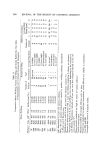
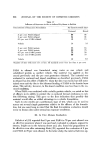
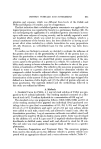
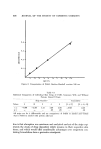
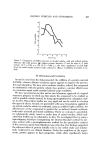
PROTEIN VEHICLES AND SUNSCREENS 603 plication and exposure, which was different from levels of the Pathik and Willis and Kligman (9) studies, may be of importance. The first indication that a solubilized protein concentrate was applicable for topical preparation was reported by Swartz in a preliminary finding (26). He was investigating the application of a solubilized protein concentrate in teen- agers with acne vulgarus of varying severity, and he initially reported a resid- ual beneficial effect, which was noted for some time. Collagen, which is a normal constituent of the keratin layer, has been alluded to as having an ad- ]uvant effect when included in a vehicle formulation for many preparations (27, 28). However, no well-defined basis for this activity has been docu- mented. To confirm our findings in animals, we decided to evaluate the influence of the protein derivative on the penetrability of PABA. If the protein does en- hance the penetration or retard the removal of a sunscreen agent, particularly after washing or bathing, one should find greater concentration of the sun- screen agent in the presence of a protein in a vehicle. We undertook a feasi- bility study among in-house volunteers for the evaluation in situ of the pene- tration or localization of PABA. The vehicle in the sunscreen preparations was ethanol in water or a protein derivative utilized to determine whether the compounds exhibit favorable adjuvant effects. Appropriate control solutions were also included. Studies reported here were confined to: (1) the analytical determination of the amount of drug eluted from the scotch-tape stripped skin defined as a function of skin depth, and (2) the effect of protein adjuvant on tissue penetration. The materials utilized and the methodology followed in this study are outlined as follows. A. Methods 1. Standard Curve [or PABA: A i mg/ml stock solution of PABA was pre- pared in 0.1 N sodium hydroxide. The working standard consisted of a dilu- tion of stock in 0.1 N sodium hydroxide to a concentration of 0.01 mg/ml. The standard curve was prepared as follows: 0.010, 0.025, 0.050, and 0.1 ml vf the working standard were piperred into individual 10-ml graduated cen- trifuge tubes to give final concentrations of 0.1, 0.2, 5, 0.5, and 1.0 •g/ml. 0.5 ml of a 2 N hydrochloric acid and i ml of a 0.1 per cent sodium nitrate were added to each tube, mixed well, and allowed to stand 3 min. After the diazotization procedure, i mg of ammonium sulfamate was added, mixed well and allowed to stand for 10 min to destroy excess nitrite. Color was developed by the addition of 1 ml of 0.1 per cent N-( 1-napthyl)-ethylene-diamide-dihy- drochloride in distilled water, mixed well, and allowed to stand for 30 min. The red color was read against the reagent blank at 540 nm in a spectro- photometer. 2. Sunscreen Preparations and Treatment Sites: The sunscreen prepara- tions used in this study are in two different vehicles-a protein vehicle com- pound with an appropriate ethanol and a water reference vehicle (Table V).

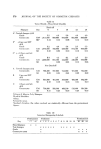
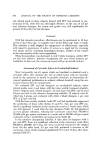
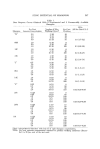
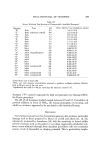
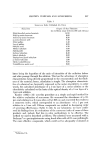
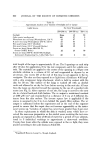
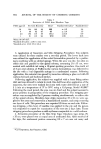
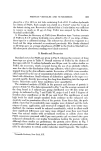
6O4 JOURNAL OF THE SOCIETY OF COSMETIC CHEMISTS Table V Recoveries of PABA from Blenderm Tape PABA (•g/ml) Per Cent Recovery Mean a Standard Deviation b Standard Error •' 10 104 102 99 102 _ 2.5 1.4 5 96 92 97 95 _ 2.6 1.5 2.5 103 116 85 101.3 --+15.5 8.9 i 81 118 94 97.6 ___18 10.8 '•Mean: 96 107 93.7. bStandard deviation: -+10.6 __+12.2 ___6.1. eStandard error: ___5.3 ñ6,1 ___3.1, 3. Application of Sunscreen and Skin Stripping Procedures: Ten subjects were utilized for these studies over a two-day period. The lower back area was utilized for application of the coded formulation preceded by a prelim- inary swabbing with an alcohol sponge. When the area was dry, two sites on either side and parallel to the spinal column, measuring 21/2 x 15 cm, were marked with indelible ink using a 10-point spotting procedure. One-tenth ml of 5 per cent solution of PABA in the various formulations was delivered to the site with a 1-ml disposable syringe in a randomized manner. Following application, the material was spread by inunction utilizing a glass rod with 20 uniform forward and backward strokes. Following application, the subject was supplied with a loose fitting cotton shirt and was allowed to return to work. One-half hour after application of the sunscreen, the sites were washed for 2 rain with water delivered at a rate of 2 1./min at a temperature of 37 to 39øC using a Cal-pump, Model #1200.* Following the wash period, the area was air dried and the subject assumed a prone position in preparation of the stripping procedure. The stripping pro- cedure was accomplished by 2 persons working simultaneously on either side of the spinal column. Blenderm tape strips measuring 21/2 x 15 cm were ap- plied to the areas and removed in a standardized manner, each strip removing one layer of cells. This procedure was repeated 25 times on each site. Follow- ing stripping, a thin layer of vaseline was applied to the site and the person was requested to report for examination of the test site 2 days later. Tissue stripping procedures produce a mild erythema comparable to a mild sunburn. 4. Extraction procedure of the Skin Strip Tape: Blenderin tape strips, 21/2 x 15 cm, were placed over an equal area of medicated skin. After removal of the tape, the centermost portion measuring 2.5 x 7 cm was cut away and *Cal Corporation, San Francisco, Calif.
Purchased for the exclusive use of nofirst nolast (unknown)
From: SCC Media Library & Resource Center (library.scconline.org)